



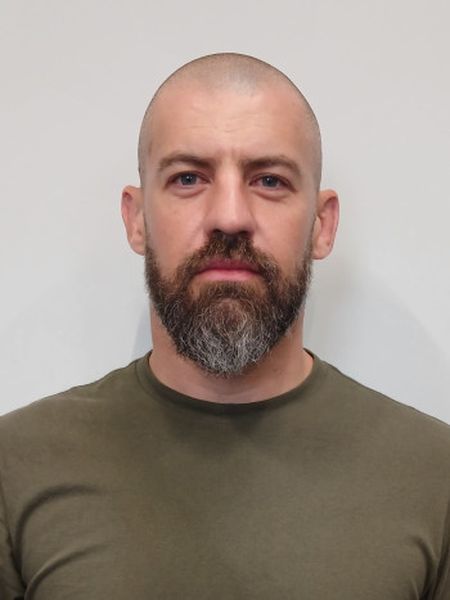
 After a decade in the SA Navy and five years defusing IEDs in the deserts of the Middle East, RJ Malan turned real life events into a fictional account of his exploits abroad. From dodgy border crossings to losing friends, he hopes the novel sheds light on the ongoing conflict and raise funds to help those struggling with trauma.
(Photo: Supplied / RJ Malan)
After a decade in the SA Navy and five years defusing IEDs in the deserts of the Middle East, RJ Malan turned real life events into a fictional account of his exploits abroad. From dodgy border crossings to losing friends, he hopes the novel sheds light on the ongoing conflict and raise funds to help those struggling with trauma.
(Photo: Supplied / RJ Malan) Taking a sip of his morning coffee, RJ Malan stares in front of him, deep in thought as he recounts some of his experiences over the five years he spent abroad.
Not all his memories are fond ones, because five years in the deserts of the Middle East, defusing improvised explosive devices (IEDs) in countries where you are not always welcomed with open arms, can leave a man with some emotional scars.
But between navigating physical and cultural minefields – either of which could cost you your life – and hopping across borders without passports, he managed to pen his experiences in his journal.
After returning to home soil in South Africa, those notes have evolved into a book that Malan hopes will shed some light on the dangers of working in an Explosive Ordinance Disposal Unit and the plight of the vulnerable families and communities living in countries torn apart by continuous conflict.
It is important to note that RJ Malan is his pen name – a mix of his real name and characters he met along the way – to protect the identities of his family, friends and colleagues, some of whom are still running operations in Iraq and its neighbouring countries.
Military service
Malan, 36, was born in Nelson Mandela Bay and grew up in Kariega. He attended the Technical High School Daniel Pienaar and after matriculating in 2007, spent a year working in the construction industry before successfully applying to join the South African Navy.
“Like most boys my age, I grew up watching action movies and dreaming about doing cool and exciting things. Joining the military sounded like a dream job, and while my time in the navy was a great experience, it wasn’t as exciting as I had built it up in my mind,” Malan said.
From 2009, he was deployed at the Saldanha, Wingfield and Simon’s Town naval bases, where he trained and worked as an engine room attendant.
In 2012, he applied for placement in De Aar, where he joined the SANDF Ammunition Corps and was trained to become an ammunition fitter.
“I was young and naive and thought this would finally be my chance to blow sh*t up!” Malan laughed.
“But being a so-called ‘peace-time soldier’ involved a lot of training, but very little real action. We learnt everything about explosives, and we knew how bombs worked back to front. I knew how to make a broken one work, and I learned how to deactivate a live one. But I felt like my knowledge and skills were going to waste.”
Bomb disposal
In 2018, a friend put him in contact with a humanitarian organisation that specialised in bomb disposal in former conflict zones, and a month after resigning from active military duty in South Africa, Malan was on a plane bound for Iraq.
Soon after his arrival, he began his journal, and so the seeds of Across the Sands were planted, and every experience he had informed the characters and plot of his book.
While he was an expert in explosive devices, he learnt that navigating Middle Eastern religions, cultures and etiquette was potentially just as dangerous as the IEDs he encountered.
“Everything from eye contact to where your feet face when you are sitting or talking to someone can land you in hot water. I quickly learnt to sit with my legs crossed and to accept every cup of tea I was offered, even if it was my tenth one of the day.”
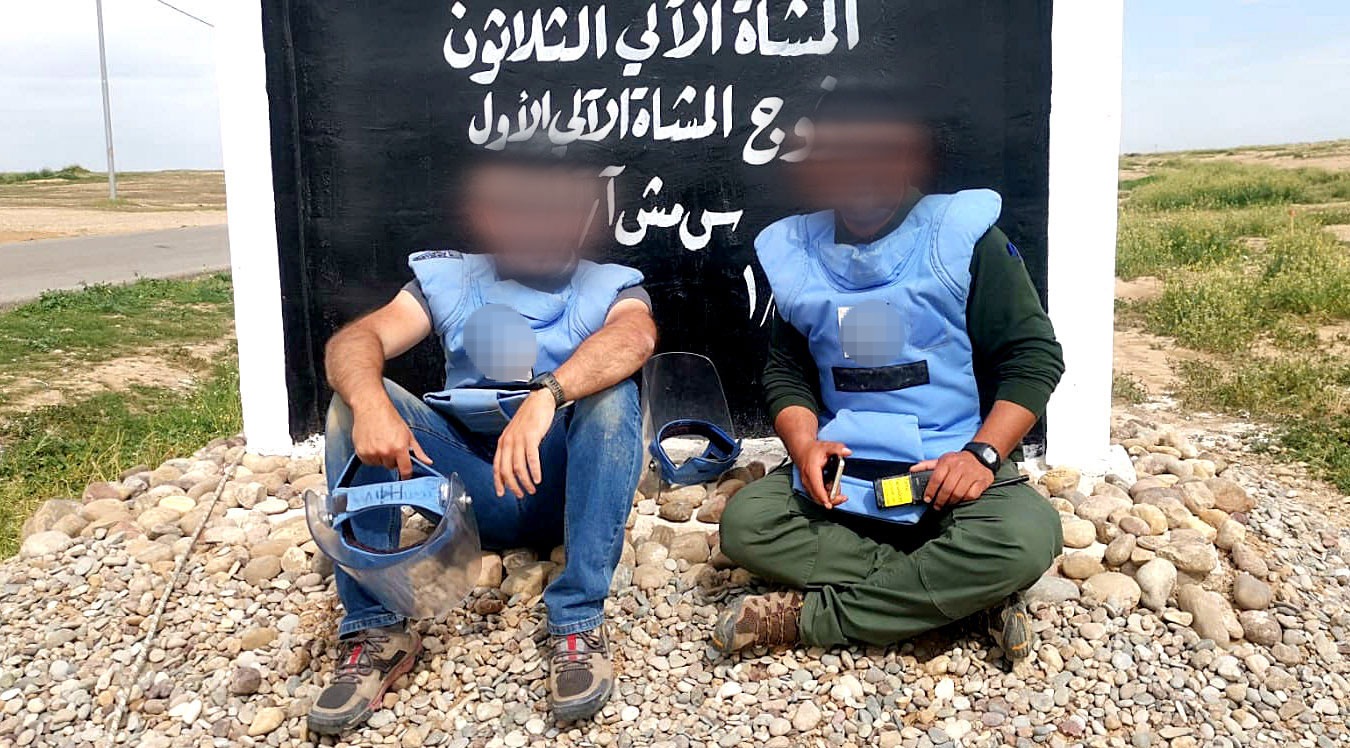
/file/attachments/orphans/AcrosstheSands2_840077_710024.jpg "Despite the vast number of IEDs Malan and his team disposed of, many organisations still frequent the Middle East to continue bomb disposal operations. (Photo: Supplied / RJ Malan)")
He recounted dangerous missions, where organisations like his were not welcome, and they crossed borders with nothing more than a letter and no stamped passport, knowing if the wrong people asked the right questions, he would never see home again.
“I vividly remember an interaction with a family where three children under the age of 13 lived with their grandparents. Their parents were killed by the military because they were mistaken for Isis agents. Who should these kids blame for their parents’ deaths? The people indirectly to blame, or the ones who actually pulled the trigger?”
In 2020, Malan was granted leave and was in South Africa when Covid-19 travel restrictions were implemented. What was supposed to be a three-month visit turned into seven months, leaving a close friend and colleague of his, from Austria, in the Middle East for an extended period, as he could not travel home.
Tragedy
“I remember calling him and laughing as he told me to stop being lazy and come back to work. Two days later, an operation went south and he was killed by an IED,” Malan said.
He underwent extensive therapy to process losing his friend, as well as other emotional trauma that the loss brought to the surface.
“Writing the book was another way for me to process a lot of what I went through in my time abroad.
“It also gave me the opportunity to reflect on a lot of the good things that I experienced. The positive side of encountering other cultures, the friends I made and the gratitude of the people who wanted us there and appreciated the work we were doing.
“It made me realise how much I have to be thankful for and how little I truly have to complain about. I saw 10-year-olds learning to weld because they had to help rebuild their homes and schools. And they did it with smiles on their faces.”
/file/attachments/orphans/Across-the-Sands-3_335514.jpg "Across the Sands, published in November, is the first in a series of novels RJ Malan hopes to publish, each volume dealing with another location and the encouraging, as well as traumatic, experiences of bomb disposal units. (Photo: Supplied / RJ Malan)")
Malan returned to South Africa in 2024 and lives in Cape Town, where he landed a data analysis job for an IT company.
Across the Sands was published online in November, and Malan is already working on the next volume of what he hopes will be a trilogy.
Malan intends to donate a portion of the book’s profits to charity, and he is in the process of identifying an organisation specifically aimed at assisting those struggling with mental health.
“Having gone through that trauma and coming out the other side has given me an appreciation [of] how important it is to seek professional help. I want my book not to draw attention to the physical trauma suffered in the Middle East, but to shine a light on the dark side of mental trauma as well.
“And if I can help one person come out the other side, then my time in the desert would have been worth it,” Malan said. DM
Comments
Scroll down to load comments...