




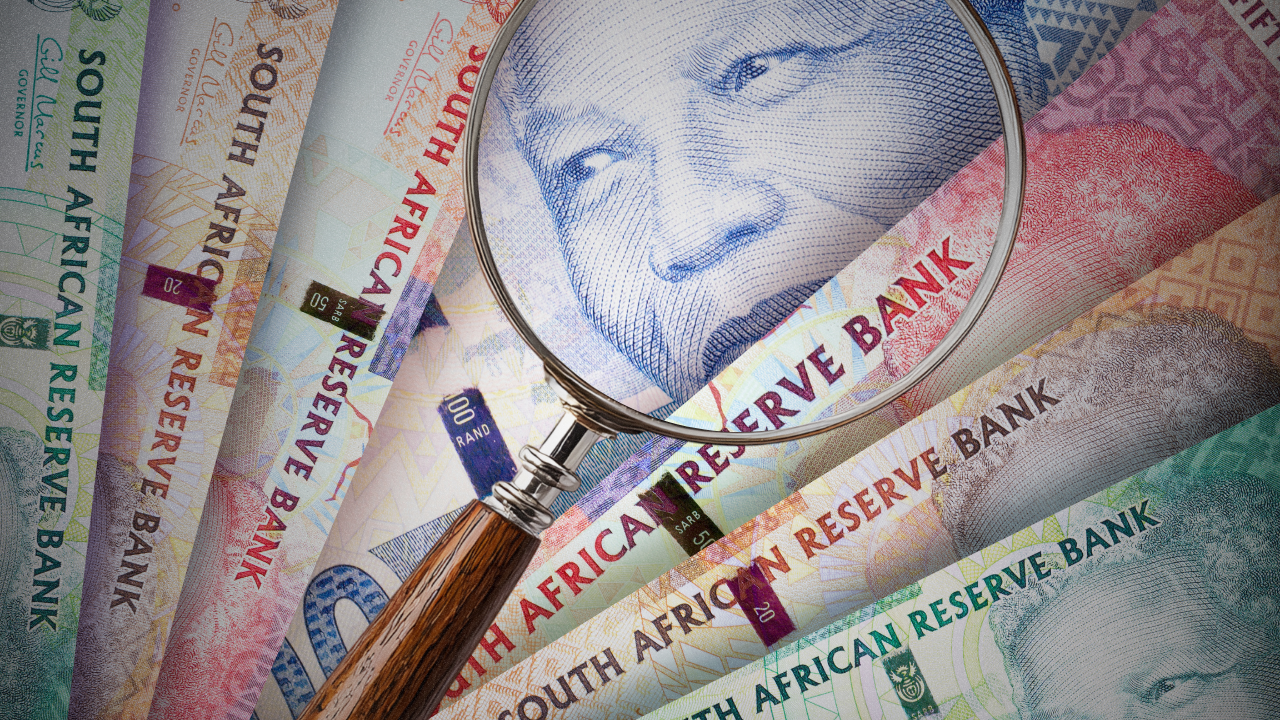
 South Africa’s anti-corruption reform project is progressing too slowly, and President Cyril Ramaphosa and his Cabinet must move swiftly to put the proposed Office of Public Integrity into operation. (Photo: ISS Today)
 /file/dailymaverick/wp-content/uploads/2025/10/label-Op-Ed.jpg)
Long-established norms of human rights, diversity and democracy are under attack worldwide. Conflict, fascism and disinformation are on the rise. Corruption is a feature of authoritarian governments, but can also be an important leverage point for change.
Surveys conducted by the World Economic Forum, United Nations (UN) Office on Drugs and Crime, and Accountability Lab between 2015 and 2025 show that corruption frequently tops the list of concerns among young people. A recent survey among youth in Africa reveals similar statistics – 80% think corruption is the most important problem Africa faces.
“The recent Gen Z uprisings in Nepal, Tanzania, Kenya, Bangladesh and Madagascar are about both the rejection of corrupt leaders and corrupted political systems,” said Associate Professor at Stellenbosch University, Firoz Khan.
Against this backdrop, South Africa’s anti-corruption reform project is progressing too slowly. It has taken 10 years to generate comprehensive proposals to address graft, which include the establishment of a new anti-corruption agency – the Office of Public Integrity (OPI). President Cyril Ramaphosa and his Cabinet must move swiftly to put the proposed system into operation.
The planning process thus far has been thorough. The Office of Public Integrity was designed through a consultative process in which civil society organisations played a central role. The National Anti-Corruption Strategy 2020-2030 was drafted by a reference group comprising government officials and key civil society organisations.
In 2022 Ramaphosa appointed the National Anti-Corruption Advisory Council to guide his government on how to implement the strategy. The council comprised representatives from academia, anti-corruption non-governmental organisations, trade unions, the legal professions and traditional leaders. It carried out extensive research into models for anti-corruption institutions from across Africa, Asia and Europe.
Final report
The council’s final report, published on 28 August 2025, recommended the establishment of an independent Office of Public Integrity, insulated in Chapter 9 of the constitution, similar to the Office of the Public Protector.
Chapter 9 institutions cannot be abolished by a simple majority vote in Parliament, unlike those created by a simple statute, such as the former Directorate of Special Operations. This anti-corruption directorate, known as the Scorpions, was closed down in 2009 following an African National Congress resolution, which aimed to prevent it from investigating senior politicians.
Prevention is key to the Office of Public Integrity’s mandate. South Africa has signed and ratified the UN Convention Against Corruption – Article 6 of which provides that member states should have an agency dedicated to preventing corruption. This is a gap in South Africa’s anti-corruption institutional matrix that must be fixed urgently.
The advisory council recommended that the Office of Public Integrity not replace the institutions currently investigating and prosecuting criminal cases of corruption. The National Prosecuting Authority’s (NPA) Investigating Directorate Against Corruption prosecutes high-level corruption, and the Directorate for Priority Crime Investigation (Hawks) in the South African Police Service is mandated to investigate corruption cases.
It recommended that these agencies be strengthened, with the NPA becoming functionally and financially independent from the Department of Justice and Constitutional Development.
The council said establishing the Office of Public Integrity was urgent. It recognised the significant achievements of the Special Investigating Unit (SIU), South Africa’s most successful anti-corruption agency. It recommended that the Office of Public Integrity absorb the SIU’s current mandate, functions and institution, and immediately use its offices, resources and staff to move forward. Essentially, the SIU should “grow” into the Office of Public Integrity, with an expanded mandate to encompass corruption prevention.
The SIU is well positioned for a seamless transition to the Office of Public Integrity. It already performs the core functions required: forensic investigations, asset recovery through civil litigation and making systemic recommendations for reform. It also conducts prevention and advisory initiatives and targeted awareness campaigns. It develops prevention plans and uses data analytics as a proactive preventive tool.
Importantly, the SIU operates across the full accountability chain by combining forensic investigations, civil recovery (via the SIU Special Tribunal), referrals for criminal prosecution (to the NPA), referrals of misconduct for disciplinary action (to employers), and systemic reform recommendations.
With the advisory council having fulfilled its brief, the Department of Justice and Constitutional Development is responsible for the next steps. It is the department responsible for drafting legislation and overseeing law enforcement agencies.
Vital initiative
With the effort now firmly within the executive branch of the government, civil society has lost its seat at the table, and must trust that this vital initiative is taken forward with urgency.
Thus far, Parliament is playing a robust oversight role. On 14 May, the advisory council presented its Office of Public Integrity recommendations to the Parliamentary Portfolio Committee on Justice and Constitutional Development. At the time, Committee Chairperson Xola Nqola said the committee would monitor whether the proposal got enough support from the executive to kick-start implementation.
So far, developments are encouraging. The Department of Justice and Constitutional Development told ISS Today: “Processes are under way to engage other government departments and constitutional institutions to also gather their views on the [advisory council] recommendations, in preparation for its tabling in Cabinet, as directed by President Ramaphosa in his February 2025 State of the Nation Address.
“The [department] regards the [council report] recommendations as vital tools in combatting corruption and we reaffirm our unwavering dedication to rule out corruption in our country.”
Given South Africa’s resource and capability constraints, the establishment of yet another government agency could be met with scepticism by citizens. But the council’s reasoning is sound, and its focus on building from what already works well is strategic and pragmatic. Importantly, it recognises that the country cannot afford to go without a long-term plan to address corruption.
South Africans should look forward to hearing that the proposal for a new anti-corruption agency is being actioned. Given recent public uprisings against corruption in other countries, the Government of National Unity must deliver concrete actions to demonstrate its commitment to combatting corruption and building integrity. DM
Colette Ashton is a Research Consultant at the Institute for Security Studies (ISS)
First published by ISS Today.