



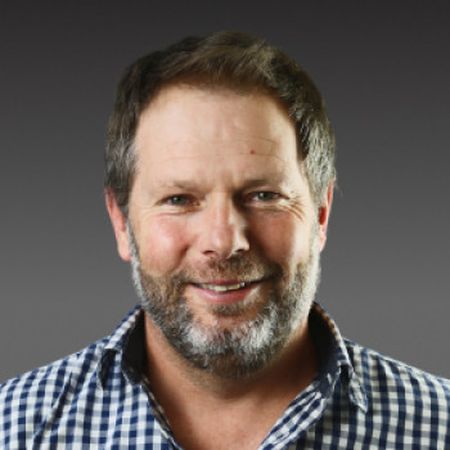
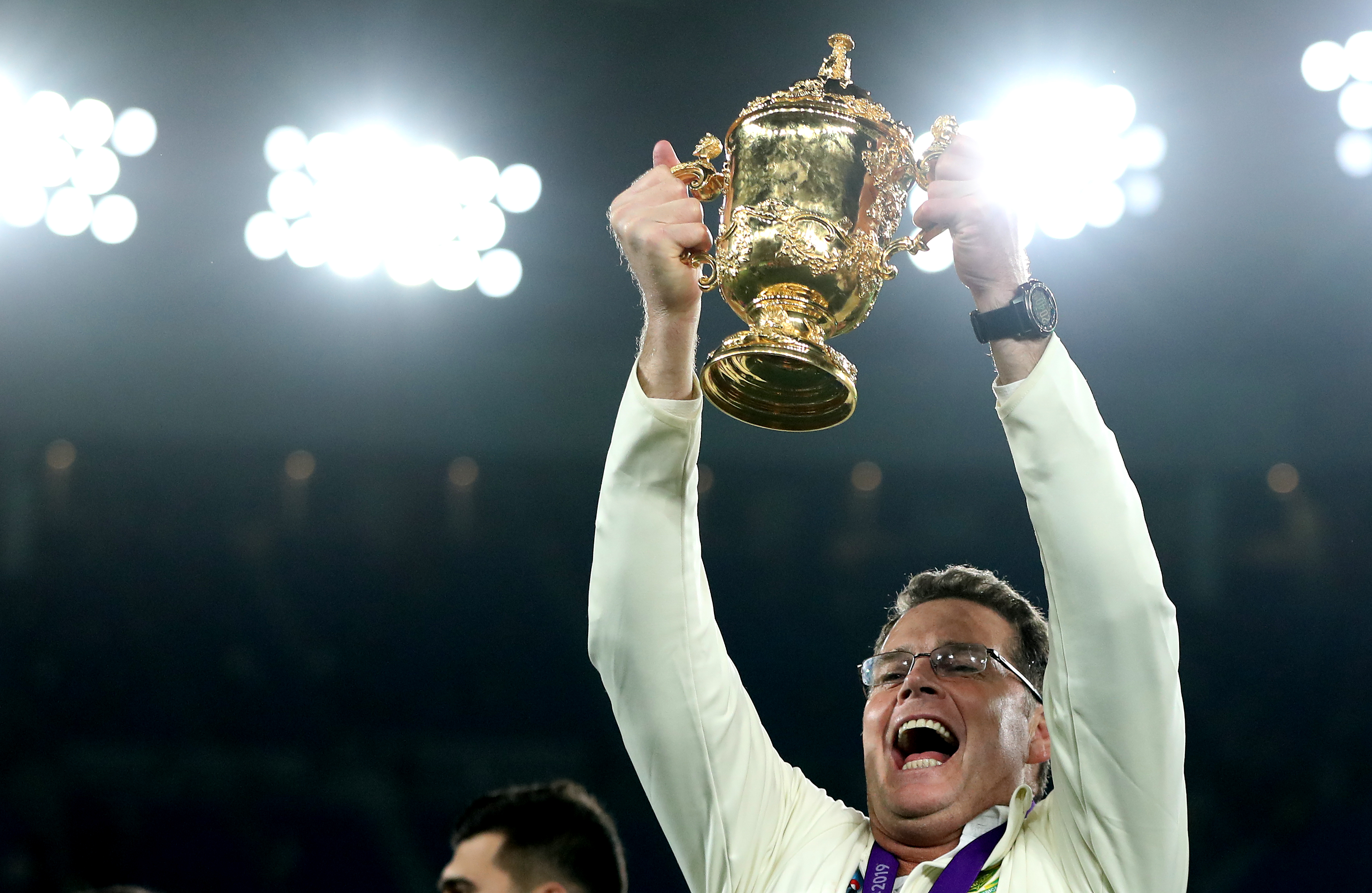
 Rassie Erasmus has extended his contract to 2031. The Boks won back-to-back World Cups in 2019 and 2023 under Erasmus's leadership. (Photo: David Rogers/Getty Images)
 On a recent Irish rugby podcast, the host mused about Springbok coach Rassie Erasmus’s future. Exasperatedly, he asked: “When is the nightmare going to end for us?”
The answer came today – no sooner than 2031, I’m happy to report, dear Irish colleague.
Erasmus, 53, has extended his contract for another six years, taking the Boks through to Rugby World Cup 2031 in the US.
/file/attachments/orphans/TL_2489600_255499.jpg "Rassie Erasmus will stay on as Bok head coach while assistant coaches such as Mzwandile Stick (right) are still negotiating their contracts. (Photo: Gareth Everett / Gallo Images)")
Erasmus was de facto head coach when the Boks won RWC 2019, and he was in the role of director of rugby in 2023 when they retained the Webb Ellis Cup, with Jacques Nienaber in the head coaching role.
With Nienaber and Erasmus though, the roles were flexible, as they were a formidable double act that earned the collective noun “Rasnaber”.
But after the 2023 triumph in Paris, when the Boks won the final 12-11 against the All Blacks, Nienaber moved on.
Nienaber took up a coaching role at Irish club Leinster, and Erasmus formally took on the title of “head coach” for the first time. In the 2018-19 cycle Erasmus acted as head coach, but was officially the South Africa Rugby Union’s (Saru) director of rugby.
Erasmus relinquished the director of rugby title in 2024 – that job is now done by Dave Wessels – and has poured all his focus into the Springbok coaching job.
Erasmus was able to be both director and coach with Nienaber a part of the coaching staff, as the pair had such a great understanding and working relationship.
But with Nienaber’s exit, Erasmus narrowed his focus into Saru’s flagship team, which he will now continue for another six years.
/file/attachments/orphans/22463949301_558590.jpg "Rassie Erasmus looks on during when the Boks met France at Stade de France on 8 November 2025 in Saint-Denis. (Photo: Jean Catuffe / Getty Images)")
RWC focus
While the Boks have grown into the world’s dominant Test team, only losing four of their 27 Tests since victory at RWC 2023, they have also continued to evolve.
In 2024, Erasmus used 50 players in 13 Tests. In 2025 he used 49 players in 14 Tests (50 players in 15 games, including the Barbarians clash).
In both seasons the Boks won the Rugby Championship, the Freedom Cup and the Mandela Plate as well as winning all eight matches on the two northern hemisphere tours. The Boks have also finished the last three seasons as the number one-ranked team in the world.
“This was a quick and easy conversation to reach agreement,” Erasmus said. “I have always said that I would find it hard to coach any other international team, and I’m very happy to continue as long as the South African public wants me.
“I’d like to thank SA Rugby and the franchises for the support and backing they have given me and the Springboks over the past few years. It hasn’t always been easy but we’re improving.
“Although this is a long-term agreement we’re not looking beyond a really tough 2026 schedule right now.”
The team’s style of rugby is showing a positive attacking evolution under Tony Brown, as a record 81 tries in 2025 signalled.
/file/attachments/2985/Springboks_Test_matches_games_played_and_wins_per_year_bars_with_win_percentage_line_665193_cfde8fe31e007dd9153258c6a7c9092b.png "Bok Test performances since Rassie Erasmus returned in 2018. (Graphic: Craig Ray).")
Erasmus continues to be an innovative leader while bringing the best out of the squad. He has surrounded himself with a strong coaching group, who are all still in the process of renegotiating their own contracts to stay on or otherwise.
While there is no indication that any coaches intend moving on, Erasmus is the lynchpin. Since 2018, good coaches such as Nienaber, Matt Proudfoot and Aled Walters have moved on. Erasmus has been the constant.
“This decision reflects not only Rassie’s remarkable track record of success, but also the enduring impact he has made in shaping the identity of our game,” said Saru president Mark Alexander.
“Under his leadership, the Springboks have achieved historic milestones, consistently setting the standard for performance on the global stage.
“He has refined a style of play that is uniquely suited to our strengths – combining physicality, tactical intelligence and resilience – and in doing so, has ensured that South African rugby remains both distinctive and formidable.
“Beyond results, his tenure has been defined by vision and consistency. He has instilled a culture of accountability, unity and belief that resonates across our players, management, and supporters.
“His ability to adapt, innovate and inspire has positioned South African Rugby as a benchmark for others, while safeguarding the traditions and values that make our game a source of national pride.”
New challenge
As Erasmus alluded to, 2026 is a benchmark year. While he would have mapped out a long-term vision and earmarked young players to feature in 2031 already, the immediate focus is on 2026, which sees four Tests against the All Blacks and the new Nations Championship.
“We’ve got two massive competitions to play next year,” Erasmus said. “I don’t think we’ll take any game lightly, but we will be willing to take a few shots and maybe an uppercut and say ‘okay, guys, we roll the dice here’.”
“You don’t want to be punch drunk next year in November, December, and you want to make sure you have players who you can pick for the next year (2027) who can win the World Cup.
“Would you rather, in a year before the World Cup, lift the Nations Cup trophy, or be ready for the World Cup? So that’s a difficult thing to handle.
“The World Cup is only 18 months out – we have to start focusing on it now.”
/file/attachments/orphans/2235172162_570559.jpg "Bok wing Ethan Hooker is tackled by All Blacks centre Billy Proctor during The Rugby Championship match in Wellington. The Boks and All Blacks meet four times in 2026. (Photo: Hagen Hopkins/Getty Images)")
And speaking of the World Cup, the Boks and All Blacks are set to collide at the quarterfinal stage in Australia in 2027.
Before that though, the old rivals will meet six times in the next 20 months.
“We will be really used to each other, and you will have three (World Cup) pool matches to also assess them,” Erasmus said of the prospect of facing the All Blacks at the quarterfinal stage of RWC 2027.
“World rankings are not important next year, and we would rather be ready for the World Cup.
“The Greatest Rivalry (series against the All Blacks) is massive for us.”
The stage is set and Erasmus is locked in. The nightmare for some, is set to continue. DM