




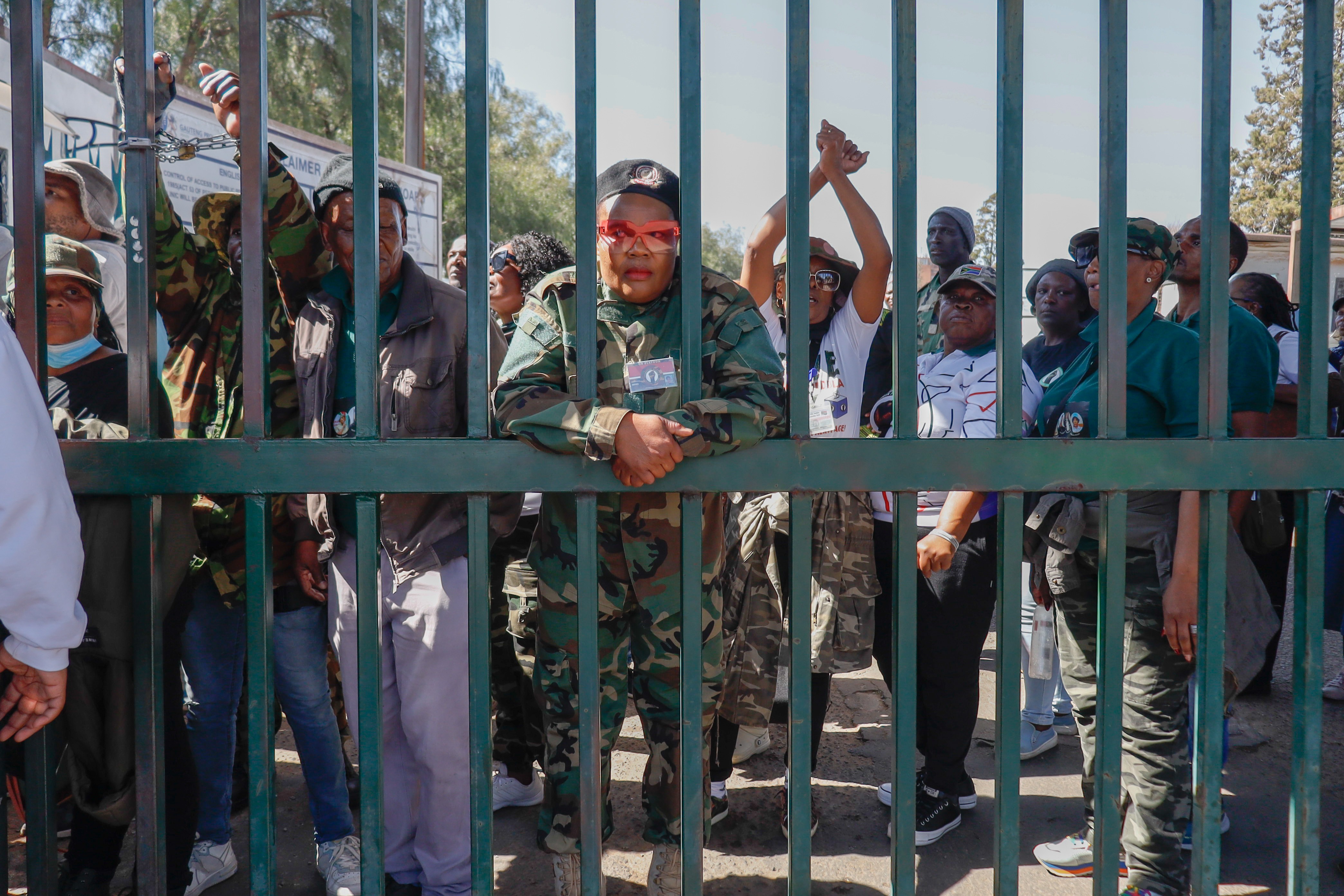
 Operation Dudula pickets outside the Lilian Ngoyi Clinic in Diepkloof, Soweto, on 11 August after three of its members were arrested for allegedly storming the clinic’s maternity ward, demanding ID documents from patients to verify their nationalities. (Photo: Sharon Seretlom / Gallo Images)
 Less than a month after the Gauteng Division of the High Court in Johannesburg barred Operation Dudula from harassing and intimidating migrants outside hospitals and schools, the same court has issued another judgment in a separate case, this time directed at the government and the SA Police Service (SAPS).
In a scathing judgment on Thursday, 4 December, Judge Stuart Wilson ordered multiple spheres of government and senior police officials to take immediate action to end the obstruction of access to public healthcare facilities in the province.
‘This cannot happen under our watch’
The case was brought by the Treatment Action Campaign (TAC), Doctors Without Borders, and Kopanang Africa Against Xenophobia, represented by SECTION27, in September against 15 government respondents, including provincial health authorities, the SA Police Service, district officials and clinic management structures. The application argued that these state bodies had failed to intervene when anti-migrant groups, including Operation Dudula, harassed migrants, pregnant women, children and people living with HIV, at public clinics.
TAC’s Gauteng provincial chairperson, Monwabisi Mbasa, said the final trigger was the escalation of violence and obstruction against groups already facing multiple layers of vulnerability.
“It was based on the persistence of that vigilantism now beginning to even attack pregnant and lactating women. We also saw this now going to elderly people as well, over and above the fact that, in the main, people living with HIV were being targeted. That triggered our consciousness to say: This cannot happen under our watch,” he explained.
/file/attachments/orphans/ED_564649_347366.jpg "Operation Dudula members check the passports and IDs of people entering the Itereleng Clinic in Soweto on 16 July. (Photo: Fani Mahuntsi / Gallo Images)")
Despite the recent court judgment in Kopanong Africa Against Xenophobia and Others v Operation Dudula and Others, which barred the obstruction of healthcare, TAC received reports that these practices had not stopped, although there was no indication whether the continued disruptions were directly linked to Dudula.
Read more: High court bans Dudula from blocking access to hospitals, clinics and schools
Mbasa said TAC’s community-based structures, made up largely of public healthcare users, monitored clinics across Gauteng, and observed that harassment, intimidation and gatekeeping by anti-migrant groups were still occurring at several facilities.
Incidents were recorded at Ivory Park, Tembisa, Diepsloot, Hillbrow Community Health Centre and Mamelodi Community Health Centre, suggesting a widespread and persistent pattern of obstruction.
One of the most concerning hotspots was Soshanguve, where individuals aligned with anti-migrant actions reportedly moved beyond obstructing access at clinic gates and entered clinic premises. In some cases, they monitored waiting areas and questioned patients about their eligibility for healthcare services. There were even accounts of them entering consultation rooms and disrupting patient–provider interactions.
The TAC has instructed its regional structures to compile detailed reports specifying the nature and location of these incidents. These reports aim to map precisely which units, such as chronic care sections, emergency rooms or waiting areas, are being affected.
Read more: How Dudula’s anti-migrant actions are reaching global attention in refugee applications
Court orders immediate action
In their responding affidavit, the national and provincial health departments argued that they had “outsourced” responsibility for the clinics to the City of Johannesburg through a service-level agreement. The judge rejected this argument outright.
The agreement, he said, did not absolve provincial or national departments of oversight duties. Instead, it required joint coordination, shared planning and co-responsibility between all three spheres of government, particularly where basic access was being obstructed.
The SAPS also came under sharp scrutiny. While the SAPS claimed its role was limited to responding to complaints, Judge Wilson highlighted the police’s constitutional mandate to prevent crime, maintain public order and protect all inhabitants.
He noted that the SAPS had already adopted a national instruction to protect non-nationals accessing health facilities — proof that the police recognised the need for proactive intervention.
The court granted extensive interim relief, directing 15 government respondents to immediately:
- Ensure safe, unhindered access to the Yeoville and Rosettenville clinics;
- Remove vigilantes and any unauthorised persons obstructing entry;
- Deploy trained security personnel at all access points;
- Post notices stating that obstruction of access is unlawful and will result in removal and police reporting;
- Report incidents and collect information needed to identify perpetrators;
- Work collaboratively across departments and law enforcement to implement these measures; and
- File a compliance report within 10 court days.
Failure to act, Judge Wilson made clear, would be inconsistent with constitutional obligations and would violate the rights of some of the most vulnerable people living in South Africa.
The court further ordered the clinics to post notices stating:
“No unauthorised person may obstruct or hinder physical access to this clinic or the provision of healthcare services within the clinic. Any person violating this instruction will be removed from the premises and its surroundings and reported to the police.”
/file/attachments/orphans/ED_568392_241137.jpg "Operation Dudula members picket outside Lilian Ngoyi Clinic in Diepkloof, Soweto, on 11 August after the arrest of three members who allegedly stormed the maternity ward at the clinic. (Photo: Sharon Seretlo / Gallo Images)")
“The weakness of the state’s response … is of grave concern. It is, in my view, a great pity that litigation was required to address what has happened at the clinics in this case,” he wrote.
Daily Maverick asked the Gauteng Department of Health (GDoH), City of Johannesburg (CoJ) and SAPS for comment on their interim plans to comply with the order.
The GDoH said it would not be able to meet the deadline. This article will be updated when a response is received.
The SAPS acknowledged receipt of the request for comment.
CoJ spokesperson Nthatisi Modingoane said, “It has never happened before that we [have been] asked to comment on a [judgment] we have not received, read and discussed with our legal counsel.”
Read more: Home Affairs and police deny collusion with Operation Dudula as court battle continues
Landmark moment for migrant health access
The judgment comes after a monthslong campaign by Dudula and other anti-migrant groups, which saw many migrants unlawfully, and often forcefully, blocked from accessing clinics and hospitals in Gauteng and KwaZulu-Natal. Many of the migrants were pregnant or suffering from chronic illnesses such as HIV or TB, as Daily Maverick has extensively reported over the last couple of months.
The campaign of what many have termed “medical xenophobia” continued largely unabated, with statements of condemnation but little practical intervention from the Department of Health and the SAPS, despite the right to access vital services for all, regardless of nationality, being enshrined in Section27 of the Constitution.
For the organisations that brought the application, the judgment was a crucial victory, which establishes clear accountability for government departments that have long deflected responsibility for xenophobia-driven barriers in the public health system.
In a collective statement, the organisations said:
“This judgment marks an important affirmation that healthcare facilities are not battlegrounds for discrimination but spaces where dignity, equality and life itself must be protected. With the court’s order now in place, the state must act swiftly to restore access and uphold its constitutional duties.”
/file/attachments/orphans/ED_564639_793397.jpg "Operation Dudula members check the passports and IDS of people entering a clinic in Braamfischerville, Soweto, on 16 July. (Photo: Fani Mahuntsi / Gallo Images)")
How civil society plans to ensure government compliance
Because the respondents in the case are state departments and officials, the TAC and its partners’ next steps are focused on ensuring the government implements the court order.
Mbasa outlines a three-part strategy:
1. Pressure the Gauteng premier to act
As a member of the Gauteng Aids Council, Mabasa said he had been raising the alarm since at least July 2023. Now that the high court has confirmed the government’s obligations, the TAC intends to push Premier Panyaza Lesufi to deploy authorities to enforce compliance.
2. Push the MEC for health to empower clinic managers
The TAC wants the Gauteng Health MEC to ensure that clinic managers, who are accounting officers under the law, act decisively.
3. Seek further legal remedies
After reviewing their latest evidence with senior counsel, the TAC expects additional legal strategies to emerge.
“We will receive a much more structured legal opinion to say: when things are like this, what should be the next course of action? All these processes will run concurrently,” said Mbasa.
He said that as anti-migrant groups continued to target vulnerable people and government structures struggled or refused to intervene, the TAC’s legal victory marked only the beginning of a longer fight for accountability and safe, equitable healthcare access. DM