




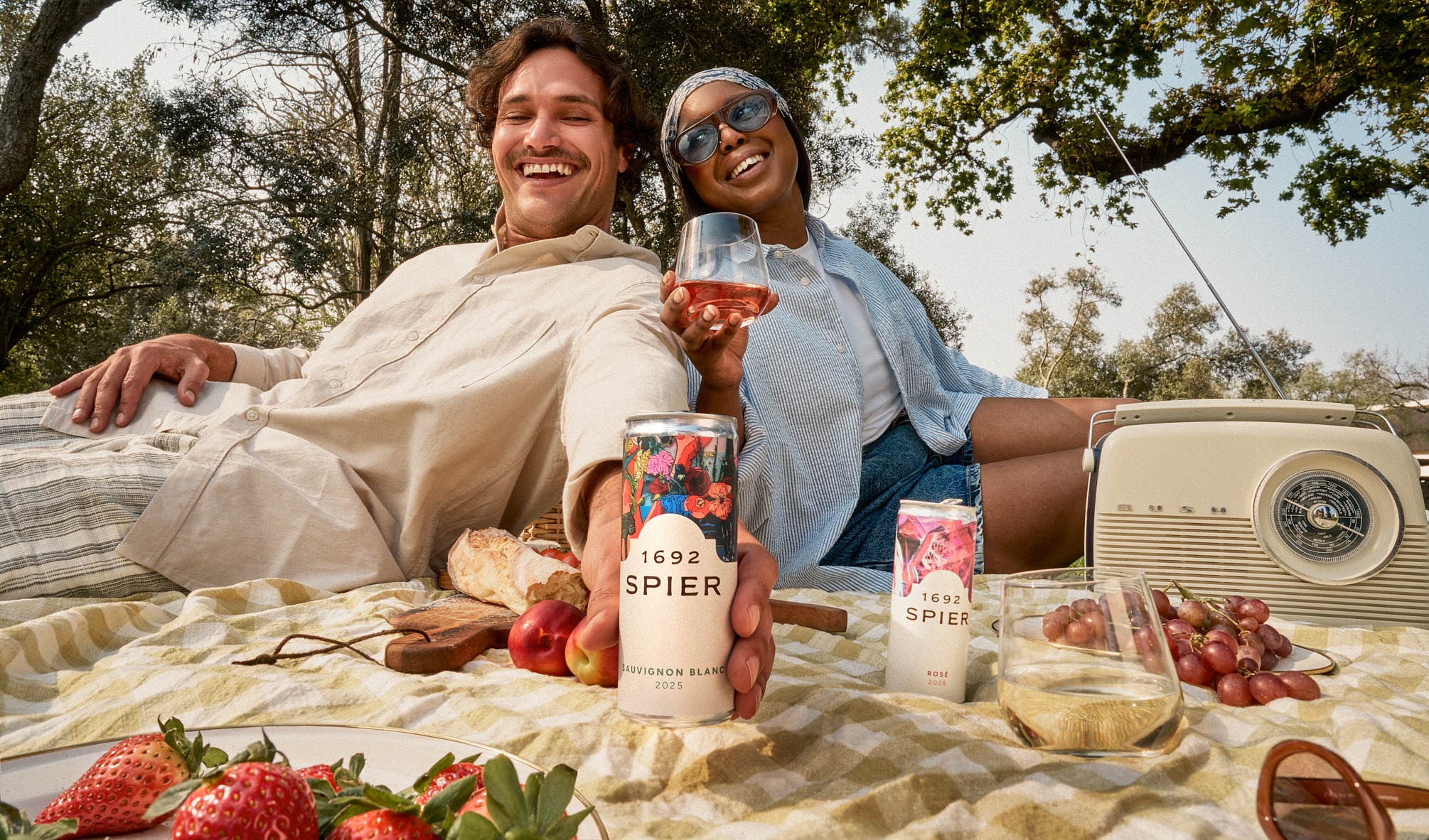
 A glimpse into the revolution of wine in a can: convenience and style in every sip.
 And while some traditionalists may still raise an eyebrow, many wine lovers are raising a can. Why? Because modern wine drinkers want choice and enjoy great wine without ceremony, wherever life takes them.
It’s no surprise, then, that the global canned wine market was estimated at USD 112.9 million in 2024 and is projected to reach USD 211.5 million by 2030 at a growth rate of over 11% annually. The steadily increasing demand for portable, convenient and single-serve wine is driving this momentum worldwide.
From rooftop sundowners to music festivals and spontaneous picnics, the way people socialise has changed. Consumers are seeking quality wine that fits into more flexible, outdoor lifestyles. Cans are lightweight, chill quickly and eliminate breakages or the need for corkscrews, making them ideal for moments that don’t fit the traditional wine mould.
Many consumers are also looking for beverages that align with healthier, more mindful lifestyles and the single-serving nature of canned wine helps control consumption and reduce waste.
/file/attachments/2985/SpierCannedWines011_361509_89a4f6cb7847f48a87923e2f24c3b4c3.jpg "Sauvignon Blanc 2025, Rosé 2025, Merlot 2024.")
Despite its clear advantages of convenience and portability, canned wine still faces barriers to acceptance. This reluctance is particularly evident in traditional wine markets such as Europe, where wine consumption is deeply tied to cultural rituals and glass bottles remain synonymous with prestige and quality.
Research suggests that beyond packaging, even the act of drinking wine from a can, could influence how a consumer is perceived. In many markets, it’s filtered through cultural norms about class, taste and status. The irony, of course, is that quality is not compromised by format. It’s merely reframed for modern life.
Much like the early scepticism around screwcaps, canned wines are gradually overcoming stigma. As consumers grow more open-minded, they are discovering that convenience and craft are not mutually exclusive.
Perhaps the answer lies in not judging canned wines against bottled wine, but rather viewing them as an innovative extension of how we enjoy wine.
As one of South Africa’s most forward-thinking wine farms, Spier has long embraced the balance between tradition and innovation. Its newly rebranded canned wine collection reflects a bold evolution in both form and philosophy, offering premium, art-led canned wine that makes great wine more accessible, expressive and culturally resonant.
Each can feature original artwork by a South African artist, continuing Spier’s decades-long commitment to supporting creativity through the Spier Arts Trust. Art has always been woven into the farm’s DNA, from its historic collection on the estate to its partnerships with emerging local talent. Now, that very art travels with you: to the beach, a picnic or your next outdoor adventure.
The canned range each pair with artwork that captures a sense of place, imagination and South African identity.
/file/attachments/2985/SpierCannedWines03_707418_e968ddd40c5d0383327fceccd11af445.jpg "Spier canned wines lineup in art-designed cans.")
Sauvignon Blanc 2025 - “Be Still Life” by Norman O’Flynn
Norman O’Flynn’s Be Still Life documents both personal history and cultural commentary, combining sculptures from throughout his career with contemporary still-life interpretation. His bold pop-art style, filled with recognisable imagery from religion, pop culture, and celebrity, reflects how information shapes our world — just as each vintage captures its unique moment in time.
Rosé 2025 — “Our Skin Contains a Universe” by Emma C. Aspeling
In Our Skin Contains a Universe, Emma Aspeling explores the connection between our bodies and the cosmos, a meditation on transformation and energy. Her mixed-media work celebrates the same harmony found in winemaking: when soil, climate, and craftsmanship align.
Merlot 2024 — “Zig Zag” by Audrey Anderson
Audrey Anderson’s Zig Zag captures the soul of the Little Karoo, a landscape that shifts from brown to vivid hues under closer inspection. Created during her time in Calitzdorp, the work mirrors how time and attention reveal the layered complexity of both art and wine.
Beyond their visual appeal, the cans reflect a philosophy of inclusivity where art and wine are shared pleasures rather than elite pursuits. Wine in a can is not about changing what is inside the glass but rather about changing how people can enjoy it. Whether you are at a concert, glamping or at home, the wine remains crafted with the same care and attention as every other Spier wine range.
Whether it’s in a bottle or a can, what truly matters is the experience it invites, one of connection, curiosity and the joy of sharing good wine. DM