




 Cruise-CoP20-trade collapse
 Southern Africa’s conservation story – the one the region has been selling internationally for years – finally met a hard wall at the 20th CITES Conference of the Parties in Samarkand, Uzbekistan. The collapse of ivory, rhino horn and giraffe trade proposals at CITES CoP20 was not a surprise to most observers in the room. What was surprising is how thoroughly the region’s long-standing justifications fell apart under scrutiny.
These weren’t strategic setbacks. They were systemic failures, failures of argument, failures of credibility and failures of a conservation model that has relied more on rhetoric than ecological reality.
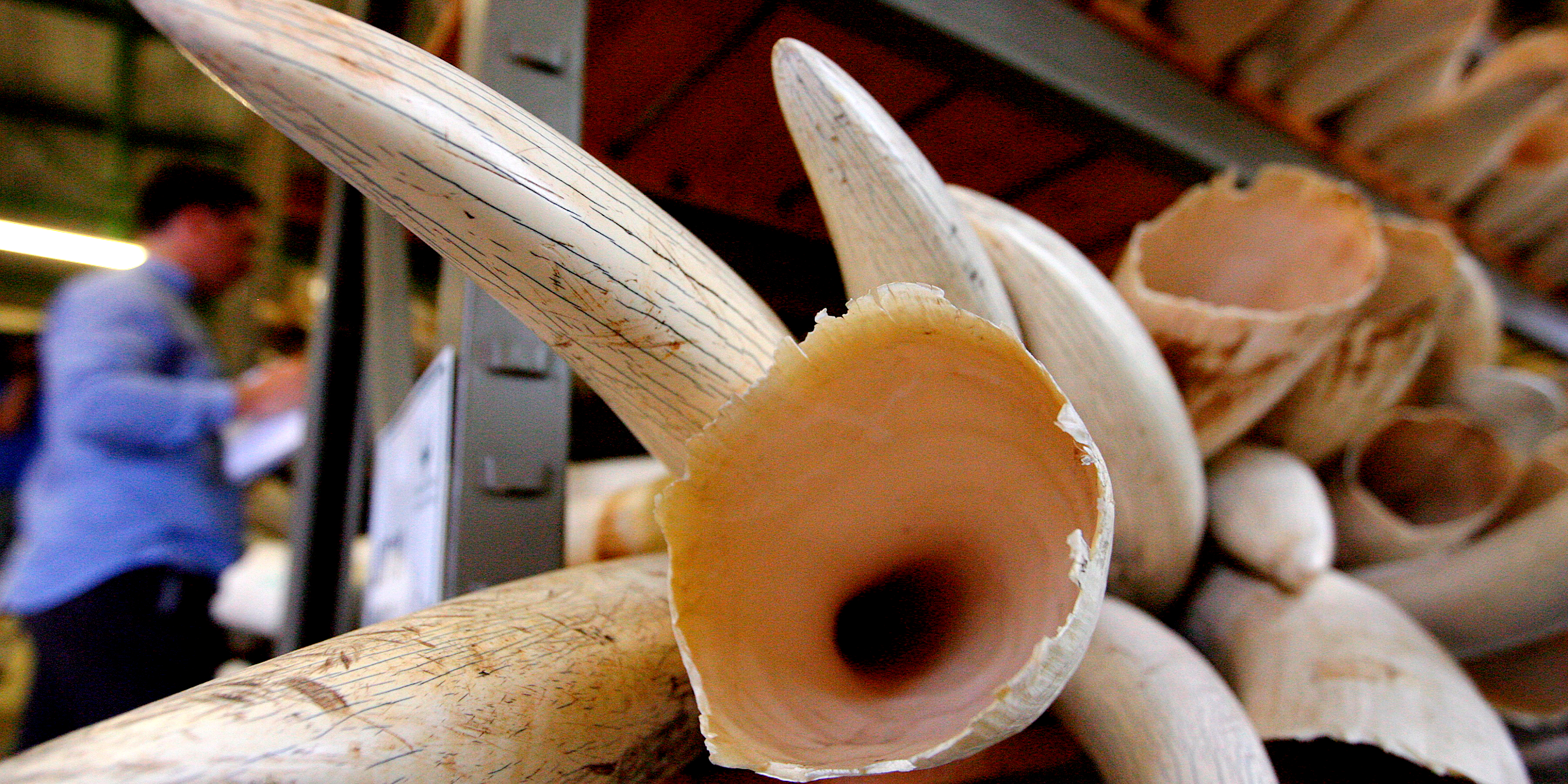
Namibia’s ivory-sale gambit to offload 46 tons of stockpiled ivory on the international market, rejected by almost 79% of parties, was the clearest signal yet that the world no longer buys the storyline of southern African exceptionalism. Its proposals for fewer restrictions on rhino horn – one for white rhinos, another for black rhinos – were dispatched with equal force. And a multicountry attempt to weaken giraffe protections also died quickly.
By the end of the session the question was no longer why the proposals failed. It was: how did southern African governments convince themselves these ideas had a chance at all?
/file/attachments/orphans/65472131_170842.jpg "Seized ivory tusks are seen at the Hong Kong Customs and Excise headquarters in Hong Kong, China, 07 August 2013. This large seizure of wildlife products bound from Nigeria was disguised as timber inside two containers. It is the latest in a recent surge of wildlife seizures that underline Hong Kong's role as a pivotal transhipment point for illicit wildlife products bound from Africa to a booming underground market in mainland China. The growing middle class in China is driving the market for carved ivory trinkets made from elephant tusks, as well as rhino horn which is taken as a so-called aphrodisiac or medicinal tonic. The illegal trade is driving many iconic African animal species to extinction, as well as funding armed terrorist groups in the horn of Africa. (Photo: EPA / ALEX HOFFORD)")
Policy failure #1: populations presented as a conservation triumph when they are not
For years, southern African officials have pointed to apparently “healthy” elephant and rhino populations as proof that their conservation systems justify trade. But this framing collapses under inspection.
Rhino numbers – especially in South Africa – have been maintained largely through coercive, intervention-heavy, quasi-agricultural models that include domestic markets, dehorning, sedation cycles, intensive fencing and 24-hour armed guarding. This is not ecological resilience; it is industrial wildlife management. And it is wildly expensive.
Elephant numbers are similarly misrepresented. Concentrations in some areas are touted as “overpopulation”, even when those same elephants are restricted by fences, pumped waterpoints and spatial constraints that artificially inflate local densities while obscuring regional declines and poaching hotspots.
CITES parties saw through this. Population numbers, detached from ecological context, no longer persuade anyone.
/file/attachments/orphans/966890_326953.jpg "FILES) Picture dated 18 July 2003 shows a customs official examining a black rhino horm illegaly smuggled into Thailand at Bangkok Airport. Delegates to the 13th Convention on International Trade in Endangered Species (CITES) were Monday 04 October 2004 for the first time ever debating the future in trade in the near extinct black rhino horn as Namibia and South Africa attempted to get the animal delisted from its protected status to legalise the trophy trade. The CITES convention runs until 14 October in bangkok, Thailand. (Photo: EPA / VINAI DITHAJOHN)")
Policy failure #2: the ‘sustainable use’ narrative has become detached from ecological reality
Southern Africa’s version of sustainable use has drifted far from the principle it claims to champion.
The model increasingly prioritises economic extraction over ecological function – treating wildlife as an income source, not as part of a larger system. This has led to a series of policy disasters, including:
- South Africa’s catastrophic expansion of the captive lion breeding industry, built under the same “sustainable use” mandate now being used to justify ivory and horn trade;
- The overstatement of elephant “carrying capacity” figures without accounting for high levels of poaching, climate-driven habitat change or fragmented movement pathways; and
- A reliance on stockpiling ivory and horn as if they are stable financial assets, ignoring the political and market realities that make those stockpiles effectively worthless on the legal market.
When these practices are held up as success stories, they reveal more about political messaging than conservation.
/file/attachments/orphans/ED_393754_851691.jpg "Driepoot, the two-year-old giraffe who lost her foot after being caught in a snare in the Tholo Eco Game Reserve at the Carousel on July 29, 2022 in Bela-Bela, South Africa. It is reported that events and campaigns are held to set up a camp for the giraffe and efforts are being taken to make her a prosthesis. (Photo: Gallo Images / Beeld / Deaan Vivier)")
Policy failure #3: misreading global politics — repeatedly, and at high cost
Southern African delegates walked into CoP20 arguing that the world was ready for an opening of the ivory and horn trade. This belief was not based on diplomatic reality but rather on selective reading and policy echo chambers.
The global context has shifted entirely. China – once the primary consumer market – has since closed its ivory trade. Most Asian states, with the exception of Japan, have adopted bans or strict restrictions. African range states outside the south remain traumatised by the poaching waves of the 2000s and early 2010s. There is no appetite for reopening markets. No credible pathway for demand-side control. No political interest in testing trade experiments again.
The numbers at CoP20 reflected this with brutal clarity. Southern Africa misread the room. The region continues to behave as though it is 1997, when they first convinced the world to offload their stockpiles of ivory, not 2025.
/file/attachments/orphans/7855834_451600.jpg "(FILE) - Three-year-old White male Rhino Wasinda stands alone in a boma with a temporary hid covering his open wounds prior to being treated by Saving the Survivors vets at a private game farm in the Free State Province, Clocolan, South Africa, 19 September 2017 (reissued 30 October 2018). China announced on 30 October 2018, that it would partially reverse a 25-year ban on the trade of tiger bones and rhino horns under 'special circumstances' (scientific, medical and cultural use). Animal conservationists see the announcement as an alarming decision. The vast majority of rhino horn poached in South Africa is for the market in China and in the Far East. (Photo: EPA / KIM LUDBROOK)")
Policy failure #4: ignoring – or denying – the legacy of the 2008 ivory sale
The 2008 CITES-approved ivory sale, in which southern African countries were authorised to sell more than 100 tons of ivory to China and Japan, is still seen by many African and Asian nations as a prelude to widespread poaching. Parties who lost tens of thousands of elephants during the years that followed will not risk another legal ivory pathway – no matter how small, how controlled or how isolated.
Southern African governments have tried for years to dismiss this history. They failed again in Samarkand.
/file/attachments/orphans/7787541_574853.jpg "A Malaysian wildlife official stands near confiscated elephant ivory tusks before destroying the ivory, in Port Dickson, Negeri Sembilan, Malaysia, 30 April 2019. Malaysian authorities destroyed 3.92 tons of seized ivory tusks with an estimated value of 3.2 million US dollar as part of the country's progress in combating the ivory trafficking and illegal trade. (Photo: EPA / FAZRY ISMAIL)")
Policy failure #5: a conservation economy built on speculation, not stability
Southern Africa has consistently argued that wildlife must pay for itself. But its preferred mechanism – consumptive commercial trade – has proven incapable of delivering reliable results.
The rhino breeding industry in South Africa is deeply mired in controversy over the domestic rhino horn market. Trophy hunting revenues are concentrated in a few operators rather than dispersed among communities. Ivory sales have been politically dead for more than a decade. And the giraffe proposal exposed how stretched the logic has become – attempting to justify regulatory weakening based on narrow, trade-driven incentives rather than ecological considerations.
Viewed together, these elements do not form a conservation model. They form a market strategy – and a failing one.
A reality check delivered, loudly
The International Fund for Animal Welfare’s statement after the vote captured the sentiment that dominated the room. Africa director James Isiche said the proposals “would have been untraceable, unmanageable and unenforceable” and warned that reopening trade “would have placed rhinos and elephants across Africa and Asia in grave danger”.
This is not an emotional argument. It is a policy one. And it reflects a consensus far broader than the NGO world. CITES parties – mostly African states outside the south – have concluded that southern Africa’s trade agenda is incompatible with global enforcement capacity, global political trust and global market risk.
/file/dailymaverick/wp-content/uploads/2023/01/ED_379762.jpg "A local herd at Addo Elephant National Park near Gqeberha. (Photo: Gallo Images / Lee Warren)")
What this means
Southern Africa now stands at a crossroads. It can continue pushing the same proposals, based on the same assumptions, underwritten by the same narratives of “success” that no longer convinces anyone. It can blame international politics and anti-use ideologies, as it has at previous CoPs. It can insist that the world does not understand its realities, or it can confront the truth: the conservation model southern Africa has spent decades promoting is no longer credible.
The region’s wildlife numbers are heavily manufactured. Its trade arguments are outdated. Its policy logic is disconnected from global political and ecological realities. The world has moved on. Southern Africa has not, and CoP20 made that undeniable.
A reckoning that could still become a turning point
This moment does not diminish southern Africa’s role in global conservation. It exposes the flaws of a single ideology within it. If the region begins reassessing the assumptions that led to this collapse – the reliance on its version of sustainable use, stockpiling ivory and rhino horn, the overconfidence in trade solutions, the misrepresentation of ecological conditions – it could still reposition itself as a leader. But that requires abandoning a narrative that CoP20 has now rejected outright.
Southern Africa did not lose in Samarkand because the world opposes it. It lost because its conservation model has failed – ecologically, politically and economically – and the rest of the world has finally called its bluff. DM