




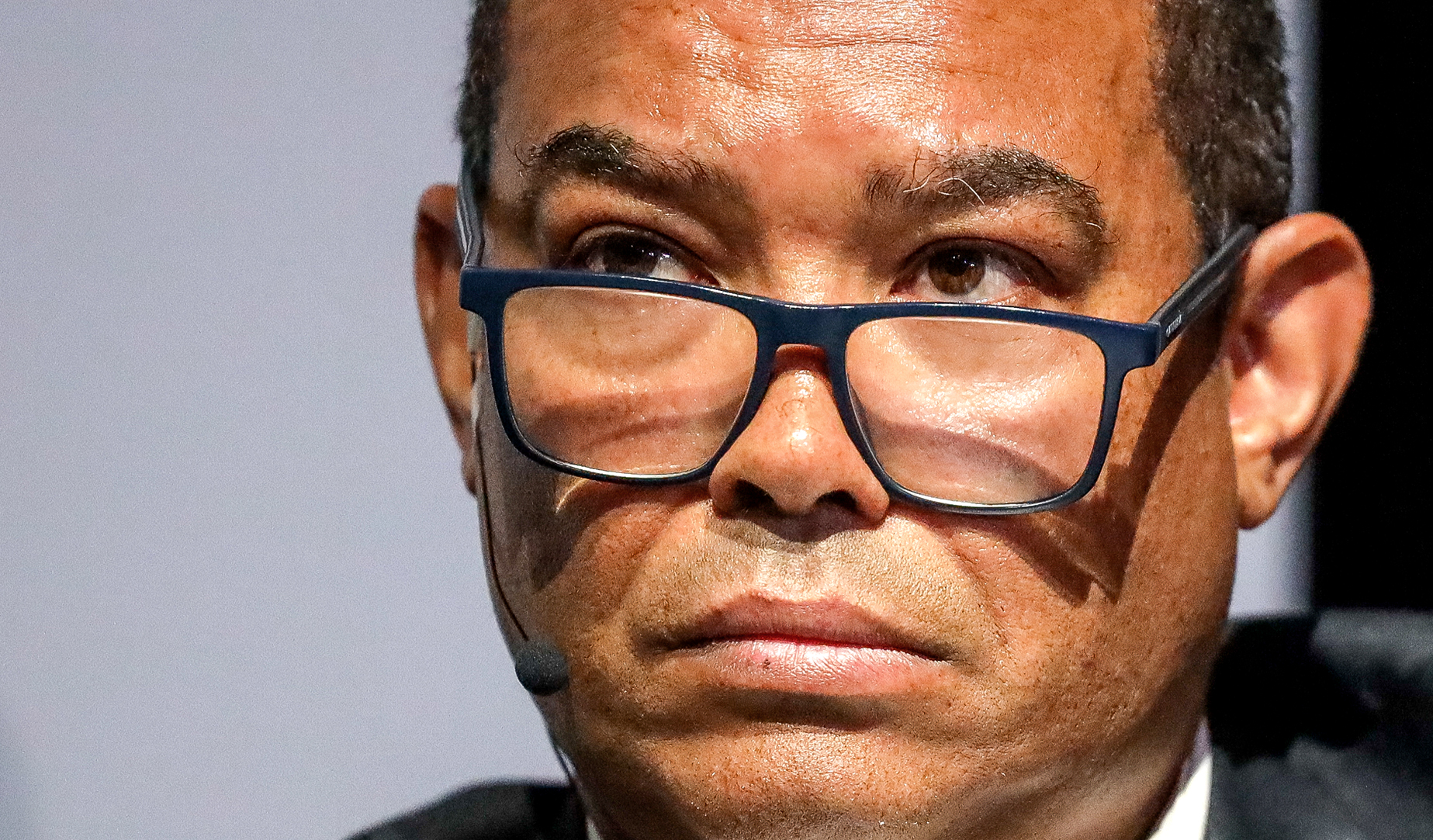
 Rudi Dicks, who heads the Project Management Office in the Presidency and jointly leads Operation Vulindlela. (Photo: Gallo Images / Fani Mahuntsi)
 The government’s latest Medium Term Budget Policy Statement (MTBPS) confirmed that South Africa is on track for a third consecutive primary budget surplus.
S&P Global cited this fiscal turnaround, along with what the ratings agency called strong tax collection and structural reform momentum that has picked up pace, when it upgraded South Africa’s sovereign credit rating earlier this week.
Operation Vulindlela (OV) Phase II, launched in May 2025, aims to push structural reforms deeper into the economy after Phase I opened the way for major investment in energy, logistics and water. But turning early fiscal improvements into lasting growth will require capital far beyond the R500-billion that Phase I helped unlock.
Rudi Dicks, who heads the Project Management Office in the Presidency and jointly leads Operation Vulindlela, spoke about the reform strategy in a critical engagement webinar hosted by PSG.
“We’ve got to see a significant jump in fixed capital formation,” Dicks said. “We require not just R500-billion, we require a trillion rand or more above what we (public and private sectors) already invest.” He explained that the 3% economic growth South Africa wants, demands 18-20% fixed capital formation as a percentage of GDP. According to World Bank data, this number was 15% for South Africa in 2024.

The implementation gap
Dicks warned that crime is now erasing economic reform gains at scale. “It has a 10% impact on our ability to grow,” he said, and pointed to copper theft and construction site mafias as direct investment killers. “Crime has a direct impact on economic growth, which we’ve got to deal with as a matter of priority.”
The other choke point is time. “In my view, I think there’s a misunderstanding about people not understanding some of the complexities of reforms when you talk about unbundling (Eskom), for example,” Dicks said. “They require transaction advisers and a whole series of technical capacities.”
He further stated that delays are often tied to legal and financial processes, noting, “there are debt covenant issues” when dealing with SOE separation, particularly for Transnet, where creditors look at the entity as a whole.
Read more: Fiscal tightrope amid urgent need for SOE reform and municipal debt solutions in SA
When describing progress, Dicks said, “We don’t simply go on love and fresh air. It’s about the hard implementation … about collaboration with business, convincing them to make the investments that are required. For me, I think that’s the sort of confidence that I’m hoping will end this year.”
The state is moving, but not fast enough for the scale of the economic challenge. In her 3 November newsletter, Business Leadership South Africa’s (BLSA) CEO Busisiwe Mavuso wrote that Operation Vulindlela has produced “tangible wins”, but noted that timelines have slipped on several critical fronts, leaving major infrastructure reforms “still on the ‘to do’ list” despite necessary legislation being complete.
R380bn for the grid
A report from the Presidency and National Treasury shows that Operation Vulindlela Phase I succeeded in creating a private electricity generation pipeline of more than 22,000MW. On paper, there is a staggering 220GW of solar, wind and storage projects in development. Yet all those projects remain stuck behind the barrier of a constrained grid.
Earlier this year, National Transmission Company South Africa interim CEO Segomoco Scheppers said that the network was historically built to move coal power from the north to the demand centres, meaning the areas now attractive for renewables (Northern Cape, Western Cape, Eastern Cape) “have very little network”. The current Transmission Development Plan indicates a requirement for a capital investment in the order of R390-billion over the next decade (by 2034) to expand the grid by an additional 14,000km.
Read more: Government launches R440bn private transmission gamble to end load shedding
About 90% of the R500-billion Operation Vulindlela investment is attributed to new generation capacity in the electricity sector, Dicks said, driven by policy reforms allowing private sector participation. The removal of the licensing threshold for embedded generation projects enabled close to R400-billion in new investment, according to the Presidency.
The technical challenge is only half the fight. Scheppers said that securing routes is a big challenge and explained that every kilometre laid requires agreement from many landowners, and each has to say yes to construction. Where agreement fails, the state has had to escalate by applying for expropriation through the Ministry of Public Works and Infrastructure for certain routes starting last year.
Freight and ports
Following the publication of the Network Statement in December 2024, the Transnet Rail Infrastructure Manager allocated slots on 41 routes to 11 new private train operating companies, covering six strategic corridors.
Read more: SA’s rail revival — new operators, old problems
“We’ve got to have other train operating companies on the network. We’ve got to have other port operators on the port system. Competition creates efficiency, brings down the cost, and it brings private investment that we so sorely need in our economy,” Dicks said.
/file/dailymaverick/wp-content/uploads/2025/11/kara-ov-update-Graphic.png "While the decline in export and freight rail volumes is slowly being reversed, private rail operators must still buy locomotives and wagons before a single tonne moves from road to rail.")
Read more: ‘Government cannot do it alone’ — a GNU proverb
But those operators must still buy locomotives and wagons before a single tonne moves from road to rail. The broad reform target of moving over 200 million tonnes of freight by 2030 could unlock R200-billion in logistics sector investment over the next five years, according to the Bureau for Economic Research.
On the port side, some progress has been tied up in a legal battle.
The High Court in Durban dismissed a losing bidder’s application against the concessioning of Durban Pier 2, a decision the government said would enable private sector participation at the country’s largest container terminal. The ruling cleared the way for a strategic equity partnership with International Container Terminal Services.
Warning lights
Operation Vulindlela Phase II places local government at the centre of reform, specifically targeting poor basic service delivery. Dicks explained that metros are being prioritised because of their outsized share of the economy and population.
This is where reform hits the hardest legal barrier. Municipalities are constitutionally autonomous. They cannot simply be taken over by national command, even when they fail, Dicks explained.
“I think sometimes our interventions are much too late,” Dicks said of municipal-level action. “We see the red flashing lights, it’s coming, the train is going to hit us, but we can’t intervene because the legislative powers demand that we follow due process.” He said reforms should focus on building intergovernmental support rather than taking over from municipal officials.
Director-General of the Department of Water and Sanitation Sean Phillips said that the main challenge with increasing private investment was at the municipal level.
The Water Services Amendment Bill, now before Parliament, attempts to solve this by introducing licensing and separating Water Service Authorities from providers. According to the Presidency, this will enable more effective intervention when municipalities fail.
Read more: Day 13 of Despatch water crisis culminates in brawls, legal threats and pleas for aid
Independent verification has become a key measure of progress. In August 2025, BLSA launched a Reform Tracker to monitor nearly 240 deliverables. Dicks welcomed the oversight, saying the government needed independent, stand-alone verification from organisations such as BLSA.
Read more: New BLSA tracker helps answer the question — Will SA be OK?
Operation Vulindlela Phase II is under way as the MTBPS projects a third consecutive primary surplus and a firmer fiscal footing. The challenge now is translating that stability into a trillion rand’s worth of investment while the implementation gaps still loom large over the economy. DM