




 Pexels
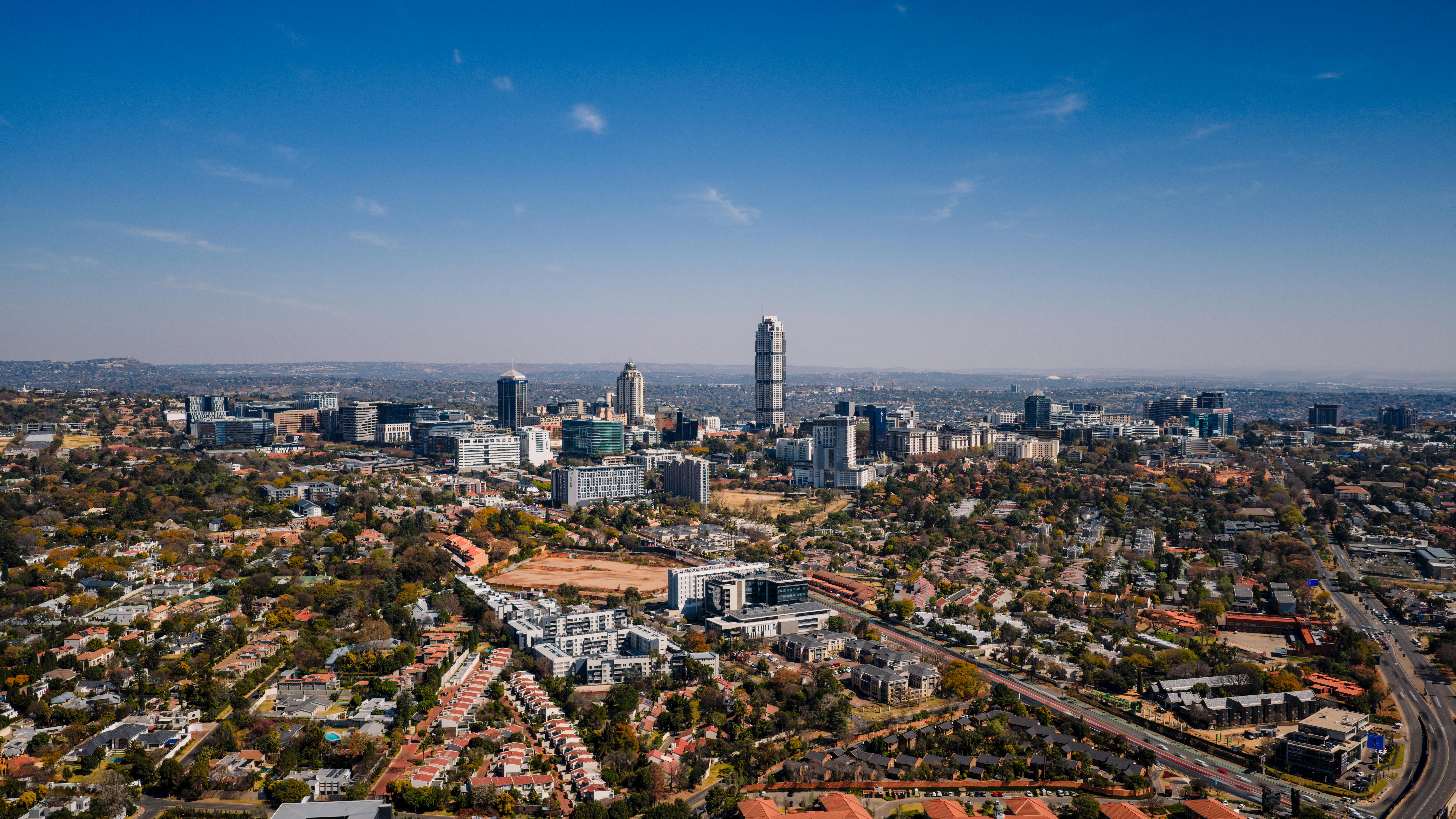
 As G20 leaders gather in Johannesburg under the banner of Solidarity, Equality and Sustainability, it’s worth asking who these words are meant to include. In much of the global South, most people work and trade outside of formal employment arrangements. They are the street vendors who keep cities fed, the waste reclaimers who make them cleaner, the home-based producers who form the base of garment supply chains, the domestic workers who provide care for households, the small scale farmers who bring food to our tables. They are the economy’s quiet infrastructure, but rarely its policy priority.
Over the past seventy years, the story we’ve told ourselves about how growth happens has swung like a pendulum. From the 1950s to 1970s, a modernist economic agenda dominated, which theorised growth would follow when workers moved from agriculture to the industrial sector. This would result in higher productivity, growing wealth, and full formal employment. But this transition never materialised for most countries.
By the 1980s and 1990s, the policy consensus had shifted. Small and medium-sized enterprises (SMEs) were now seen as the engines of economic growth. If governments could just unlock the so-called ‘untapped’ potential of individuals and individual enterprises through skills, training and access to credit, then growth and formalisation would follow.
Scale without substance
The limits of that model have become clear, as economists such as Ken Opalo have argued. We now know that scattered, small-scale, supply-side interventions do little to modernize and rationalize important sectors of the economy. And today, the pendulum is swinging again. The modernist economic agenda from the 50s-70s, with its focus on industrial policy and economic planning, is back, accompanied by a familiar belief that “big is beautiful” and that the informal economy is unproductive and residual. The large formal, capital-intensive sector is once again framed as the real engine of transformation with tax incentives, export promotion, infrastructure and R&D subsidies geared towards building national champions and building the industrial base. In this context, small and micro firms, and the millions of workers who sustain them, are often treated as an afterthought.
There is some recognition that times have changed. The opportunity for developing countries to drive structural economic transformation via digitalization is one example. A new wave of green industrial policy is certainly more inclusive in tone. But its promises of inclusion often remain thin on detail. For example, South Africa’s Just Energy Transition Investment Plan (2023–2027) is a flagship example of the new wave of green industrial policy - ambitious on investment and technology, but vague on inclusion. While it speaks of “livelihoods” and “vulnerable workers,” it offers no concrete mechanisms to integrate the informal economy into the green transition.
The danger of this lack of clarity is that we’ve already seen what happens when the “big is beautiful” logic runs unchecked. From the tech sector to the global garment industry, large firms have certainly scaled, yet often by undermining labour rights, shifting risk onto workers, and deepening inequality. The promise of scale has too often come without meaningful solidarity, equality or sustainability.
Supporting both strengthens the whole
Meanwhile, workers and enterprises in the informal economy continue to shoulder a large share of production, trade, care and public services. They create employment, deliver essential services, and recycle what formal systems discard. They are remarkably resilient, often despite the policy environments in which they operate. And yet they remain treated as an afterthought in economic planning, or worse, as a nuisance to be controlled.
India’s experience is instructive. Despite record growth, informal manufacturing, which employs over 400 million workers, is in decline, squeezed by neglect and punitive approaches. In South Africa, where unemployment sits among the highest in the world, we still see the eviction of street traders and waste reclaimers, a staggering contradiction in a country facing an official unemployment rate of over 30 percent, and expanded unemployment rate, which includes discouraged job seekers, of over 40 percent.
This situation is not only unjust; it is economically short-sighted. The formal and informal economies are deeply interwoven. Goods, labour and capital flow constantly between them. When informal producers are weakened, so too are households and the value chains and markets on which formal businesses depend. Penalising one sector weakens the other; supporting both strengthens the whole.
Path to connecting the formal and informal
What we need now is a path that connects across the formal and informal binaries, not another extreme swing of the pendulum. The path needs to be paved with conceptual shifts and policy and legal frameworks that fit today’s reality. It must start by acknowledging informal work as a major component of the economy, and as critical to reducing poverty.
It also means debunking the notion that structural transformation immediately leads to more and better jobs when in fact, it can lead to greater precarity. It means recognizing that structural conditions such as economic crises, government policies and value chain dynamics undermine the productivity of informal enterprises while ensuring protections, and fairer policy and market practices can improve it. One example is using public procurement to integrate collective enterprises in the informal economy into public systems. Municipal collaborations with waste-picker cooperatives in Brazil and India and care cooperatives in multiple countries show how these arrangements can raise incomes, provide stability and enhance decent work.
For decades, workers in the informal economy and their organizations have developed concrete proposals to transform their working lives. Among these is the need to update labour law to the new world of work, by establishing new mechanisms to challenge corporate power, and extending collective bargaining to own-account workers and independent contractors. This would allow more organisations to be formally recognised as trade unions – building worker power and representation.
Fiscal policy, too, plays a pivotal role by channeling investment into social protection and essential public services, as a matter of rights and as a foundation for inclusive economic development. Moreover, policymakers should treat investments in livelihood-centred urban infrastructure and services as part of economic planning at both national and local level, not as secondary social expenditure, a lesson from Durban’s urban strategies of the 1990s.
And finally, perhaps the most immediate and least costly intervention is to end the punitive treatment of workers and enterprises in the informal economy: the evictions, harassment and confiscations that persistently undermine livelihoods and the economy.
If the G20’s commitment to solidarity, equality and sustainability is to mean anything, it must begin with the people who make sustainable and inclusive economies work every day: in markets, on pavements, and in homes. DM
Authors: Laura Alfers, Ruth Castel-Branco, Marty Chen, David Francis, and Mike Rogan