




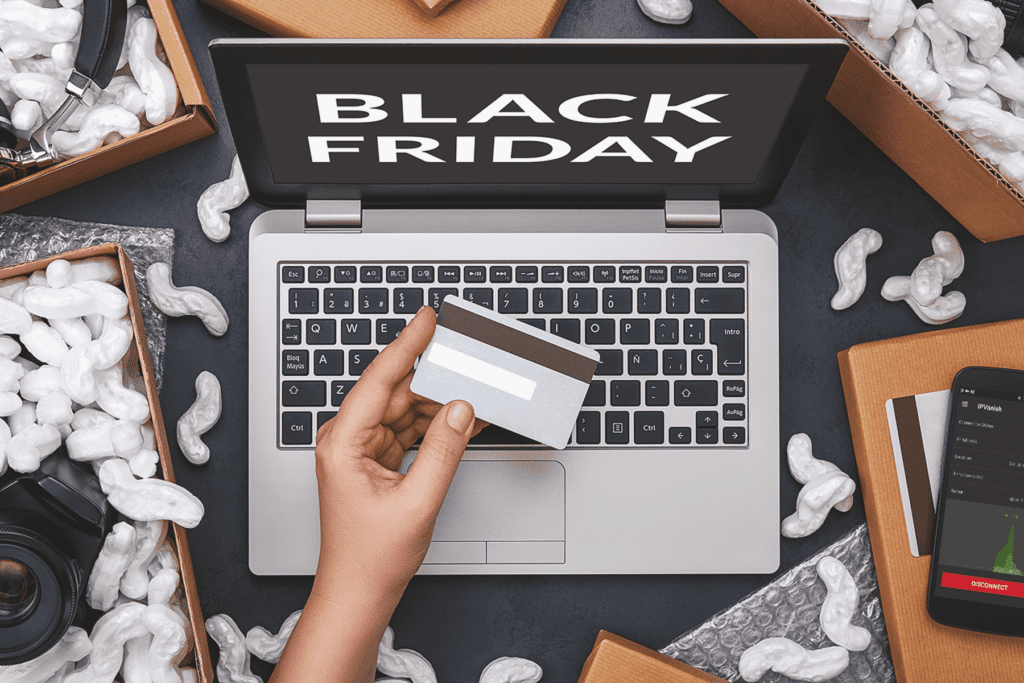
 Black Friday is a shopper’s dream adrenalin rush with its jaw-dropping discounts, limited-time offers and the thrill of snagging that perfect deal. But it’s also a playground for scammers. (Photo: Freepik)
 In a somewhat worrying case highlighted recently by the office of the National Financial Ombud Scheme (NFO), a consumer lost R120,000 after she responded to a social media advert offering discounted airline tickets.
After submitting her phone number and email address via a link, she was contacted through WhatsApp and instructed to download an app from the Google Play Store to access promo codes. Although the link appeared secure, the app was fraudulent and embedded with malware. Soon after installation, her phone began overheating and behaving erratically. The unexpected activation of the camera’s green light also raised immediate concerns.
When she checked her banking app, she discovered two unauthorised transactions and swiftly reported the incident to both her bank and the police. Despite her prompt action within just 27 minutes after the transactions, the bank denied liability, citing that the payments had been authorised via selfie verification on her trusted device.
The consumer escalated the matter to the NFO, seeking a full refund. The ombud found that the funds had already been used before the fraud was reported, leaving no opportunity for recovery. The bank also provided evidence that biometric authentication was used to approve the transactions.
Nerosha Maseti, credit and banking division lead ombud at the NFO, said that by downloading the fraudulent app, the consumer essentially handed over her phone, including all the information stored on it, to the criminals, which resulted in the fraud.
According to the South African Banking Risk Information Centre, digital banking fraud losses exceeded R1.4-billion in 2024. Reported incidents almost doubled to more than 64,000 cases. This underscores the sophisticated tactics used by criminals, who increasingly exploit peak shopping periods through advanced social engineering and “fraud-as-a-service” networks.
Read more: Banking crime losses fall in 2024 — AI fraud on the rise
Black Friday is a shopper’s dream adrenalin rush with its jaw-dropping discounts, limited-time offers and the thrill of snagging that perfect deal. “But beneath the buzz lies a financial minefield,” Maseti said. “Swipe-happy spending can spiral into credit card chaos, and lurking digital scams are ready to pounce when vigilance slips.
Read more: Black Friday: The facts and fiction of the shopping craze origins
“To truly win the day, smart shoppers arm themselves with a plan, stay sharp online and keep their budgets on lockdown. After all, the best deal is one that doesn’t cost your peace of mind.”
You can try to avoid scams on Black Friday by noting the following:
- Be sceptical of bargains: If a deal looks too good to be true, it usually is. Compare prices on official retailer sites;
- Verify websites: Check for the padlock icon and https:// in the URL, and watch for small spelling errors;
- Type, don’t click: Type retailer web addresses into your browser instead of clicking on links in emails, adverts or messages;
- Use secure payment methods for online shopping: Pay with a virtual credit card rather than EFTs, and avoid wire transfers, cryptocurrency or gift cards;
- Protect your details: Never share your PIN, CVV number or one-time pin (OTP)with anyone. Use strong, unique passwords and enable multifactor authentication;
- Use your bank’s security tools: Set lower transaction limits to reduce your potential losses;
- Stay secure: Avoid public Wi-Fi unless you have a trusted virtual private network you can log on to when shopping online, and keep your devices and software updated; and
- Check your statements: Monitor accounts regularly and report suspicious activity immediately. Review purchases within 48 hours to spot any irregularities early. DM
This story first appeared in our weekly Daily Maverick 168 newspaper, which is available countrywide for R35.
