



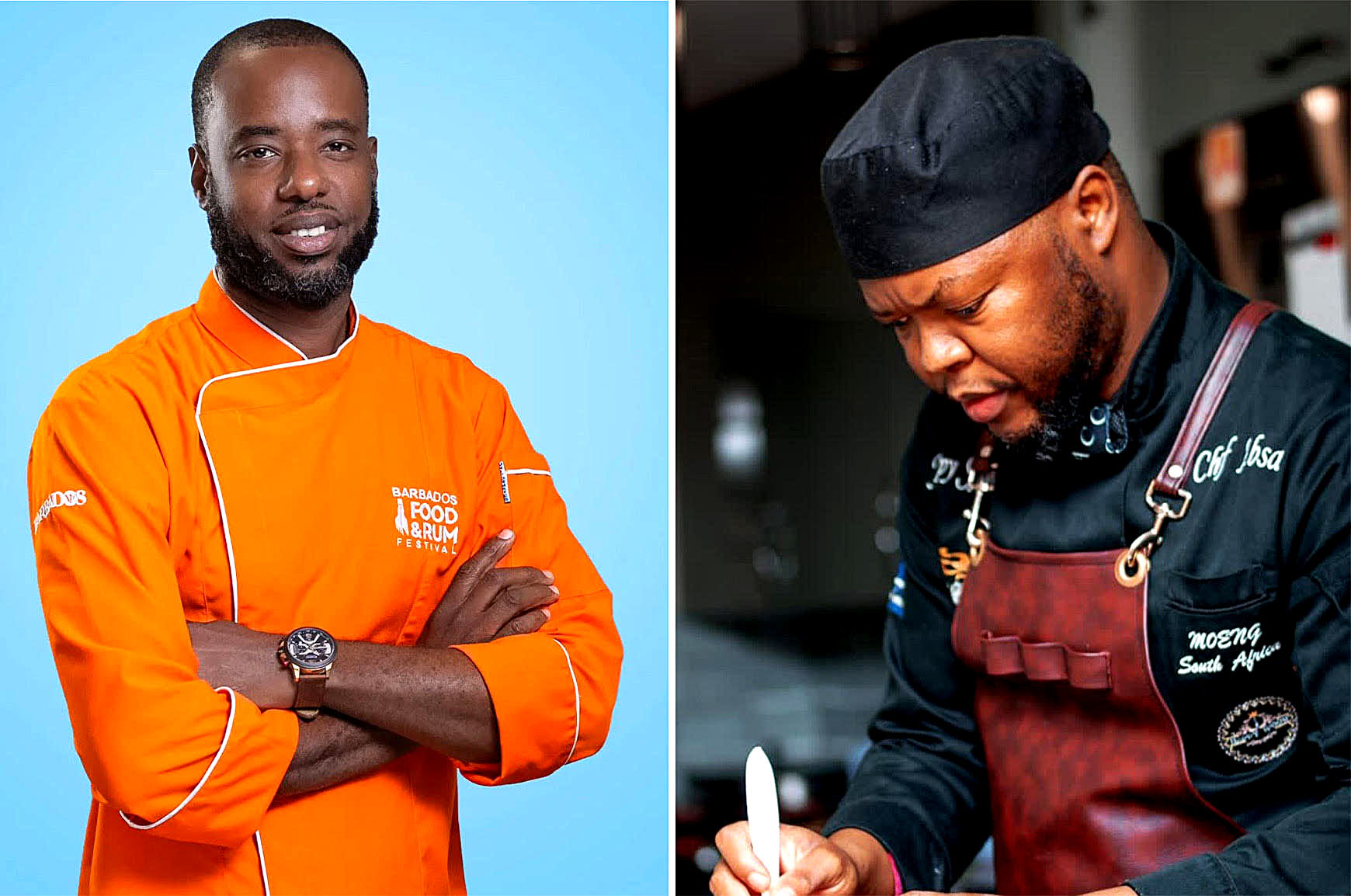
 Chef Adrian Cumberbatch in orange (Photo: the BTMI Barbados Tourism Marketing Inc.) , and chef Absa Kotsokoane. (Photo: Gift Vilankulu)
 The Atlantic Ocean separates Cape Town, South Africa and Bridgetown, Barbados but their culinary cultures call to each other across the water. Both are post-slavery, post-colonial societies with decimated First Nation populations and creole cuisines that reveal deep histories of resistance, resilience and cultural synthesis.
They are also each rich with edible indigenous biodiversity, but find their original ingredients marginalised by cash crops, convenience culture and the homogenisation of modern food systems.
Fortunately, from Cape Town to Bridgetown coalitions of chefs, farmers, foragers, fisherfolk, diners, climate activists, diplomats and development policymakers are beginning to turn that tide. They do not do this in the name of nostalgia, but rather because safeguarding indigenous ingredients is a vital form of ecological, economic and cultural repair.
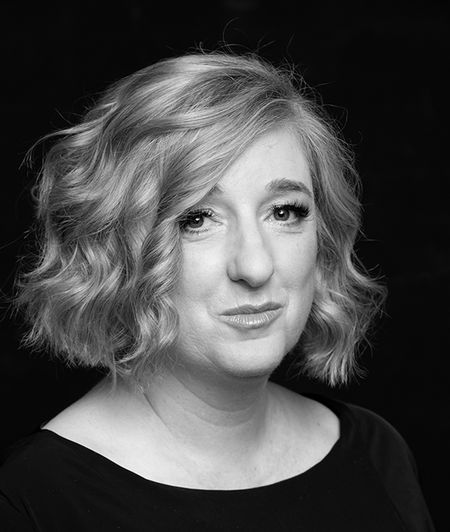
/file/dailymaverick/wp-content/uploads/2025/11/PHOTO-2025-11-10-16-05-58.jpg "Jeanette Sutherland, curator of Wild Feast. (Photograph: Easy Visualz)")
The WILD Feast, V&A Waterfront in Cape Town on 28 November 2025 brings together a magnificent melange of epicurean activists from both sides of the Atlantic. South African chefs Absa Kotsokoane and Wisani Marivate have worked with Bajan chef Adrian Cumberbatch to create a multi-course menu. Each offering celebrates the indigenous ingredients and food histories of South Africa and Barbados, tracing the parallels that connect them.
As Trinidad and Tobago-born, Western Cape-based WILD Feast curator and CEO of AgriLuxe marketing, Jeanette Sutherland, explains: “We focused the menu on indigenous and under-utilised crops because they remain so undervalued despite their resilience to climate change and their nutritional richness. They flourish in marginal soils, require little irrigation and sustain local ecologies, yet their absence from global trade systems means Africa still imports billions of dollars’ worth of wheat, rice and maize each year. These imported staples displace local varieties and undermine food security.”
/file/dailymaverick/wp-content/uploads/2025/11/sorghum-272917_1280.jpg "Sorghum (Photograph: Bishnu Sarangi from Pixabay)")
/file/dailymaverick/wp-content/uploads/2025/11/sorghum-growing.jpg "A field of sorghum (Photograph: Anna Trapido)")
She points out that initiatives like WILD can be part of a process that changes the image of indigenous ingredients. Through culinary excellence and storytelling, foods previously dismissed as “poverty food” can be transformed into symbols of edible excellence, artistic innovation and pride.
Some of the aforementioned excellence is also quaffable — the evening will begin with chef Marivate’s signature suurvy (Cape sour fig) and Caribbean rum cocktail. After this, the fabulous food will be paired with Cape wine.
Chef Cumberbatch will continue the trans-Atlantic sensory dialogue with an amuse bouche of Haitian joumou soup. This silken, squash-based dish is made with the calabaza — a West Indian heritage gourd. Prior to the Haitian revolution, enslaved Africans were forbidden from eating this soup, which was reserved for the French colonial elite. After the 1804 revolution, joumou became a symbol of freedom and is traditionally served on January 1 — not only New Year’s Day, but also the anniversary of the birth of the Haitian Republic.
Chef Kotsoloane will follow the soup with umleqwa traditional chicken, mabele (sorghum) and jugo beans because: “I am a storyteller, and the story that the chicken course tells is about our ultimate son of the soil, former president Nelson Mandela.
“He grew up eating these indigenous ingredients. When he was on Robben Island he longed for such food. Those earthy flavours define him. I have infused his favourite umhluzi (gravy) with Cape Malay spices as a tribute to the memory of enslaved people who were such a big part of creating and sustaining this city. I wanted that flow from Haitian freedom struggle soup to our own liberation journey.”
Lamb shank will be paired with a crisp Cape Coast soutslaai succulent salsa because as chef Kotsoloane observes, “Literally right at the Waterfront where the WILD Feast will be held is where the Khoekhoe Camissa was. They foraged plants such as soutslaai here. They had their fat-tailed sheep herds here. They traded with passing ships right here.”
/file/dailymaverick/wp-content/uploads/2025/11/unnamed-7.jpg "Sorghum, Africa's ancient grain. (Photo: Chef Absa Kotsokoane)")
Chef Cumberbatch is planning to set the lamb atop roasted cassava fondant. This root vegetable, indigenous to the Americas, has flourished in Africa, bringing the continents together on a plate.
Sweet-toothed types will be delighted with the Bajan spiced panna cotta. Paired with an indigenous tepane leaf and diya root infusion from Limpopo’s Setsong Tea, it promises to be a beautiful blend of South African warmth and Caribbean cool.
Beyond its gastronomic and historic appeal, the organisers of WILD Feast see the event as a strategic intervention supporting South Africa’s growing commitment to creating connections with the Caribbean — a process that was accelerated by last year’s ministerial meeting calling for collaboration across tourism, education and creative industries. The Afri-Caribbean Cross-Atlantic Trail, now in development, envisions a network of food festivals, trade fairs and chef residencies connecting farmers, cooks and researchers. The Cape Town feast is a tangible manifestation of that dream; a sensory introduction to what sustainable trade through taste might look like.
As Sutherland says: “In recent years, global awareness of indigenous and climate-resilient crops has grown, but implementation lags. The real challenge is shifting from projects to products. Moving from self-conscious celebration to circulation. These crops won’t be rescued by nostalgia but by viable markets. By connecting farmers to chefs, and chefs to tourism and export channels, WILD aims to build value chains that reward biodiversity, rather than erase it. It’s food sovereignty with a business plan.”
This unique Atlantic epicurean experience takes place on 28 November 2025. Tickets (R1,500 per person) are available here.
Within the WILD Feast, food becomes both medium and message, illustrating the transformative power of culture-led trade. As chef Marivate says: “Diners should come hungry and expect to leave changed.” DM