




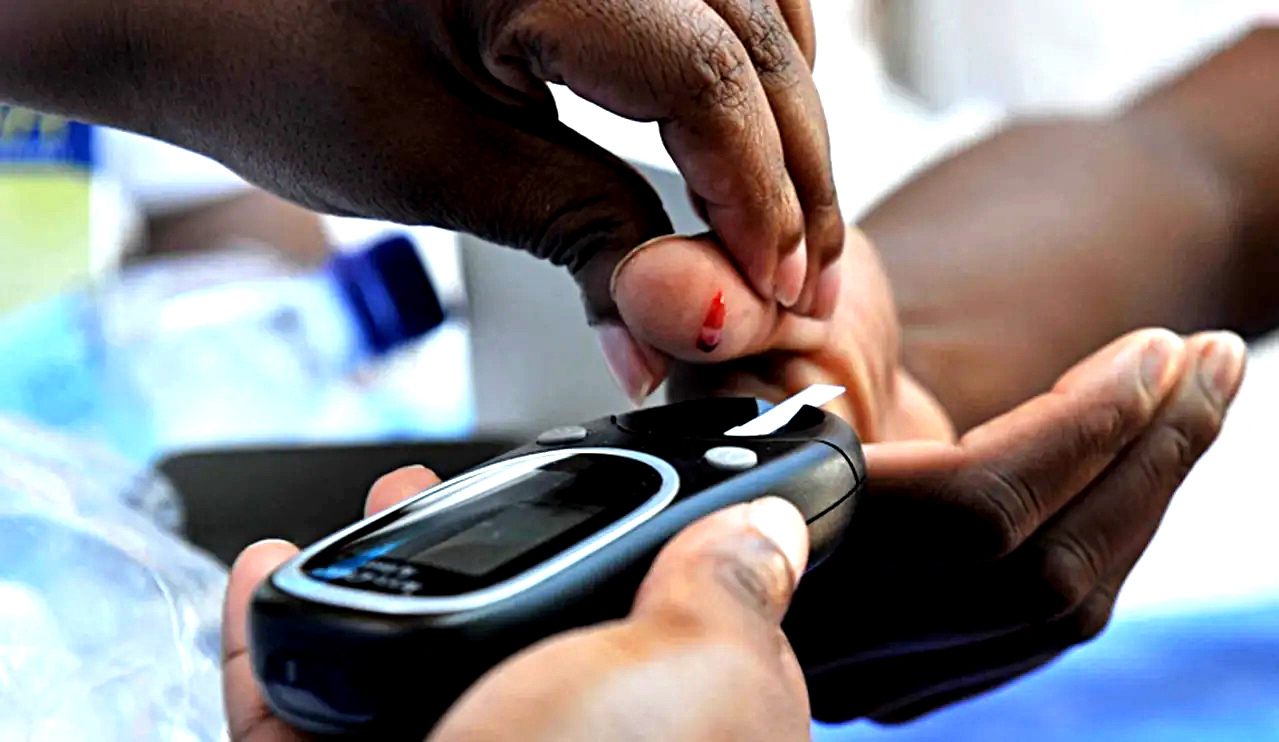
 Many people struggle to maintain healthy blood glucose levels, sometimes because the glucose testing tools they need for monitoring are out of stock or unaffordable. In the private sector, a months worth of basic blood sugar test strips will cost the lowest-paid government workers three days' wages. (Photo: Supplied)
South Africa’s history is etched with monumental battles for equitable healthcare, none more transformative than the fight for universal access to life-saving antiretroviral (ARV) treatment for HIV.
When the government said ARVs were too expensive (more than R172,000 per patient per year in today’s value terms), activists at the Treatment Action Campaign showed how patents keep the prices high.
They challenged international trade norms and did not relent when 39 pharmaceutical companies sued to stop them in 2001.
Within just a few years, HIV drug prices fell by more than 95%. Today, another crisis demands that same moral courage and collective muscle: the fight for affordable insulin, diagnostics and lifelong diabetes care.
We’ll have to take on powerful forces once more, because diabetes thrives where people lack access to nutritious food, safe spaces to exercise, or quality primary care.
It exposes the deep inequalities of South African life: who can afford to manage a chronic condition, and who is left to deteriorate.
This is the next frontier of health justice in South Africa.
The mysterious case of the missing million
Diabetes represents a critical health challenge in South Africa, currently ranking as the number one underlying cause of death for women and the second leading underlying cause of death for men.
The health department cannot provide reliable records of how many people are living with diabetes in South Africa, as clinic staff still use paper-based records, which leads to mistakes, duplications and delays.
In the absence of a robust electronic records and surveillance system for diabetes, we’re left to rely on estimates by the International Diabetes Federation. In 2021, the federation estimated the number was 4.3 million, but just 2 million in 2024.
Did 1.3 million people simply disappear?
Without a co-ordinated surveillance system for diabetes, we have little hope of figuring out what the true number is, nor will we be able to track how South Africa is faring against the goals set out in its action plan on non-communicable diseases, which lapses in 2027.
How SA’s health system fails people with diabetes
The current system fails people with diabetes long before they show any symptoms of the condition.
Many South Africans are unaware of behaviours, such as an unhealthy diet, harmful alcohol use and physical inactivity, that could be increasing their risk of non-communicable diseases.
Overworked clinic staff might not know they’re seeing the warning signs of diabetes (including overweight, obesity, raised blood pressure, raised blood glucose) or they don’t catch them in time, leading to delayed referrals to a hospital. Shortages of dieticians, podiatrists and other specialists complicate matters further.
Those who do get a timely diagnosis don’t have an easy time either.
/file/dailymaverick/wp-content/uploads/2025/11/MC-Oped3-Elderly.jpg "The parallels between HIV and diabetes are striking. In parts of South Africa, people ration their treatment, hospitals run out of stock, rural clinics lack diagnostic tools. (Photo: iStock)")
Many people struggle to maintain healthy blood glucose levels, sometimes because the glucose testing tools they need for monitoring are out of stock or unaffordable. Blood tests are technically free in the public sector, but overworked nurses don’t always have the training or the testing tools to help people.
In the private sector, a month’s worth of basic blood sugar test strips will cost the lowest-paid government workers three days’ wages, according to a 2024 study published in the Journal of Pharmaceutical Policy and Practice.
A healthy life should be a right, not a privilege
Cost barriers turn diabetes management into a privilege rather than a right, mirroring the disparities faced by people living with HIV in the early years of the Aids crisis.
Insulin pens, which are crucial for diabetes management, are currently restricted to specific patient groups.
These pens are recognised as the standard of care globally, but they’re hard to come by in South Africa’s public sector pharmacies since older and cheaper forms of insulin are recommended for most people with diabetes to contain costs. This forces many patients to rely on vials and syringes that are difficult to use.
A Doctors Without Borders survey of 403 people from 38 countries suggests the vast majority of people with diabetes (88%) preferred insulin pens due to their improved accuracy, ease of use and reduced stigma associated with injections, leading to increased adherence and better health outcomes.
One respondent explained: “[The] syringe would always get bubbles no matter what you did to avoid them. Carrying syringes around has a bigger stigma. Vials broke easily if dropped by accident.”
Nobody should have to choose between insulin strips and food
The parallels between HIV and diabetes are striking.
In parts of South Africa, people ration their treatment, hospitals run out of stock, rural clinics lack diagnostic tools. And just as in the early HIV years, government inertia meets a pharmaceutical industry that profits from scarcity.
This fragmented service provision leaves patients vulnerable to emergencies and long-term complications (like leg amputations, blindness and kidney failure).
The lessons learned from the successful HIV response specifically, the need for proactive procurement, decentralised care, and robust community engagement, must now be urgently applied to diabetes.
The government must demonstrate the political will to challenge pharmaceutical monopolies and explore the local production of essential therapies to limit our dependence on imported products.
An important first test of how far South African regulators are willing to go to confront monopoly pricing in chronic care is the announcement that Novo Nordisk and Sanofi are under investigation by the South African Competition Commission for potential anti-competitive practices related to analogue insulin pens.
But it can’t end there.
South Africa has been here before.
We know how to turn despair into action and action into rights. The fight for access to quality diabetes care is not merely a technical battle, but a moral one. Whether we have truly learned from our own history will be tested in how we respond to this slow, silent epidemic.
The courage that once broke the back of pharmaceutical greed can once again save lives, if we summon it now. DM
Tian Johnson is the founder and strategist of the African Alliance, a pan-African health justice advocacy non-profit. Patrick Ngassa Piotie is a senior programme manager at the University of Pretoria’s Diabetes Research Centre.