




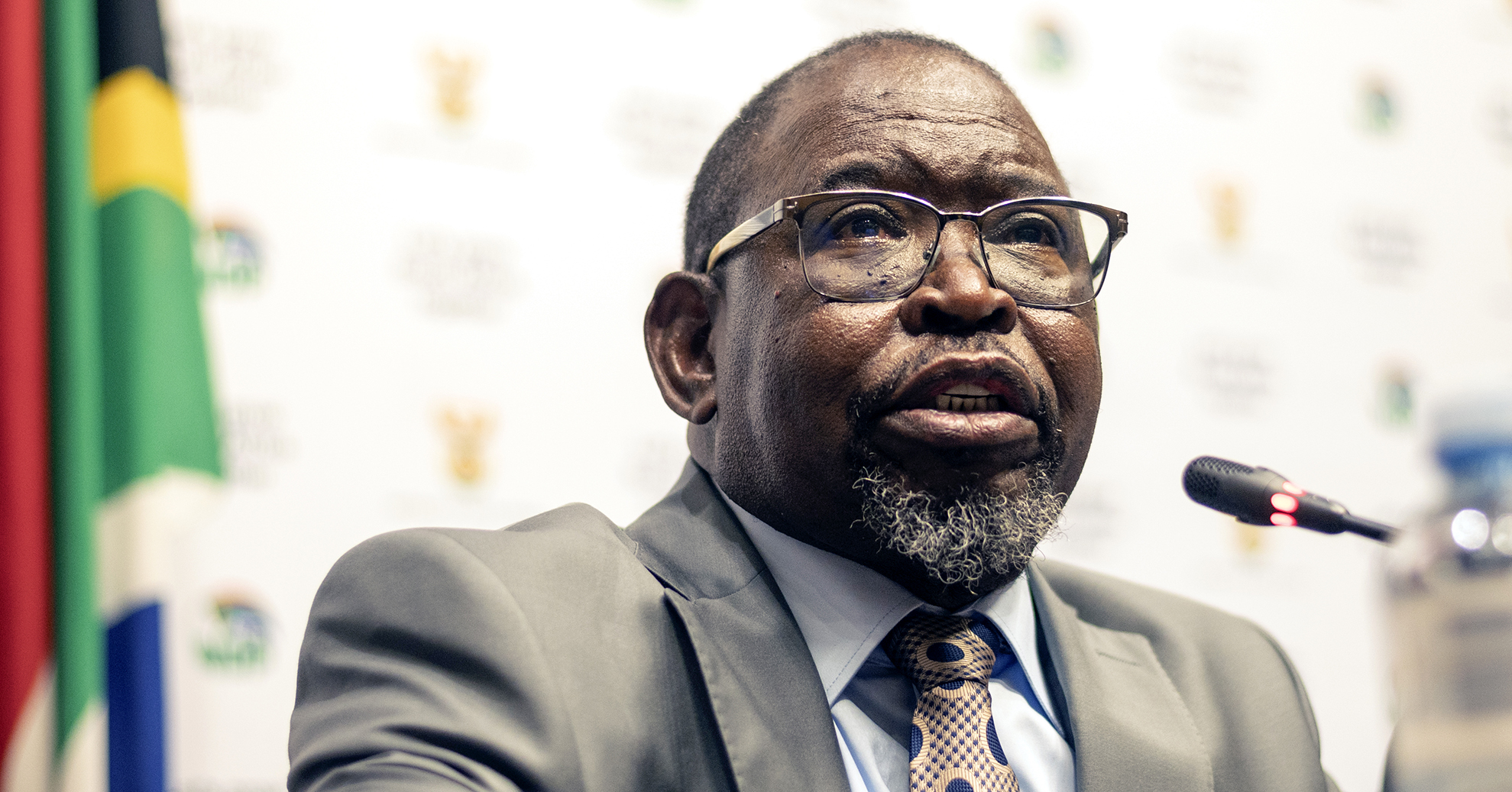
 Finance Minister Enoch Godongwana has taken steps to identify cases where people are 'double-dipping' in the social grant system. (Photo: Gallo Images / Brenton Geach)
 The latest numbers from the Medium-Term Budget Policy Statement paint a picture of restraint and some success. While consolidated government expenditure will nominally swell to R2.88-trillion by 2028/29, the actual increase is barely perceptible, with real consolidated expenditure growing at a modest 0.3% per year.
Relief comes from the slowing pace of the debt spiral, as the rise in debt-service costs has eased to 3.8%. This breathing room is being directed smartly as capital payments are now the fastest-growing item, expanding by 7.3%.
An impressive 60% of non-interest spending remains dedicated to the social wage. This commitment means the Covid-19 relief grant has been extended to March 2027, and spending on crucial areas like health and learning will continue to grow above the rate of inflation.
To finance these obligations responsibly, the Treasury has deployed the Targeted and Responsible Savings initiative, designed to systematically identify and cut out inefficiencies.
Godongwana noted that a significant portion of this involves identifying cases where people are “double-dipping” in the social grant system. This concerted effort to eliminate waste is essential as the national debt continues its climb, and is projected to reach R6.99-trillion within the next three years.

Government expenditure categories are often ambiguously named. Here are some of the key categories explained:
The learning and culture category funds basic education and post-school education and training, including support for universities, skills development, and compensation for educators, as well as initiatives supporting the arts, culture, sport and recreation sectors across the country.
Social development is the government’s effort to reduce poverty and protect vulnerable citizens. This includes direct funding for social protection (like grants), social security funds and public-sector pensions.
Economic development directs funds towards boosting economic growth and resilience by improving key sectors and infrastructure. It focuses on stimulating industrialisation and exports, supporting agriculture and rural development, funding job creation and labour affairs, enhancing economic regulation and infrastructure (like rail, energy and water), and driving innovation, science and technology.
Peace and security spending is allocated to maintaining national safety, state sovereignty, and the rule of law. This includes financing the defence and state security apparatus, managing police services, operating law courts and prisons and funding core services at home affairs.
The general public service category covers the general running and representation of the government at all levels. It supports executive and legislative organs, manages public administration and fiscal affairs and maintains external affairs.
Debt-service costs are mandatory payments to service government debt.
The contingency reserve is a non-interest allocation set aside to manage major unforeseeable risks that may arise during the fiscal year.
Payments for financial assets are included for the outflow of funds related to financial transactions. DM