




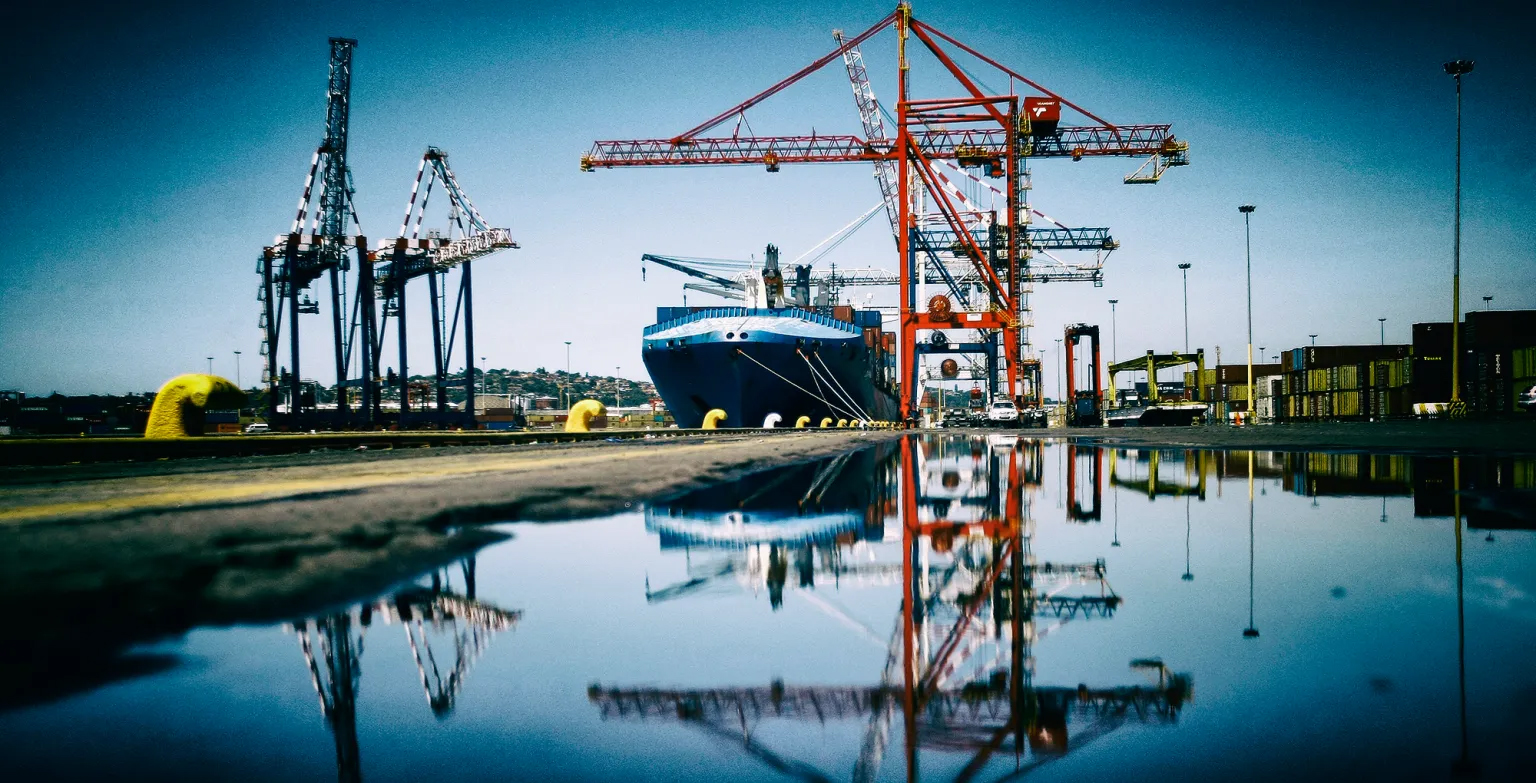
 Gantry cranes sit above a container ship in the terminal at the Port of Durban, operated by Transnet. (Photo: Kevin Sutherland / Bloomberg via Getty Images)
 Read Treasury’s 83-page medium-term budget statement at your leisure (for real, it’s actually quite illuminating, with none of the usual pomp and obfuscation) and you’ll find a lot of admission. The biggest has been a trend across all the GNU minister briefings – that the government must mobilise private funding to achieve its big, hairy, audacious goals.
Chief among those BHAGs? Fix the state logistics sector. “Additional allocations through the budget facility for infrastructure (BFI) include expanded support for… the reinstatement of freight rail operations to transport high-value minerals to ports,” wrote the Treasury in the Medium-Term Budget Policy Statement (MTBPS).
Water and sanitation projects in Polokwane are accounted for, but the biggest infrastructure spend is on Transnet.
“Transnet has stabilised volumes, but requires investment. We have committed to do that on a project by project basis,” director-general Duncan Pieterse explained in answer to Daily Maverick questions about the expanded contingency and treasury bonds.
Good progress, but the road is still long
In rugby terms, Enoch Godongwana is the scrumhalf of the GNU and Transport Minister Barbara Creecy has been making significant yards off the good fiscal policy service she’s been getting – like RG Snyman attacking the gain line, but with better hair.
“Transnet’s freight rail volumes increased in 2024/25 – though it is not meeting its own targets – and port volumes have stabilised,” is high praise and Creecy will see a lot more off the ball coming her way as a reward.
The distribution strategy, as it currently stands in the Operation Vulindlela game plan, is through the continuous offloads to Transnet’s rail infrastructure management division (established in April to manage the private participation), with a new Transport Economic Regulator coming on board in 2026/27, as a secondary playmaker, to oversee the newly competitive sector.
Treasury has picked this route as the shortest path to returns on the private sector investment. “They will unlock additional funding from the private sector,” Pieterse continued.
Spokes in the transport finance hub
Of course, all of this progress is to support fiscally critical industries like mining, which saw its gross value addition contract by 2.9% in the first half of 2025, with the custodians of the national coffers noting that “bulk commodity exports continue to be hampered by poor rail and port performance”.
Additional beneficiaries of the Transnet recovery plan are the transport, storage and communications sector which will realise gains linked to increased rail payloads.

Treasury will also increase the contingency reserve to R13.5-billion to (mostly) cover Transnet’s North Corridor Reinstatement Project (R4.9-billion) and Iron Ore Corridor (R3.4-billion). It’s an additional R8.5-billion plus a hefty R1.5-billion of the original, main budget R5-billion contingency.
Not enough billions to cover the hole
“Transnet depends on state support to access the capital market,” Treasury admits. The masters of coin have already granted guarantees to the tune of R145-billion for the state logistics arm to meet liquidity needs, finance debt and fund capex.
“These contingent liabilities represent potential future claims on the national Budget in the event that the company defaults on its debt obligations,” the MTBPS explains.
Yes, Godongwana is betting the game on our current biggest ball carrier to get over the gain line, mobilise private funding, generate revenue, and set up for a match-winning cross-kick that will get South Africa out of its economic hole.
Ramaphosa better be ready to pull the trigger (he is, of course, the flyhalf in this analogy) with all the international deals. DM