





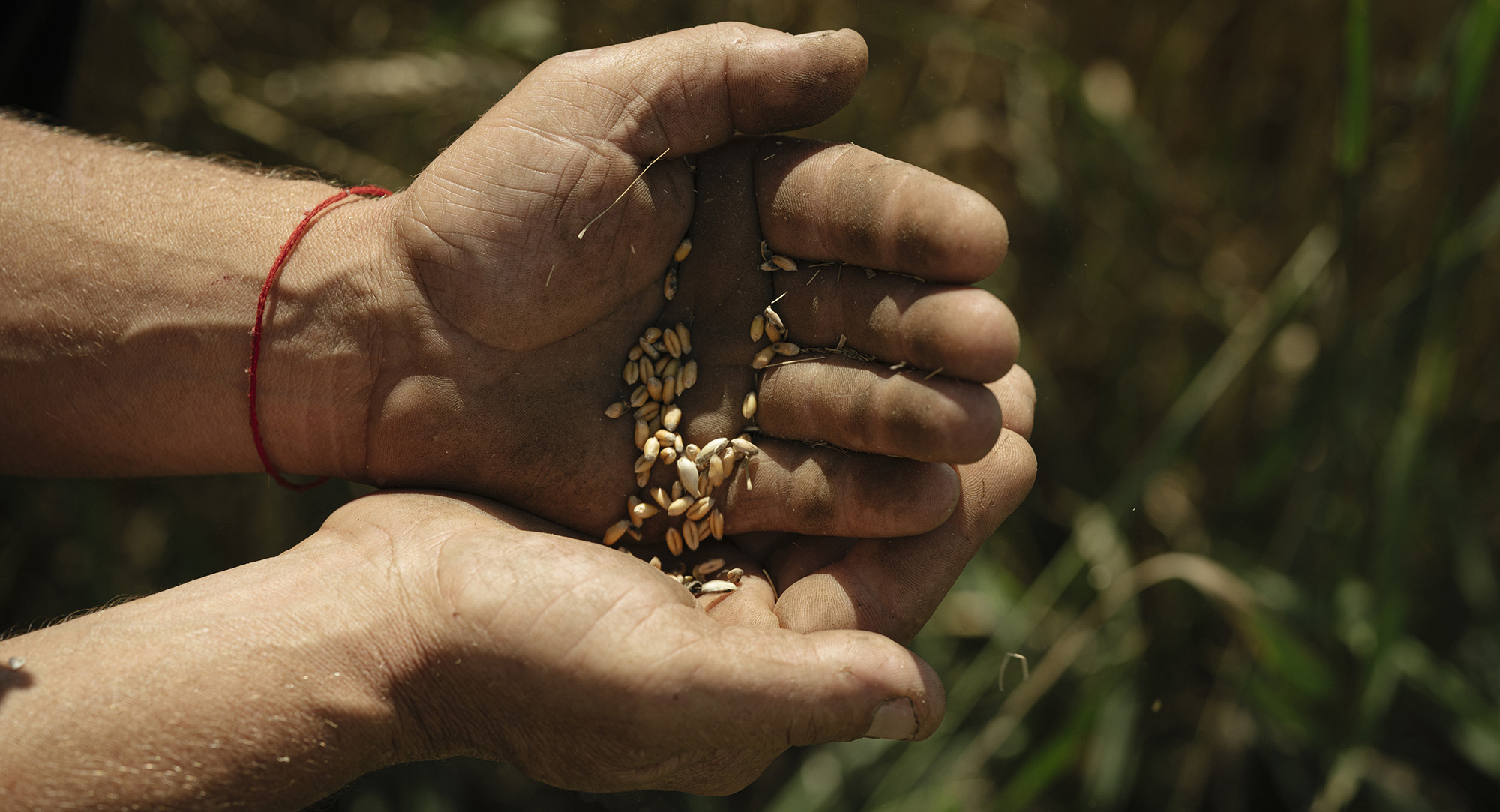
 Both stock and seed theft pose a significant challenge to the agricultural sector in South Africa, affecting farmers’ livelihoods, food security and economic stability. (Photo: Andrew Kravchenko / Bloomberg via Getty Images)
 September is the month farmers prepare their fields for planting season. This can result in bulk inputs on the farm for easier access, and that is when criminals seize the opportunity to steal from them, particularly seeds, which they resell.
/file/dailymaverick/wp-content/uploads/2022/01/GettyImages-492898078.jpg "Stock theft rose to 36,109 cases in 2025, up from 25,606 reported cases in the 2023/2024 financial year. (Photo: Kevin Sutherland / Bloomberg via Getty Images)")
While stock theft is the more commonly known vulnerability farmers face, seed theft is becoming increasingly common.
Dr Jane Buys, Safety Risk Analyst at Free State Agriculture, told Daily Maverick that the two latest incidents in the province that they were aware of were in the Bethlehem area and Ventersburg, with seed worth a combined R1.7-million stolen.
Both stock and seed theft pose a significant challenge to the agricultural sector in South Africa, affecting farmers’ livelihoods, food security and economic stability.
Buys spoke to Daily Maverick about the impact of seed theft on farmers.
Seasonal crime
/file/dailymaverick/wp-content/uploads/2025/11/high-angle-woman-spreading-seeds-soil-pot.jpg "Standard safety protocols, merged with new technology such as sensors and camera surveillance, could help curb seed theft. (Photo: Freepik)")
“From September, farmers are preparing their fields to plant, and they have to order products such as fertiliser, seeds, which need to be readily available. We see a seasonal trend of criminals targeting farmers during this time. We see an increase in terms of incidents and cases, and the number of products that get stolen on farms.
“If you are a maize or sunflower farmer, or soya beans, you need to make sure that, if you have products readily available on your farm, [they are] protected. If you have a room or storage [area] for these products, make sure movement is restricted using CCTV cameras and other technology. This will help with arresting these criminals and bringing them to court,” explained Buys.
She said that standard safety protocols, merged with new technology such as sensors and camera surveillance, could help curb this crime. There was an organised syndicate working on seed theft.
“If you look at the number of incidents and number of bags stolen from farms… now with organised syndicates, there must be a market, so what is concerning is that for seeds, the market would be other farmers, whether it is emerging farmers or commercial farmers, it doesn’t matter.
“But they are the ones who can do something with these seeds, put them in the ground and plant them, they can make a business out of it, so the market is farmers buying from these criminals.
“The message we want to send to these farmers is that, irrespective of who they are, once they are identified and arrested by the SAPS, we will make it really worth it to testify for aggravated sentences. Because those farmers are creating a market for the selling of these stolen seeds.”
Buys says they are working with the police and farmers, and hope to have crime intelligence involved to get to the core of the syndicate. They are working on having greater visibility from the police as an extra tool of deterrence.
Speaking to Farmers Weekly, Sarel Pretorius, chairperson of Agri North West’s Rural Safety Committee, said, “We know of the case of seed theft reported in Lichtenburg recently, where the criminals stole Dekalb seed bags worth R450,000.” These are a line of high-yielding, drought-tolerant, hybrid maize seeds.
In an article published by Grain SA, agriculturalist Johan Teessen wrote that seeds could go unnoticed in a farm production budget, but, “Seeds can range from 10% to 17% of the total input cost and, in certain instances, can even surpass the cost of fuel.”
Stock theft
Stock theft rose to 36,109 cases in 2025, from 25,606 reported cases in the 2023/2024 financial year.
/file/dailymaverick/wp-content/uploads/2025/11/ED_252855.jpg "Stock and seed theft are on the rise, but the farming community is pulling together to create preventative measures. (Photo: Bebe Kabundura / Gallo Images)")
Corine Steyn from the National Stock Theft Prevention Forum told Daily Maverick that collaborative efforts were crucial in fighting against the vulnerability to theft that farmers faced.
“All the security agencies (SAPS, NPA, Agriculture, SANDF), and other roleplayers in the red meat value chain are represented on the National Stock Theft Prevention Forum. The forum has a footprint in all nine provinces as well. The relationship we have with the security agencies and other roleplayers [abattoirs, auctioneers] is of utmost importance to ensure the prevention of livestock theft,” said Steyn.
She said understanding protocols for protection was crucial for the red meat industry and that the Red Meat Industry Services and the National Stock Theft Prevention Forum (NSTPF) had embarked on several stock theft awareness workshops to inform livestock owners.
“At these workshops, input is given by SAPS, the National Prosecuting Authority (state prosecutors), the Department of Agriculture (Animal Identification), NSTPF (on the economic loss due to stock theft) and RMIS (mitigation strategies). These workshops are being held to give the correct information to livestock owners to empower them with the correct information and knowledge.”
This knowledge includes points such as making sure stock is tagged, and reporting thefts.
Tips in the forums toolkit:
- Mark animals (brand or tattoo) under the Animal Identification Act. Livestock owners must apply for a brand/tattoo mark from the Registrar of Animal Identification at the Department of Agriculture.
- Maintain stock registers, count stock weekly and update registers. This serves as proof for court cases.
- Adhere to section 6 (document of identification) and section 8 (removal certificate) of the Stock Theft Act, 57 of 1959, when transporting or selling livestock.
- Report all livestock cases to SAPS and obtain a CAS number. Follow up on reported cases. Ensure the affidavit content is accurate before signing.
- Protect the crime scene until the stock theft investigating officer arrives. Outdoor crime scenes can be affected by the weather.
- For stock theft involving animal brutality or illegal hunting with dogs, add an animal cruelty complaint. The NSPCA can confiscate dogs as evidence.
- Maintain an open relationship with the stock theft investigating officer.
- Use the National Stock Theft Reporting system. DM