



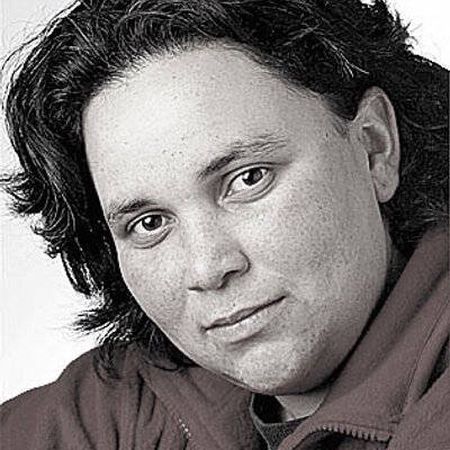
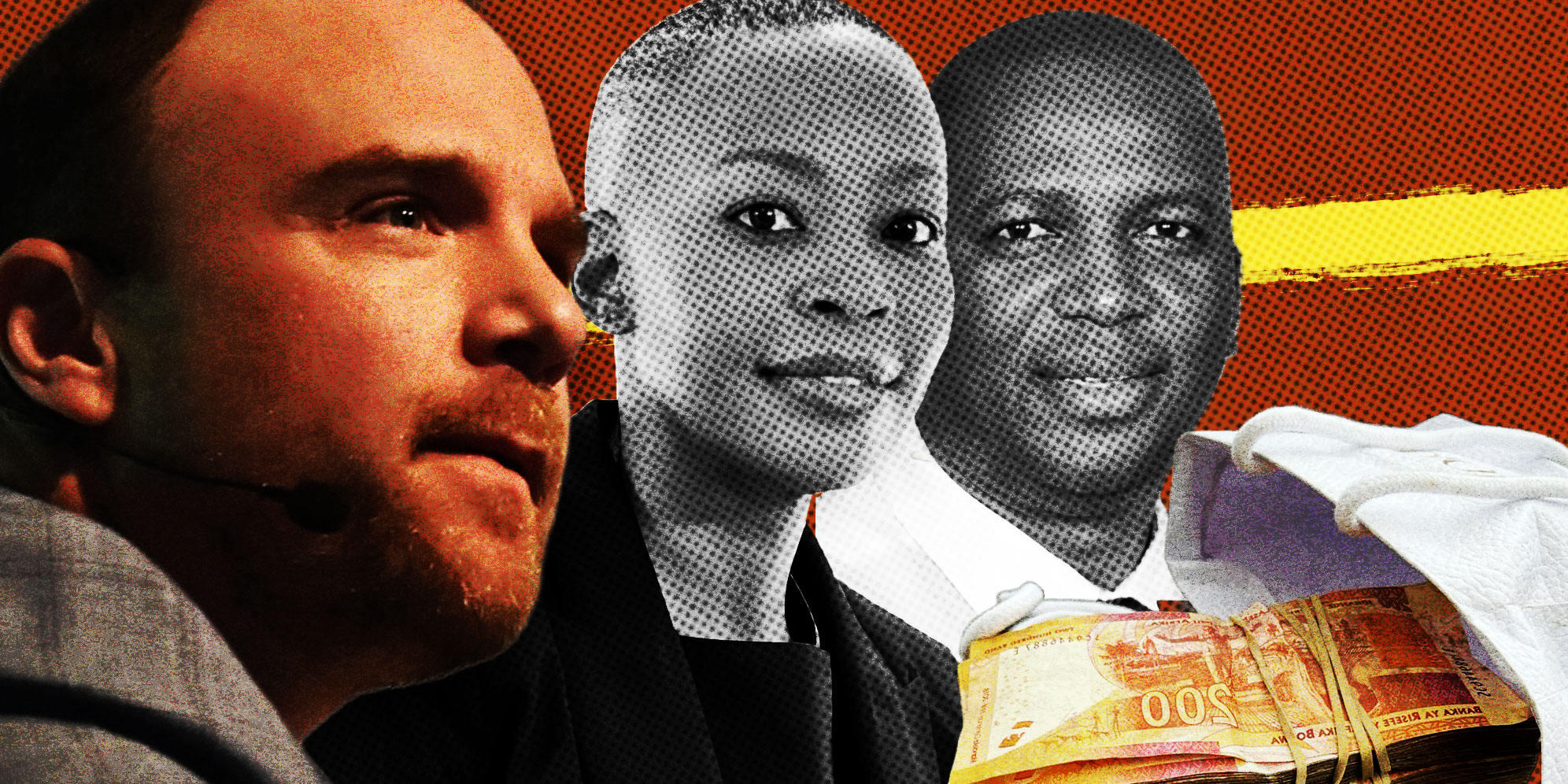
 Illustrative image | Pieter-Louis Myburgh at Daily Maverick's The Gathering 2025. (Photo: David Harrison) | Suspended IDT CEO Tebogo Malaka. (Photo: IDT) | Attempted bribery money. (Screengrab: Daily Maverick) | Phasha Makgolane. (Image: IDT / X)
 In August, Daily Maverick exposed one of the most brazen attempts in recent memory to silence a journalist: a recorded meeting in which suspended Independent Development Trust (IDT) CEO Tebogo Malaka and her spokesperson Phasha Makgolane offered Daily Maverick investigative journalist Pieter-Louis Myburgh R60,000 in cash and the promise of lucrative tenders in exchange for dropping an investigation.
All Myburgh would need to do was bury a story about Malaka’s property development and the scandalous mismanagement of an IDT Expanded Public Works Programme (EPWP) where workers were reportedly ripped off.
Attempted bribery of a journalist to conceal official misconduct is a serious crime that strikes at the heart of public accountability and freedom of the press.
Myburgh did what any professional with integrity should do – he refused, documented the exchange and handed over the evidence. His bravery exposed not just a desperate act of corruption, but a symptom of a creeping culture of impunity that has taken root across our public institutions.
Two days after we published the attempted bribery, we took the extraordinary step of instituting legal steps in the form of criminal charges. History has taught us that just because it’s been exposed doesn’t mean the appropriate action will follow.
The political principal overseeing the IDT, Minister of Public Works and Infrastructure Dean Macpherson, also laid criminal charges in Cape Town.
Three months later, however, there have been no arrests, no disciplinary outcomes and no updates. Malaka remains suspended on full pay. Her suspension relates to allegations of corruption and mismanagement of an R836-million oxygen plant tender. Makgolane, by all appearances, remains attached to the public payroll even if he is not making many appearances in the office.
The silence is as loud as the evidence is clear.
The IDT board promised an internal review. The minister promised accountability. SAPS promised an investigation.
But this promise exists in a broader context – one that makes inaction all the more dangerous.
At the same time that this police case languishes, the South African Police Service faces its own reckoning. A parliamentary inquiry into corruption within SAPS is uncovering disturbing patterns of internal bribery, procurement fraud and political interference. A separate commission of inquiry running concurrently continues to lift the lid off alleged links between senior police and government officials and criminal networks.
So when the very agency tasked with investigating corruption stands accused of corruption, how confident can the public be that justice will be served swiftly or at all?
The Zondo lesson
We have been here before.
The Zondo Commission of Inquiry into State Capture laid bare the extent of grand corruption in our beautiful country. State institutions were hollowed out, procurement processes were manipulated and senior government officials were fingered in the testimony. Yet, years later, the Commission’s volumes of evidence have yielded little visible consequence.
Few prosecutions. Fewer convictions. Almost no real accountability.
When the public sees that even the biggest revelations of wrongdoing where billions are stolen and decades of rot exposed result in little or no justice, it sends a corrosive message – that power, position, and proximity to the state protect you. That corruption may be a career risk, but not a criminal act.
That same message is now being reinforced in the IDT case.
If a government official can offer a journalist a cash bribe — caught on camera, reported, and charged — yet face no consequence months later, what hope does the system have of reform?
This matters because it tests whether the lessons of State Capture have been learnt.
It matters because a journalist who did everything right should not be rewarded with institutional silence.
It matters because an anti-corruption system that moves only when politically convenient is no system at all.
And most importantly, it matters because each act of inaction chips away at the public’s faith in the rule of law.
If corruption goes unpunished, it becomes normalised.
South Africa is not unique in suffering from the affliction of corruption. Countries across the globe have yet to find the vaccine against corruption. But elsewhere, action appears to follow exposure.
In Ukraine last year, a deputy energy minister was detained after being caught accepting a $500,000 bribe, while in Russia, senior defence officials were arrested for bribery in state contracts.
Closer to home, when the Namibian, Aljazeera and Icelandic State Television published the Fishrot Scandal that exposed government officials receiving $15-million in bribes from an Icelandic fishing company, arrests and resignations followed.
South Africa, meanwhile, has become a country of endless inquiries, boundless evidence and almost no consequences.
And this is how democracies die – not with a coup, but with the quiet acceptance that impunity is the norm. DM
Please support our journalism. Become a Daily Maverick Insider here.
Share a tip-off with us here