




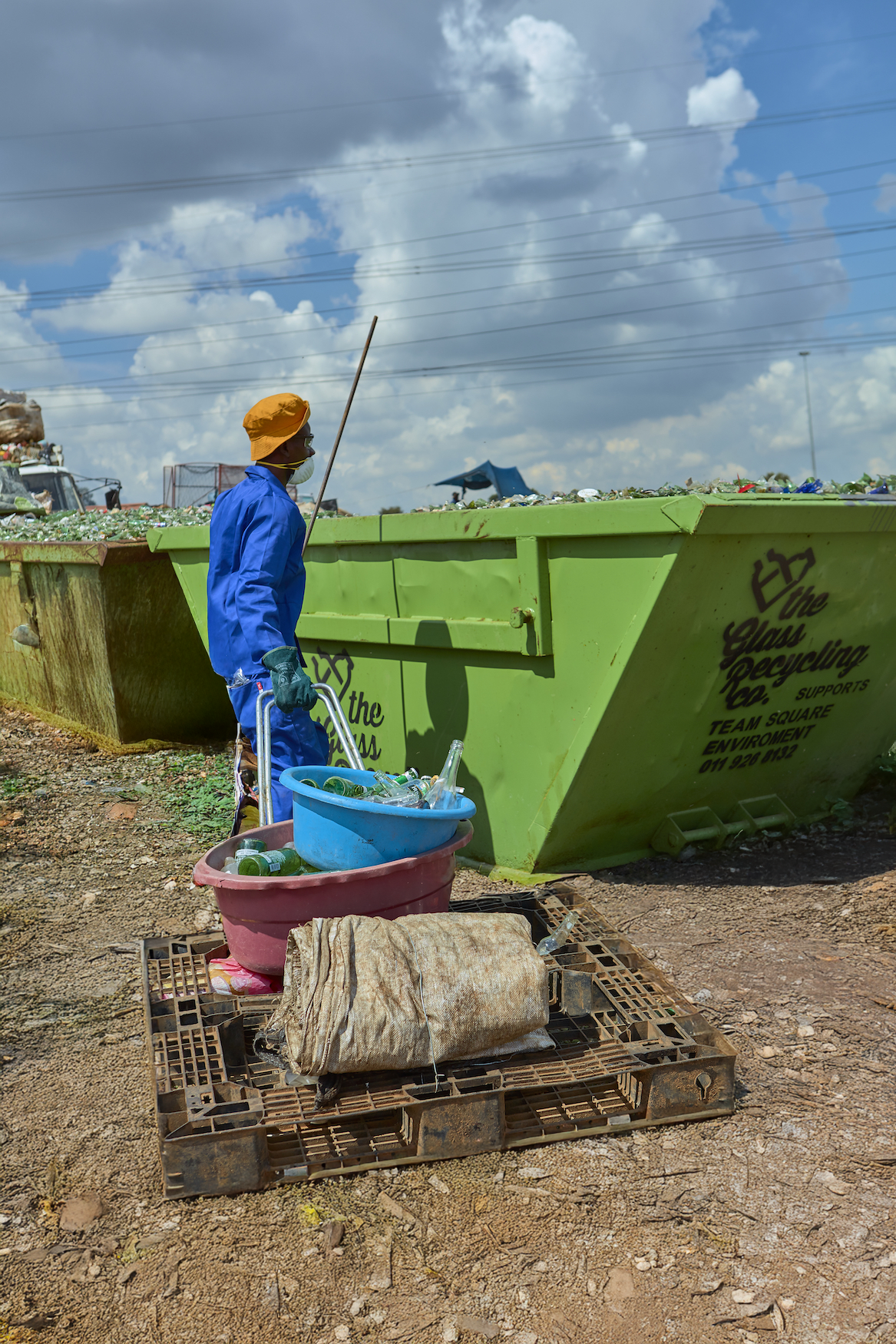
 TGRC skip bins stationed at a buy-back centre, supporting glass recovery and recycling across South Africa.
 TGRC’s members pay Extended Producer Responsibility (EPR) fees, and TGRC fulfils the obligations on their behalf under SA’s Extended Producer Responsibility (EPR) regulations. Their contributions fund the infrastructure, entrepreneurs, and buy-back centres - among other incentives - that collect hundreds of thousands of tons of glass each year. From global beverage brands to local packaging producers, every TGRC member plays a part in turning what could be waste into new opportunity.
How membership works
South Africa’s EPR regulations require companies that place glass packaging on the market to take responsibility for its collection and recycling, often by partnering with a PRO like TGRC.
TGRC’s members meet these obligations by paying EPR fees based on the tonnage of glass packaging they place on the market. These funds are channelled into collection networks, buy-back centres, transport subsidies, incentives, and public education. In practice, TGRC’s members help maintain the entire system that keeps glass moving.
Among TGRC’s members are household names such as SAB, HEINEKEN Beverages and Diageo alongside glass manufacturers Ardagh Glass Packaging and Isanti Glass. Together, they are building a model of shared responsibility that keeps glass flowing through a truly circular economy.
Manufacturing at the heart of the system
At the core of this circular model are glass manufacturers, whose operations close the loop by transforming collected recycled glass into new bottles and jars. Ardagh Glass Packaging and Isanti Glass are the key players in the country’s packaging landscape and active contributors to the recycling value chain that TGRC manages.
Ardagh Glass Packaging: forging the future of glass
Ardagh Glass Packaging emerged after Ardagh Group acquired Consol Glass in 2022, bringing one of Africa’s most established glass manufacturers under the Ardagh banner. With facilities in Nigel, Bellville, Clayville and Wadeville, Ethiopia, Kenya and Nigeria the company supplies a wide range of glass packaging across the continent, serving beverage, food and pharmaceutical industries.
The operations are continuously modernised through investment in new, energy efficient, and sophisticated cullet processing technologies, which enables increased cullet (recycled glass) use. Each ton of cullet used in the production process saves natural resources and significantly reduces carbon emissions. Ardagh Glass Packaging-Africa is a member of the TGRC PRO and plays an integral role in the collection and processing of cullet. The business is also invested into future skills development through its Ardagh for Education programme, a 10-year commitment designed to foster high-quality STEM education.
Isanti Glass: locally made, globally inspired
Isanti Glass has rapidly become a key player in South Africa’s glass packaging sector, proudly standing as a 100% black-owned, Level 1 B-BBEE manufacturer. Isanti was established as a demonstration of black industrialisation, localisation and competition within the industry while strengthening South Africa’s manufacturing base.
Headquartered in Johannesburg, Isanti produces amber, flint and green glass for the food and beverage industries, incorporating up to 50% recycled content in its products. The company’s vision goes beyond manufacturing: it’s focused on sustainability, skills development and community upliftment. Through partnerships with enterprises and buy-back initiatives aligned with TGRC, Isanti supports the inclusion of informal collectors and small business owners in the circular economy. It’s In Our Hands: A movement to inspire change, one glass bottle at a time is Isanti Glass’s powerful new nationwide campaign. It’s a call to action urging South Africans to choose sustainability, uplift local communities and grow the country’s manufacturing industry, one glass bottle at a time.
SAB: turning waste into worth
For more than 130 years, South African Breweries (SAB) has supported the country’s economic and social growth, brewing not just world-class beer but also opportunity. Its collaboration with TGRC continues that legacy, linking environmental responsibility with job creation and small-business development.
Through partnerships such as its work with Unconventional Waste Solutions, a young, purpose-driven enterprise, SAB is helping to turn waste into worth. The project focuses on the collection of post-consumer glass waste from townships, ensuring it’s transformed into new glass products. This isn’t just recycling; it’s social upliftment in action.
Every load of glass collected represents income for local reclaimers, cleaner streets, and a stronger local economy. SAB’s work with TGRC reinforces the company’s belief that true sustainability must empower communities as much as it protects the planet.
/file/dailymaverick/wp-content/uploads/2025/11/DM2.jpg "Moments of celebration — every bottle here can be recycled through TGRC’s national network.")
HEINEKEN Beverages: brewing change
HEINEKEN Beverages’ Brew a Better World 2030 ambitions place sustainability at the heart of its growth strategy. Through its GreenUp and Vuselela programmes, the company is investing in recycling education, infrastructure, and entrepreneurship to transform how glass is recovered and reused across South Africa.
By working with TGRC to establish and strengthen Buy-Back Centres in underserved communities, Heineken Beverages is helping to formalise the informal waste sector. The company’s approach empowers youth, women, and informal waste reclaimers to build sustainable livelihoods while protecting the environment. These initiatives not only divert glass from landfills but also strengthen local economies and promote inclusion.
“Brew a Better World is more than a corporate initiative; it’s a movement brewing opportunity, resilience, and a cleaner future,” says Eric Leong Son, Head of Sustainability at HEINEKEN Beverages. The company’s partnership with TGRC is a practical expression of that philosophy, ensuring that recycling becomes part of everyday life in the communities that need it most.
Diageo: the spirit of progress
Through its Spirit of Progress agenda, Diageo continues to drive meaningful impact in South Africa’s most vulnerable communities. Its Water for Life initiative has enhanced sanitation and hygiene in 32 schools across KwaZulu-Natal, replenishing more than 24 million litres of water and restoring dignity to thousands of learners.
At Sandakahle Primary School in Umlazi, infrastructure upgrades included the provision of water tanks, geysers, taps, and improved food-storage facilities, alongside hygiene education. Complementing this is Diageo’s Learning for Life programme, endorsed by Deputy Minister of Higher Education and Training, Dr Nomusa Dube-Ncube, as “a shining example of what is possible when the public and private sectors work together.”
In partnership with the University of Johannesburg’s School of Tourism and YES4YOUTH, the programme is equipping 100 young people for careers in hospitality this year. Looking ahead, Diageo plans to pilot a glass recycling initiative to combat illicit trade and advance national circular economy goals. For Diageo, sustainability is not only about what’s inside the bottle but also about the difference that bottle can make.
The bigger picture
TGRC’s 80-plus members show that recycling is a shared responsibility that thrives on cooperation. Every bottle remade through this system represents jobs and significant energy savings. Glass can be recycled infinitely without losing quality, making it one of the most sustainable packaging materials on earth.
Together, TGRC and its members are demonstrating how a circular economy can work in practice: transparent, efficient, and inclusive. In a world still hooked on single-use convenience, glass remains the original sustainable material. Thanks to this growing network of partners, each clink of a glass carries more than a toast - it carries the promise of a cleaner South Africa. DM