




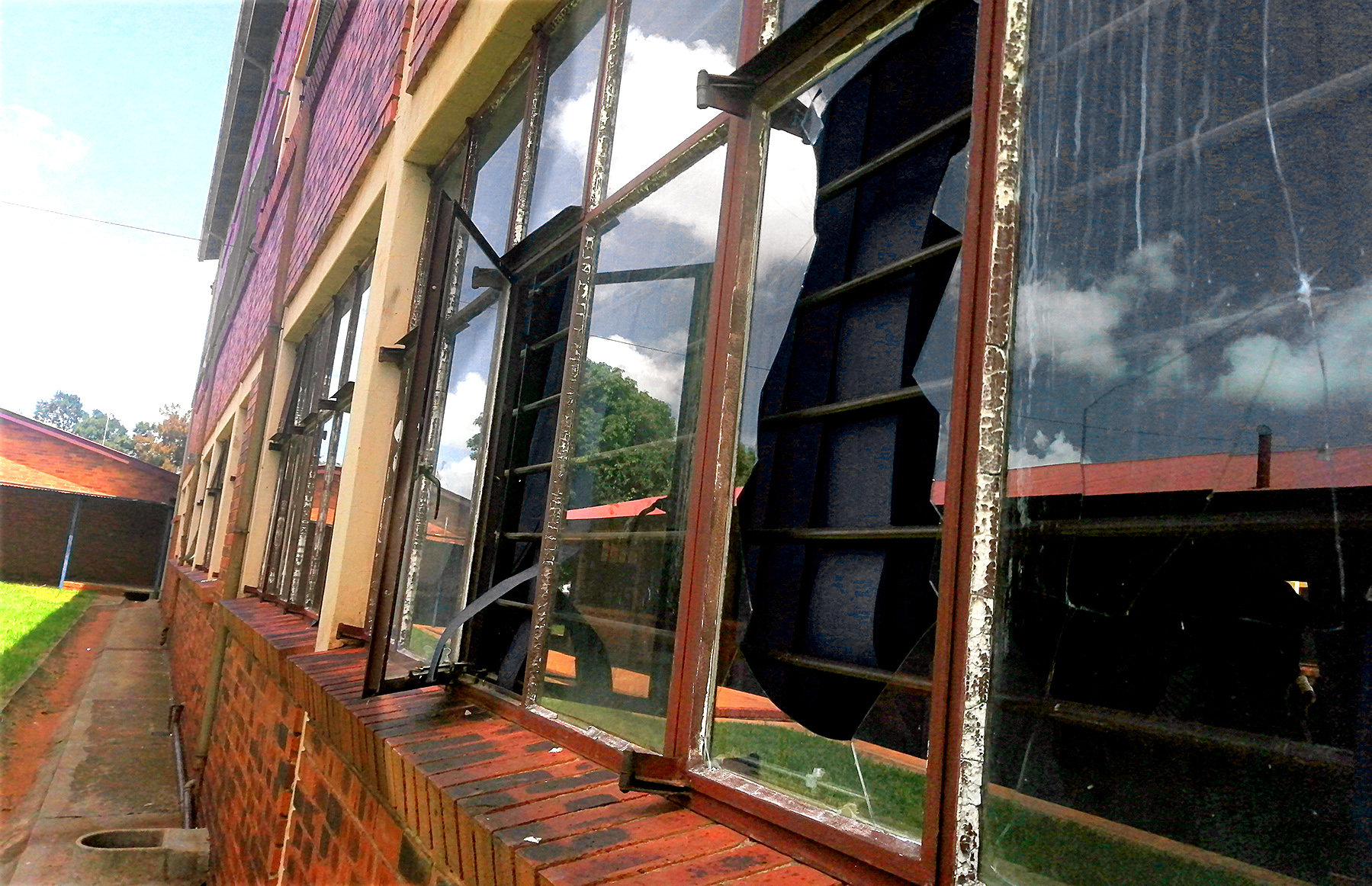
 Subsidy cuts are likely to further erode crumbling infrastructure at struggling quintile 5 schools in Gauteng.(Photo: Bheki C. Simelane)
 Rosettenville Central Primary School in Johannesburg is a microcosm of hundreds of public schools across Gauteng. It’s bustling with dedicated teachers and learners from varied backgrounds with differing academic needs, and many of the pupils benefit from tailored support and after-school programmes.
However, this scenario is under threat after the Gauteng Department of Education (GDE) announced that from April 2026, subsidies for quintile 5 schools in the province will be decreased from R879 to just R315 per learner. This will force schools to rethink budgets and parents to pay more amid profound uncertainty.
More than 600 quintile 5 public schools — a category traditionally reserved for fee-paying schools serving relatively wealthy communities — in Gauteng will be affected by the cut.
Financial realities behind the numbers
Dr Jaco Deacon, the CEO of the Federation of Governing Bodies of South African Schools (Fedsas), provided a sobering perspective.
“In real financial terms, a 65% drop is actually R500 per learner, per year. It’s a cappuccino per month, so it’s not that substantial, but if you’re operating a school of 1,200 learners, which is more or less the average size of a school in Gauteng, then suddenly it’s R600,000 less income for the next year, and that’s substantial. Parents will have to pay for the deficit if the department doesn’t step up,” he explained.
Deacon clarified common misconceptions about quintile 5 schools. Although sometimes presumed to be wealthy because of their locations, these schools frequently serve learners transported from poorer areas, resulting in a different socioeconomic reality from the one suggested by their classification. Heavy reliance on provincial subsidies means that such cuts leave the schools financially exposed.
The sudden subsidy cut, announced in a letter dated 30 September — the statutory deadline for school governing bodies to submit budgets — created procedural and operational chaos at the affected schools.
“Budgets were set, and schools had a reasonable expectation of stable funding. A 65% reduction, announced after the deadline, means many schools now face inaccuracies up to R600,000 in their budgets,” said Deacon.
Addressing the outdated quintile classification system, he said, “When the quintiles were created, a quintile 5 school was one in an affluent area. But now, with learners being transported from poorer areas, the financial status of the school community often does not match the geographical location. We have proposed revising this classification system to [Minister of Basic Education Siviwe Gwarube’s] advisory committee.”
Fedsas had raised issues around the subsidy cut with the GDE, and would engage with Gwarube, said Deacon.
He said there was a need for clarity and urgent intervention, and acknowledged that difficult choices lay ahead.
“If additional funds aren’t forthcoming, schools will have to amend their budgets and potentially increase fees. This will directly affect learners and communities,” he said.
Not all that glitters is gold
The South African school quintile system categorises all public schools into five groups (quintiles) based largely on the socioeconomic status of the communities around them.
Quintile 1 schools serve the poorest 20% of learners, while quintile 5 schools serve the least poor 20%. This classification is primarily used to allocate funding and determine whether schools charge fees. Schools in quintiles 1, 2, and 3 have been declared no-fee schools and receive higher government subsidies to compensate for the lack of fee-based income.
Quintile 4 and 5 schools are fee-paying and receive smaller subsidies, as they are expected to raise additional funds through school fees and fundraising.
Rosettenville Central Primary’s acting principal, Sphelele Dzanibe, gave an unvarnished account of the daily struggles faced by schools in qunitile 5, highlighting a disconnect between official classifications and local conditions.
“My school is technically quintile 5, but on paper it should be quintile 4. We have lodged numerous appeals to the Gauteng Department of Education to reconsider this classification, given the changed financial context in our community, but to no avail,” he said.
The announcement of the subsidy cut came as a shock.
“We only received notice two weeks ago. Our subsidy for 2024 to 2025 was about R890,000. Now, for 2026 to 2027, it’s been slashed to approximately R346,000, a decrease of more than half.”
This announcement came after the school had already finalised its budget, forcing urgent and drastic revisions.
“This shortfall means we have to increase school fees. We currently charge one of the lowest fees in the area — R3,500 a year — but that’s still unaffordable for many parents. Many apply for fee exemptions or simply can’t pay. We face a potential revenue loss nearing R3-million, even after collections,” he said.
Dzanibe described his school’s community as diverse, with many low-income and foreign-national families. He lamented that the physical facilities, such as the netball court and school hall, which once justified the quintile 5 classification, were falling into disrepair from years of neglect.
“We’ve appealed multiple times for reclassification, but the department refuses. The parents we have work as security guards, cashiers, doing piece [work] jobs… You can’t expect them to pay more, because where will they get the money from? The classification is not reflective of our realities,” he said.
The strain goes beyond finances.
“Learner numbers have increased, but two teaching posts were cut last year, leaving us with 28 [teachers]. The official learner-teacher ratio should be one to 40, but in reality, it’s closer to one to 55. It’s impossible to teach effectively in such overcrowded classrooms,” he said.
The financial challenges have rippled throughout the school’s operations.
“We’ve been threatened with electricity disconnections because we can’t pay for municipal services. I had to beg the officials not to cut us off, knowing a blackout in a high-crime area would jeopardise safety,” said Dzanibe.
He said fundraising efforts, like “casual Fridays”, where learners pay a small fee to dress informally, only raised enough to pay for one security guard a week.
“Ten to 15 years ago, you would classify us as quintile 5, but not any more. I’ve been here 29 years, and the circumstances have changed drastically. We cannot run away from that any more, and I cannot overstate the financial pressure we are under,” said Dzanibe.
A teacher from another quintile 5 school, who requested to remain anonymous over concerns about professional backlash, voiced similar sentiments.
“Our infrastructure is showing signs of serious neglect due to insufficient maintenance funds — leaking roofs, broken sewage systems and ageing facilities hamper our ability to provide a safe and conducive learning environment. Collecting fees has become increasingly difficult as more parents request exemptions, leaving us caught in a difficult balancing act between meeting operational costs and supporting our learners’ needs,” she said.
The teacher said the subsidy cuts would exacerbate these financial pressures, forcing them to consider fee increases that would place additional strain on already vulnerable families.
“It’s a challenge just to keep up with day-to-day costs such as utilities and security. We are doing everything we can to maintain standards and support learners, but without additional funding or a revision of the quintile status that more accurately reflects our community’s socioeconomic reality, the outlook is bleak,” she said.
/file/dailymaverick/wp-content/uploads/2025/11/ED_554291-1.jpg "Members of the teachers' union Sadtu protest against austerity measures in public education on 23 April in Pretoria. (Photo: Frennie Shivambu / Gallo Images)")
Department defends timeliness amid backlash
GDE spokesperson Steve Mabona said the department had met the required deadline for announcing the subsidy cuts.
“The indicative resource allocation certificates were signed by the head of department on 30 September as required by the national norms and standards for school funding,” said Mabona.
“Since the 2021 medium-term expenditure framework, departments have faced budget cuts due to fiscal consolidation by the National Treasury..
“There’s no additional funding received, and there remains a shortfall in the 2026/27 budget even after implementing the new funding mode.”
For several years, quintile 5 schools received top-up funding to bring them closer to the level of quintile 4 schools, but that support has now been withdrawn.
Mabona said the decision was taken to contain financial pressure and ensure the department adhered to national guidelines. DM