




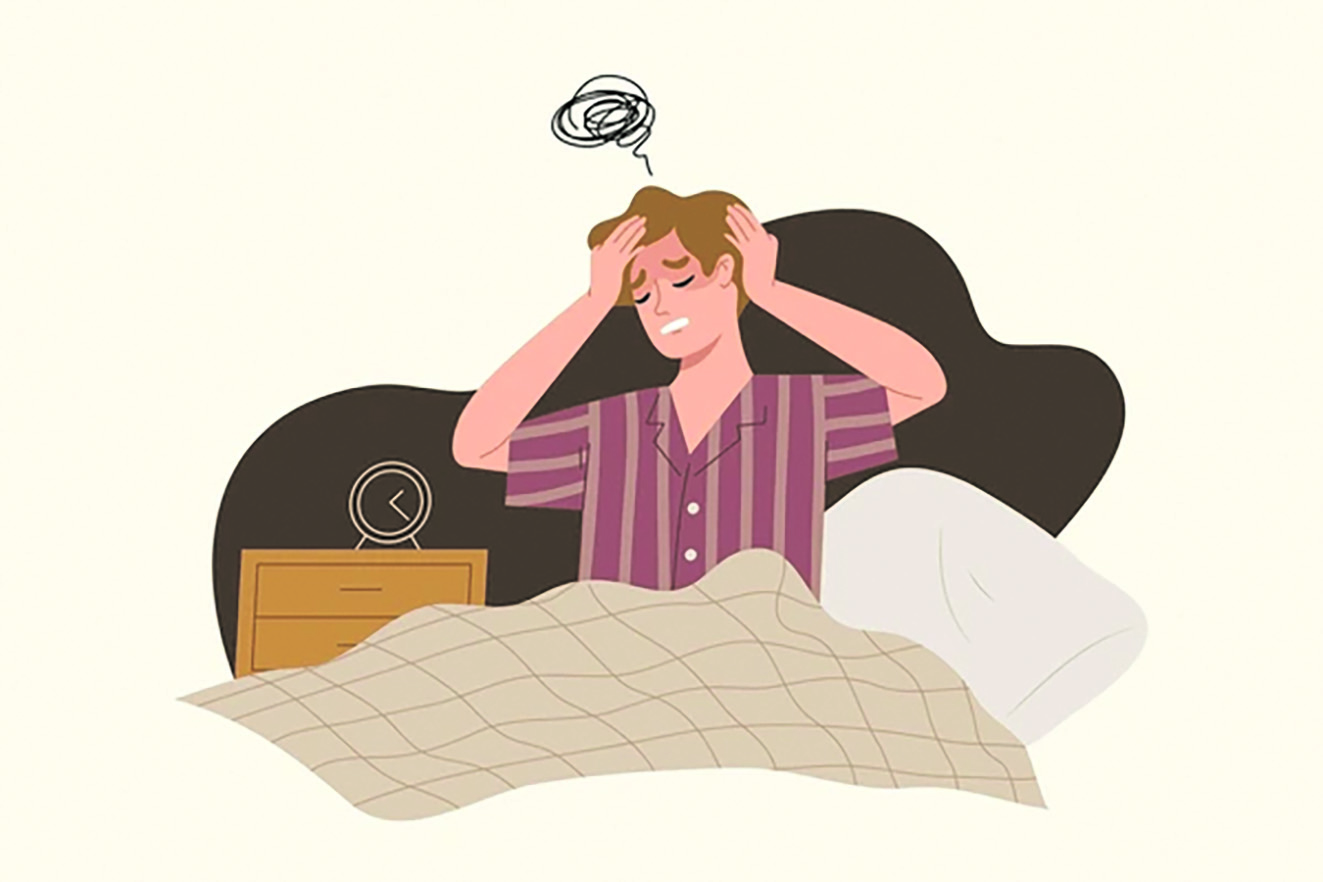
 A good night’s sleep is not just about how long you sleep, but includes regularity, quality and timing. (Illustration: Freepik)
Way back when I was in matric, I trained myself to sleep for just six hours a night to maximise the time available to study. By the time I got to college, it had become an ingrained habit.
Fast-forward a few years, and the stress of certain life events saw my sleep-training habits turn into insomnia. Over the years, it has progressively become worse, but when I become aware of how little sleep I’m getting, I can usually switch back to my six hours a night. More than that tends to make me feel even more sluggish.
So, I was rather alarmed when presented with Discovery’s recent research report, The Sleep Factor: A data-led blueprint for better health. Drawn from more than 47 million sleep records, the study shows that one in two Vitality members has at least one sleep metric out of range, and those with insufficient and irregular sleep patterns face a 22% higher risk of early death.
Discovery Health Medical Scheme data shows that individuals sleeping less than six hours per night (compared with those sleeping seven to eight hours) have a higher risk of developing diabetes, obesity, coronary heart disease and symptoms of depression. They have a:
- 65% higher risk of diabetes;
- 41% higher risk of obesity;
- 33% higher risk of coronary heart disease; and
- 20% higher risk of depression symptoms.
Claims for sleeping disorders in the Discovery Health Medical Scheme have grown 2.8 times from 2008 to 2024, with insomnia accounting for 55% of those claims in 2024, and obstructive sleep apnoea emerging as the fastest-growing condition.
“The evidence is telling us something important,” Dr Ron Whelan, chief executive of Discovery Health, said. “Sleep is emerging as one of the strongest predictors of chronic disease and mental health challenges. We cannot afford to overlook sleep in our approach to prevention and healthcare.”
And the side effects of poor sleeping patterns extend beyond your immediate physical health, even affecting consequences behind the wheel.
Discovery Insure data reveals that sleep is a five-times stronger predictor of motor accident risk than demographic or credit factors. Drivers who sleep only four to five hours per night face a 4.3 times higher motor accident risk.
Conversely, getting enough sleep reduces accident risk by 32%, and maintaining a regular sleep schedule reduces it by 36%.
/file/dailymaverick/wp-content/uploads/2025/10/ChatGPT-Image-Oct-8-2025-02_46_18-PM.png "Image created using ChatGPT")
As my health app tells me every morning, sleeping health is not just about how long you sleep, but includes regularity, quality and timing.
Nadine Rampf, an associate professor in the division of clinical anatomy at Stellenbosch University, points out that “sleep is not downtime – it’s the active biology that keeps our brains and bodies running”.
“When we prioritise sleep, we unlock human potential, safer decisions, stronger health and greater resilience. Neglecting sleep impacts every system in the body, but protecting it is one of the most powerful predictors of long-term health and longevity.”
If you are a poor sleeper, the good news is that poor sleep is not a life sentence and you can improve outcomes almost immediately.
Tips to ensure you get a good night’s rest
Some of the tips shared by Rampf and senior Discovery executives (including Robert Attwell, CEO of Discovery Insure; Ron Whelan, CEO of Discovery Health; and Dinesh Govender, CEO of Discovery Vitality) include:
- Aim for seven to nine hours of sleep each night – the optimal range;
- Six hours may suffice if you wake refreshed, upbeat and functional;
- Catch up with naps – ideally before lunch, not later;
- Skip the nightcap as alcohol shortens deep-sleep stages;
- Avoid late exercise or heavy meals after 7pm; and
- Enable night mode on phones and screens from 6.30pm. DM
This story first appeared in our weekly Daily Maverick 168 newspaper, which is available countrywide for R35.
