




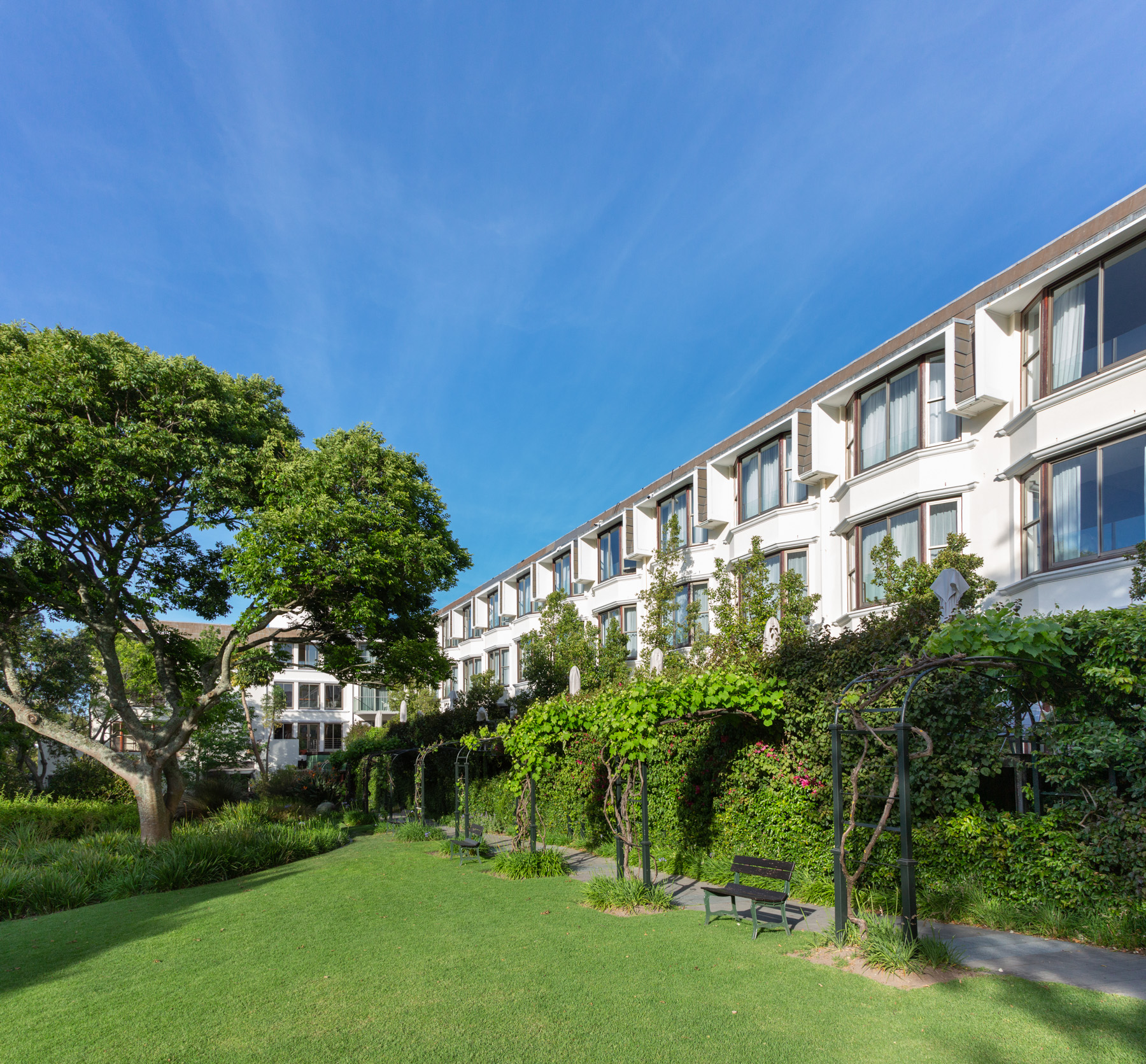
 The Vineyard
In the world of high-end hospitality, waste management is often a linear problem: food scraps are tossed, trimmings discarded, and the end product leaves the premises. But at The Vineyard, a quiet revolution is unfolding, reimagining waste as a resource.
From Juice Scraps to Soil Health
Each morning, the hotel’s breakfast bar comes alive with vibrant, cold-pressed juices. The preparation of these colourful blends creates mountains of pulp, stems, and trimmings, material most kitchens would simply send to landfill.
Here, however, nothing is viewed as waste. The organic matter, including coffee grounds and fruit pulp, is collected by a local composting partner who transforms it into nutrient-rich compost. This “black gold” is then returned to the hotel’s gardens, enriching the soil that grows the next cycle of herbs and microgreens.
What began as a small kitchen experiment has evolved into a rhythm of its own. The team has learned that true sustainability is not a single initiative but a daily practice, one that demands patience, observation, and care, much like the garden itself. Every week, the compost returns a little richer, the soil a little healthier, and the garden a little more alive.

Growing More, Wasting Less
The decision to grow microgreens on-site is not just an environmental gesture. It’s about resilience and connection. Led by Head Chef Chad Blows, the kitchen team cultivates a variety of microgreens including pea shoots, mustard, and basil, supplying both the breakfast buffet and restaurant.
Microgreens are notoriously difficult to source consistently in Cape Town, often arriving from commercial growers in other provinces. Growing them in-house ensures fresher produce, fewer food miles, and greater control over quality and availability.
“It’s not just about the numbers,” says Blows. “Right now, the project is evolving as we improve our yields and quality, with the expectation that it will breakeven within the next 3 months. The goal is to build a system that feeds itself, one step at a time.”

The early savings are being reinvested where they matter most, in people. The hotel has created a dedicated horticulturist and propogandist position to manage the gardens and microgreens, turning a sustainability initiative into a skills and job creation opportunity. What started as a single tray of pea shoots now feels like a small ecosystem, tended daily, harvested weekly, and always teaching something new.
/file/dailymaverick/wp-content/uploads/2025/10/The-Vineyard_Microgreen_DM-3.jpg "The Vineyard_Microgreen_DM 3")
/file/dailymaverick/wp-content/uploads/2025/10/The-Vineyard_Microgreen_DM-6.jpg "The Vineyard_Microgreen_DM 6")
/file/dailymaverick/wp-content/uploads/2025/10/The-Vineyard_Microgreen_DM-8.jpg "The Vineyard_Microgreen_DM 8")
Reconnecting Chefs with the Earth
Beyond its environmental and economic impact, the project has changed how the team experiences food. In fast-paced kitchen environments, the connection to an ingredient’s source can easily be lost. At The Vineyard, chefs step outside to pick what they plate, reconnecting with nature in a way that rebalances both kitchen culture and mindset.
“When you’ve grown it yourself, you cook differently,” says Blows. “You appreciate every stem, every leaf. It reminds us that food has a journey before it reaches the plate.”
This hands-on approach has become a kind of antidote to the intensity of hospitality life. Chefs speak of the calm that comes from tending seedlings before service, a quiet pause that resets perspective. It’s a reminder that good cooking starts long before the pass, and that a healthy kitchen is one that respects both its people and its produce.

A Living System
It’s still early days, but the system is alive, a loop of growth, harvest, and regeneration that aligns perfectly with The Vineyard’s long-standing ethos of care for both people and planet.
Each phase feeds the next: the juice pulp becomes compost, the compost nourishes the soil, the soil grows the greens, and the greens find their way back to the plate. It’s a complete cycle, small in scale yet rich in meaning, and one that continues to deepen the hotel’s relationship with the land around it.
So, the next time you enjoy a dish at The Vineyard, know that the smallest greens carry the biggest story, one rooted in purpose, patience, and possibility. DM
[embed]https://vimeo.com/1078609816/2bd883cc89?fl=pl&fe=sh[/embed]
Comments
Scroll down to load comments...