




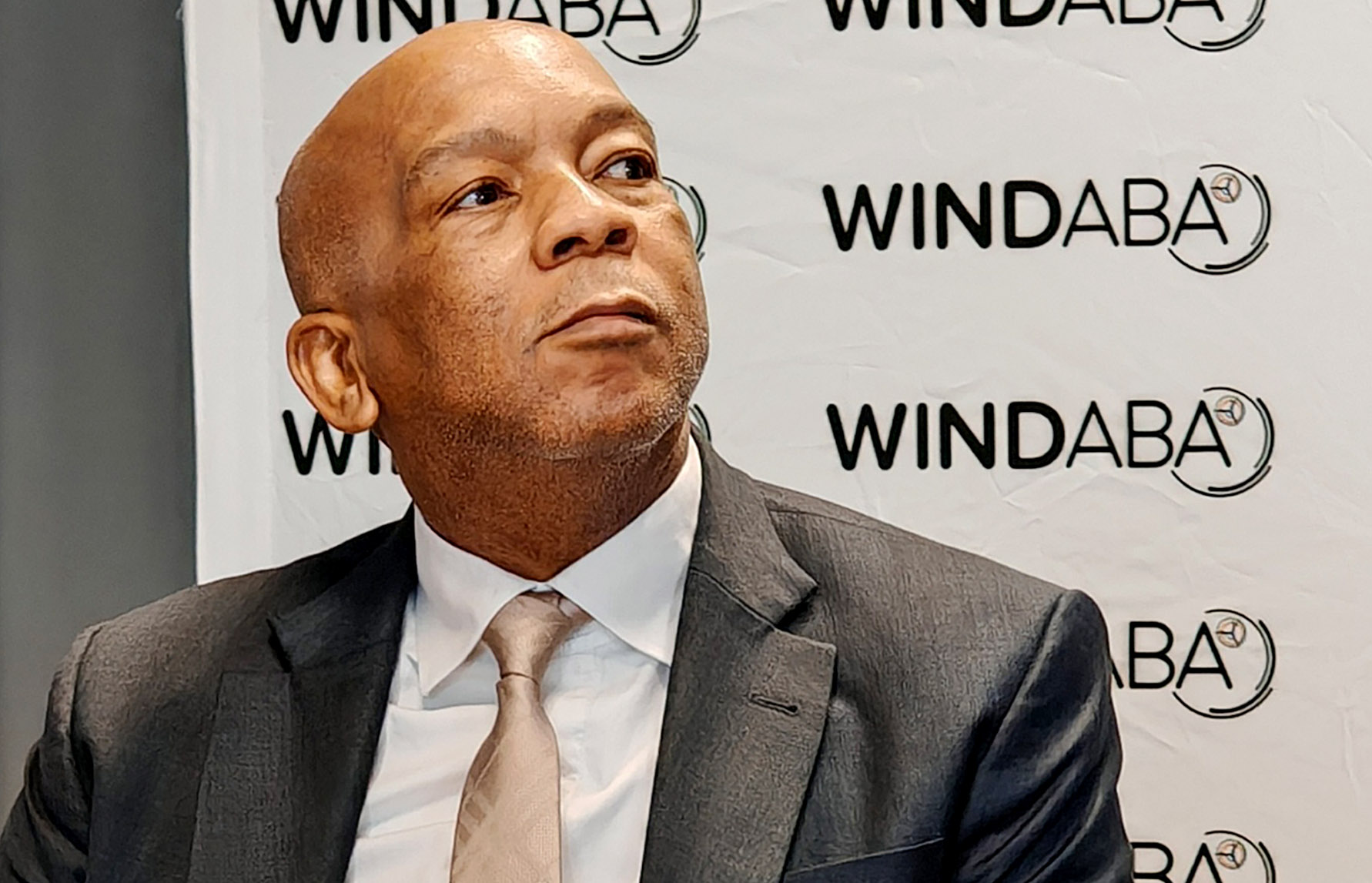
 Minister of Electricity and Energy Kgosientsho Ramokgopa. (Photo: Lindsey Schutters)
 There’s a charming quirkiness to how technical Dr Kgosientsho Ramokgopa gets about energy and electricity.
Before the Department of Mineral Resources and Energy was split into two on the formation of the GNU (to be clear, the official split happened only in 2025), then incumbent, and still Minister of Mineral and Petroleum Resources, the honourable Gwede Mantashe dithered about with the crucial energy infrastructure development framework.
IRP2025, however, comes to South Africa after a short period of development and deliberation and, in the words of its principal author (current Minister of Electricity and Energy Ramokgopa), “is a living document that can be changed or adjusted”.
It’s this candour that endears him to all who have the open minds to listen.
Weaving words of hope and wonder
While wind is the biggest winner in the proposed energy mix – it will make up 24% of electricity generation if all goes to plan – Ramokgopa is also realistic about its intermittent, untameable nature. “Wind doesn’t blow 24/7, it doesn’t follow a prescribed programme.”
So hydrocarbons are still in the mix, which will encourage foreign investment on the back of secured demand. I call it hydrocarbons and not gas or diesel because Ramokgopa doesn’t refer to it as gas.
His chosen verbiage shows a deeper connection with and understanding of the underlying technologies that drive electrons through the country’s grid. He speaks of molecules, de- and regasification, and refers to the critical minerals.
He says “energy ceases to be a crisis” and that “electricity is going to be a catalyst for growth”. It better be, because the sticker price on the planned doubling of Eskom’s capacity is R2.2-trillion.
Spending consumer money
“We are introducing (an investment that is) 30% of South Africa’s GDP. As you know, consumer spending makes up 64% of that, so we’re taking money from working citizens who need to see value,” he explains.
That value proposition sits at the heart of IRP2025 – not just the megawatts, but the multiplier effects.
Read more: Local products can rescue SA’s GDP from the offshore consumption trap
It’s framed not as a technical update, but as a strategic and economic intervention: an attempt to move the nation’s energy policy from crisis management to investment-led transformation.
The IRP is the single biggest investment programme of the post-apartheid era, a document that tries to straddle hard science and soft politics. He insists on “stripping emotions out of the conversation” – the kind of thing a man says only after surviving a decade of load shedding memes.
Wind whispers and policy pivots
Wind, he says, is “part of our endowments”. The plan is to add 34,000MW of onshore wind capacity by 2039, alongside 25,000MW of utility-scale solar PV. Together, they form a 50GW renewable surge that will push cleaner electricity generation beyond fossil fuels for the first time.
But this time, he wants the industry to mean something that goes beyond electrons. “We have not been able to build an industry. On the back of this experience, we’ve taken a view that industrialisation must be a big part of that conversation,” he says.
That means not just buying wind turbines but building them – or at least using South African steel and civil engineering to prop them up on the hills. And simultaneously smashing trade barriers like the EU’s Carbon Border Adjustment Mechanism (CBAM) by exporting clean energy goods (and skills) of our own.
Read more: EU carbon price on imports ‘violates’ WTO rules, says Patel as SA heads for clash with bloc
The coal conundrum and the baseload blues
Still, the ghosts of Medupi and Kusile whisper through the air. “We are not going to abandon coal – it’s our strategic resource,” he says, and there’s an audible shift in the room.
The IRP formalises 8GW of coal decommissioning by 2030 with no new coal-fired power stations, but the baseload gap that remains is real.
That’s where gas-to-power enters the chat.
“Decommissioning 8GW of baseload coal-fired plant necessitates urgent decisions on gas-to-power procurement,” he says.
The plan calls for 6,000MW by 2030, scaling to 16,000MW by 2039, with a 50% minimum load factor to anchor LNG infrastructure. And yes, nuclear’s in there too – 5,200MW of new capacity to complement renewables and stabilise the grid. And he plans to revive the pebble bed project.
Read more: Ramokgopa makes the case for small modular reactors and the resuscitation of SA’s nuclear industry
He even slips in a nerdy promise: a clean coal demonstration plant by 2030, to prove – under South African commercial conditions – that cleaner combustion might still have a place.
The philosopher-engineer
Wind is central to the Ramokgopa vision, and he puts to bed the ideas that solar scores as well in a longitudinal study that creates skilled jobs. He answered Daily Maverick’s questions during the media roundtable, explaining that he was coordinating with universities and policymakers to ensure South Africans benefit directly.
The Renewable Energy Industrialisation Masterplan, he says, is designed to boost domestic manufacturing and skills, anchoring wind as both a clean energy source and an industrial catalyst.
On the challenge of solar manufacturing, Ramokgopa is clear about the difficulty of competing with China, acknowledging that building a local industry may initially cost more.
However, he frames this premium as an investment in jobs and long-term competitiveness, arguing that South Africa can gradually shift from imports to increased local content. The minister’s approach balances immediate energy needs with a phased localisation strategy, mapping out where South Africa can compete now while building capacity for the future.
What this means for you
If this all sounds distant and technocratic, it’s not. That R2.2-trillion investment isn’t abstract money – it’s your electricity bill, your taxes, your factory’s uptime, your broadband stability.
Wind, gas and molecules are policy poetry until they become jobs and power lines. But if Ramokgopa’s right, IRP2025 could be the bridge from survival mode to a reindustrialised South Africa – a place where load shedding finally becomes a historical term.
Ramokgopa isn’t just describing policy. He’s performing with optimism. He talks about electrons as if they’re economic agents, about molecules like they’re precious trinkets.
And perhaps that’s the charm – that he can stand before a country still traumatised by darkness and insist that electricity will “reindustrialise South Africa’s economy”.
His IRP2025 vision is bright. It’s easy to be cynical. But cynicism doesn’t keep the lights on.
Science might. Leadership might. And if you listen closely to Ramokgopa long enough, you might just start believing that hope might, too. DM