




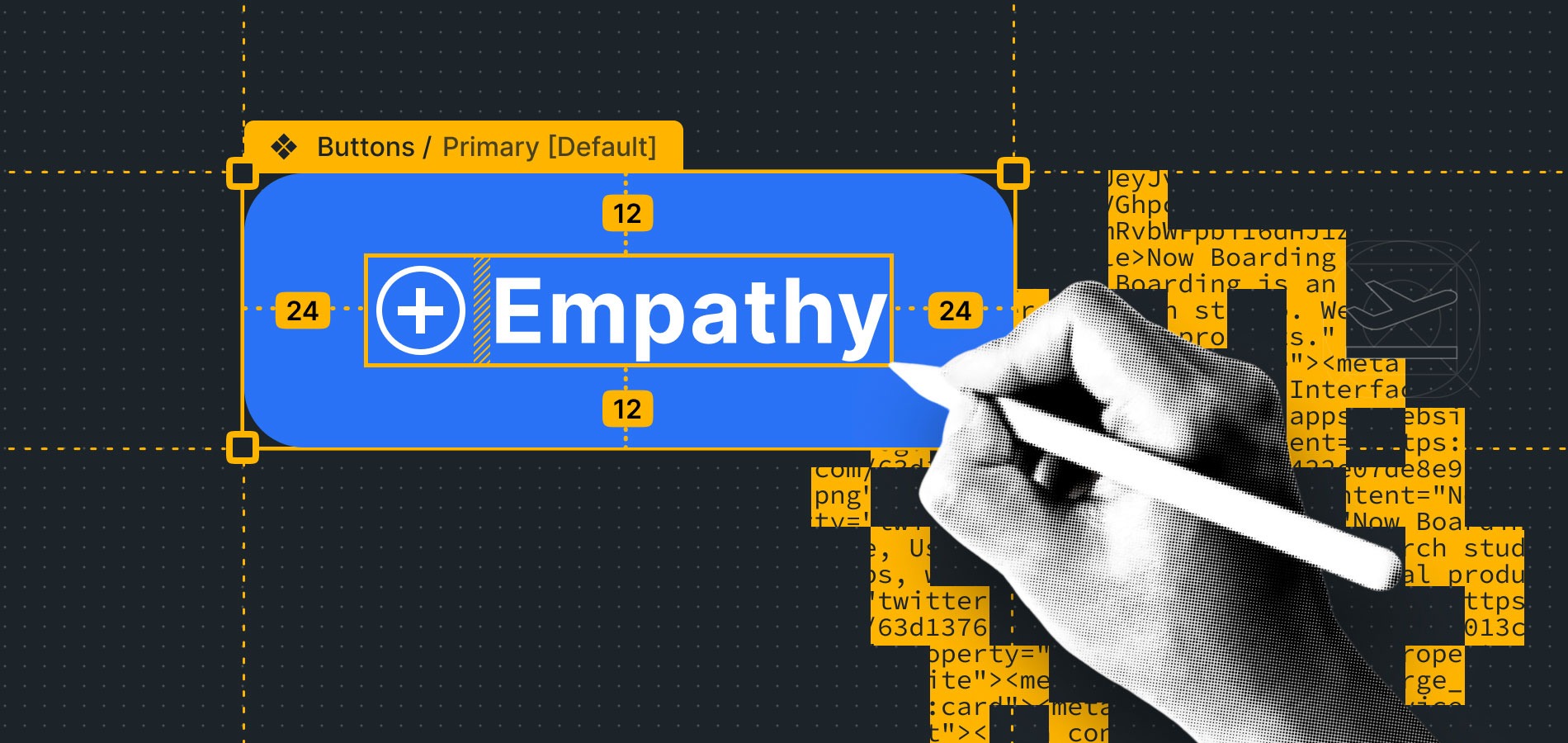
 Illustrative image, co-creating with AI and shaping the future of user experience
Great UX is often the silent decider in consumer choices. It’s possibly the reason you've chosen one music streaming service over another, or why you prefer one food delivery platform over another. In a world where user expectations are higher than ever, thoughtful UX/UI design has become an absolute must for building any successful digital business.
UX/UI Design is by its very nature, human. It pulls together research, psychology, and design to make sure digital experiences don't just work, but feel intuitive, trustworthy and enjoyable. Designers lean heavily on creative skills, data and tools, but there's a less tangible aspect that’s absolutely critical: empathy.
The Human Edge
With the rise of AI across all facets of design, empathy remains the UX designer's superpower. Designers have a unique capacity to represent the people that products are being built for, using a sharp eye and creative skepticism to craft interfaces. The process of questioning ideas with an open mind, and reflecting from diverse perspectives, is what helps us cut through complexity and develop a deeper understanding of what users truly need.
Take, for example, the design of an Emergency Assist feature within a large insurance platform, Everything.Insure. It wasn’t enough to create functional flows, the design team had to put themselves in the shoes of a person who is stranded on the side of the road in a dire, emotional state. There’s zero time for fumbling. The interface had to be deeply intuitive, stripping away all unnecessary noise, minimising steps, and getting the person the help they need, fast.
A less obvious but equally interesting example is SnapScan’s merchant onboarding journey. The required sign-up steps could easily make a busy business owner throw their hands up and drop off, but the design team found real compassion for that time-constrained business owner. They simplified the entire process, breaking it down into logically-grouped, manageable steps, always giving the merchant the option to save their progress and come back when they had a free minute.

When Emotional Intelligence meets Artificial Intelligence
With the bold entrance of AI onto the scene, digital experiences are getting radically more interesting. AI is allowing products that were once confined to science fiction to come into existence, creating a whole new way for users to interact with digital services through natural, conversational language.
AI has created the potential for interfaces to learn from user inputs and behaviours, and adapt dynamically to a user’s specific context. This technology offers designers the ability to craft deeply personalised experiences that are nuanced and dynamic, customising each person’s journey in real time.
In South Africa, a country with twelve official languages and complex cultural and societal nuances, this type of personalisation offers enormous potential to make digital tools and services more broadly equitable and accessible, meeting users exactly where they’re at.
Designing Trust
Nowhere is the intersection of AI and human empathy more critical than in high-stakes sectors like Medtech. Take a company like AI Diagnostics whose AI-powered digital stethoscope greatly improves the speed and accuracy of Tuberculosis screening. The companion app is used by healthcare workers to manage the screening process, so it was essential that the app designer truly understood the realities of operating on the medical frontline and could empathise with the user in that high-pressure moment.
The primary design goal was to create an app so intuitive that healthcare workers could focus completely on their potentially ill or emotional patient, and not on wrestling with the technology. Critically, the interface also needed to instil trust and confidence for it to be embraced by medical professionals, becoming a bridge for acceptance and successful adoption.

The Enduring Value of Empathy
The navigation of this evolving landscape, where human empathy meets artificial intelligence, continues. So far, it’s clear that the most meaningful digital experiences emerge when design teams thoughtfully combine understanding with AI's capabilities. Humans bring context, emotional intelligence, and the ability to truly advocate for users. AI brings precision, speed, conversational engagement, and the power to personalise at scale.
As we look ahead, the synergy between technology and empathy is what will define the future of digital experience. By combining AI’s powerful capabilities with our unique ability to champion people through design, we’re fundamentally making digital experiences more human. DM
Author: Now Boarding Digital, UX & UI Design Studio
Now Boarding supports Daily Maverick's mission to Defend Truth. As a DM reader, 10% of your UX/UI Design project fee will be donated back to Daily Maverick to help it continue producing impactful journalism.
Comments
Scroll down to load comments...