



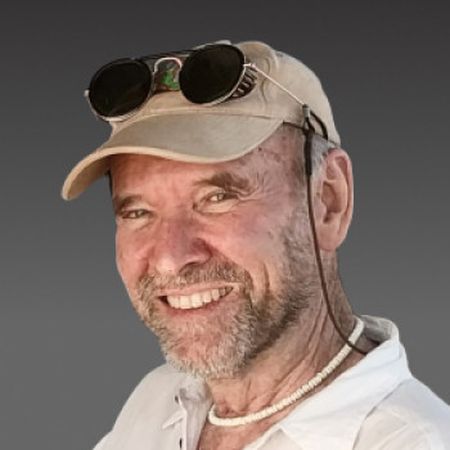
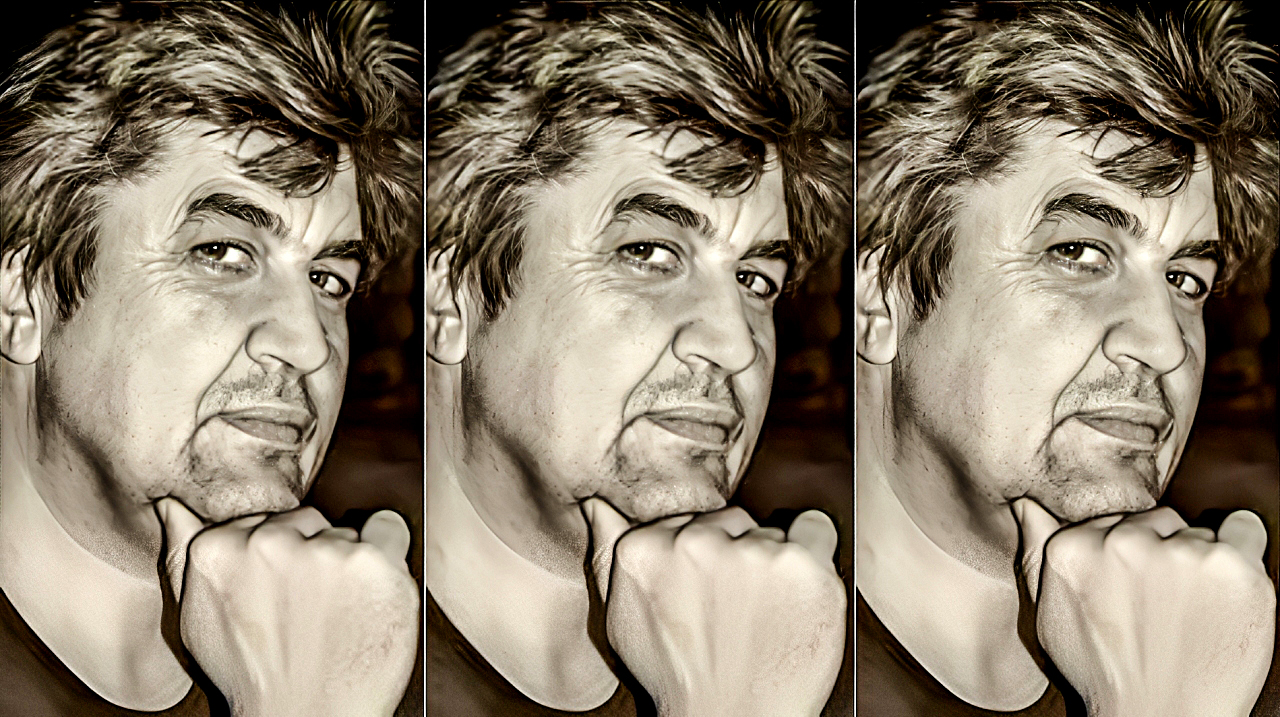
 Illustrative image: Wildlife photographer John Vosloo, who died on 4 October, encouraged other photographers with a generosity that made more room than it occupied. (Photo: Supplied)
 When Colin Bell and I began plans for a book to be called The Last Elephants in 2017, an amazing photograph caught our eye. It showed the trunks of three elephants in Addo National Park surrounding a newborn, and it was taken by John Vosloo.
We were never in any doubt from that moment that we wanted it as our cover. We didn’t know who he was but tracked him down. When we asked permission to use the photo we requested he sent some more of his elephant photos. They simply blew us away. They were the best photos of elephants we had ever seen and asked him if we could use them as a portfolio in the book.
He seemed surprised. “You really think they’re good enough?” he asked. They became a key photographic anchor in the book, which was published by Struik Nature for Africa and the Smithsonian in the US and has now sold thousands of copies.
His sudden death shocked us. We have lost a brilliant photographer.
The law and the living world
/file/dailymaverick/wp-content/uploads/2025/10/Cover-1.jpg "Addo elephants cradle a newborn with their trunks. (Photo: John Vosloo)")
/file/dailymaverick/wp-content/uploads/2025/10/ANP-EARLY-16_0395_preview.jpeg-1.jpg "Despite numerous accolades, John Vosloo remained humble; his pictures alone testimony to his excellence as a photographer. (Photo: John Vosloo)")
John Vosloo’s life had two lodestars: the law and the living world he loved to witness through a lens. A Port Elizabeth-based (now Gqeberha) attorney by trade and a conservation photographer by passion, Vosloo stood at that rare crossroads where professional discipline met an artist’s patient attention.
Week after week, often in the soft bookends of the day, he drove the short, beloved road out to Addo Elephant National Park. There, he waited – sometimes for hours – for the brief moments when elephant society revealed itself: the hush around a newborn, the stern choreography of a matriarch’s warning, the earth-low tenderness of trunks entwined.
His photographs were not lucky accidents; they were the result of an ethic – show up, pay attention, honour the animals by learning their rhythms.
Though he always described himself as an “amateur”, Vosloo’s wildlife images carried the signature of someone who studied both light and behaviour with equal care. The wider world took notice.
In 2017, he won Africa Geographic’s coveted Photographer of the Year award for Circles of Protection, a stand-still image of elephant guardianship that seemed to breathe: a family ringed tight, a calf held within, the dust hanging as a kind of benediction.
For many viewers, that single frame distilled what we ask of ourselves in an age of ecological unravelling – stand closer, protect the vulnerable, take nothing for granted.
The recognition kept coming. A year later, his Locking Horns (also published under the wry caption, “An eye for an eye”) took Getaway Magazine’s Photograph of the Year, affirming what those of us who worked with him already knew: Vosloo had moved beyond “promising” into a mature, confident voice in wildlife photography.
Yet success never altered his manner. When we asked to feature a portfolio of his images in The Last Elephants, he was genuinely puzzled that we thought his pictures were “good enough”. That humility – slightly incredulous, always generous – was quintessential Vosloo.
Precision, preparation, process
/file/dailymaverick/wp-content/uploads/2025/10/11.png "John Vosloo’s focus on kinship as a form of strength, and intimacy as a kind of power, made his pictures more than beautiful; it made them useful, a contribution to the wider task of biodiversity awareness and care. (Photo: John Vosloo)")
/file/dailymaverick/wp-content/uploads/2025/10/12.png "John Vosloo read the weather and the wind, and then trusted the moment. (Photo: John Vosloo)")
To understand his photographs, it helps to understand the context he built for them. Vosloo was, first, a practising lawyer with his own firm in Newton Park. The work demanded precision, preparation and a respect for process.
Those same habits governed his time in the field.
He read the weather and the wind, placed his vehicle not for the shot he wanted but for the story he sensed might unfold, and then trusted the moment. The courtroom’s discipline, in other words, became a fieldcraft of patience. That dual identity – city lawyer and bush listener – made him unusual, and perhaps explains why his pictures are so free of gimmick. They look like what they are: waiting rewarded.
Addo, the landscape that schooled him, is written into the grain of his work. Its elephants are survivors, descendants of a remnant protected against the odds. Vosloo understood that history.
You can feel it in the way he framed distance – those low thickets, that pale, used sky – and in the way he centred elephant society rather than spectacle. Circles of Protection is emblematic not just because of its prize, but because it reveals what he returned to again and again: kinship as a form of strength, and intimacy as a kind of power. That sensibility made his pictures more than beautiful; it made them useful, a contribution to the wider task of biodiversity awareness and care.
An invitation to care
/file/dailymaverick/wp-content/uploads/2025/10/9.png "The landscape of the Addo Elephant Park schooled John Vosloo in his craft. (Photo: John Vosloo)")
/file/dailymaverick/wp-content/uploads/2025/10/brothers-in-arms_preview.jpeg.jpg "John Vosloo was clear that his images should serve something beyond themselves. (Photo: John Vosloo)")
And he wanted them to be useful. Vosloo was clear that his images should serve something beyond themselves – an invitation, especially to those who may never get to Addo, to feel the pull of living systems and the responsibility that follows from feeling.
He published, he shared and he encouraged other photographers with a generosity that made more room than it occupied. It is not a small thing, in a competitive field, to be remembered as someone who lifted others. It is, in fact, a measure of character.
When we laid out his portfolio for The Last Elephants, the pages took on the cadence of field time – approach, pause, revelation – because Vosloo’s sequences were built that way. You can’t fake that arc – you have to live it.
Vosloo’s passing leaves a sudden silence where a patient voice had been.
For his family, colleagues and friends, the loss is intimate and immeasurable. For the communities of photographers and conservationists who learnt from his example, the loss is professional and public. And for the elephants of Addo – animals who knew him only as another respectful watcher – the loss is quieter still but no less real.
Farewell, John. You gave us more than pictures. You gave us a way of seeing that, once learnt, does not leave us. May your images continue to do their quiet work in the world, enlarging the circle, one viewer at a time.
Vosloo died on 4 October and a memorial service was held for him on Friday, 17 October, in Gqeberha. DM