




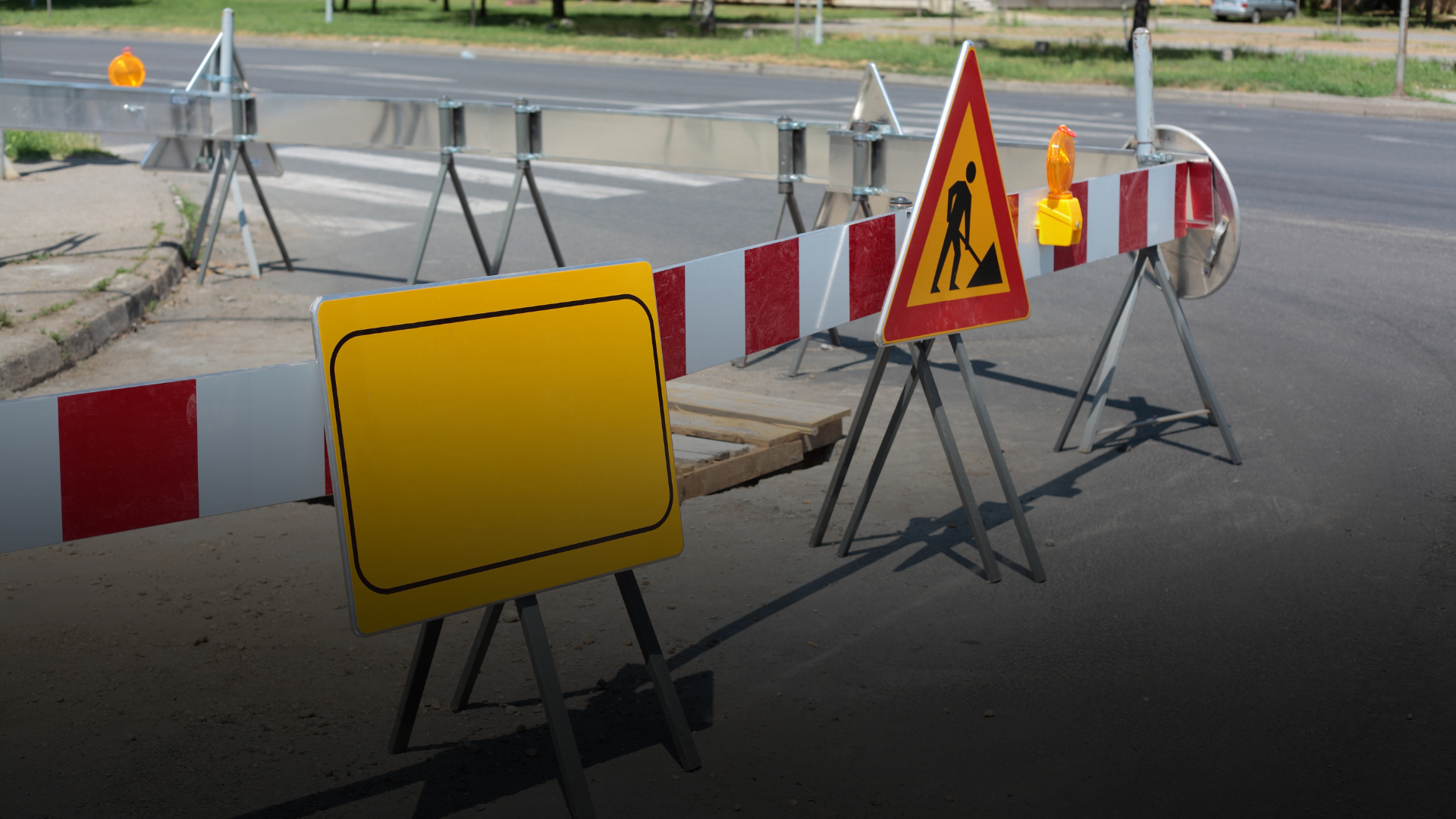
 The Johannesburg Development Agency announced that the City is preparing for the official launch of Rea Vaya’s Phase 1C during Transport Month, which is October 2025. (Photo: Canva)
 Reader question:
What is the current situation with the Rea Vaya Phase 1C route, particularly the drive from Bowling to Sandton?
Answer: A reader has reported that the drive from Bowling to Sandton is a “highly congested” experience, adding at least 20 minutes to a commuter’s travel time. This congestion is part of the Rea Vaya Phase 1C Rivonia-Katherine corridor.
The Rea Vaya Phase 1C route was envisioned as an integrated, sustainable public transport corridor linking the inner city to Sandton along Louis Botha Avenue. However, a rush-hour drive by the Daily Maverick team from Park Station to Sandton showed that this vision often clashes with the realities of congestion, erratic enforcement and deteriorating infrastructure.
/file/dailymaverick/wp-content/uploads/2025/10/IMG_20251010_090322.jpg "The final Phase of Johannesburg’s Rea Vaya bus rapid transit system will be launched on October 23. Our team drove the route to gauge the impact on traffic. The BRT connects the city from south to north. (Photo: Shahdia Johnson)")
Observations from the drive include:
- The journey began outside Park Station at 7am.
- Within the CBD, dedicated Rea Vaya bus lanes and yellow rumble strips were visible, but many rumble strips were knocked out of place.
- Taxis were seen occupying the bus lanes with little resistance.
- Metro Police were present near the Hillbrow station, but enforcement appeared inconsistent, as taxis and private cars moved freely within the reserved lanes.
- Most traffic lights in the inner city, including those on the Rea Vaya corridor, were out of order, forcing drivers to inch through intersections cautiously.
- The car exited the CBD and merged onto Louis Botha Avenue (M11) by 7.30am.
- Between Hillbrow and Houghton, the road’s asphalt was cracked and uneven. The surface improved near Berea, where new markings and smoother tar suggested recent resurfacing.
- By 8.08am, both directions of Louis Botha Avenue showed a pattern of taxis and private cars using the bus lanes almost continuously.
- With only one lane for general traffic, the system is ineffective without strict enforcement, as the dedicated lanes become an extension of the congested flow.
- The road’s design provides no margin for disruptions; any roadworks — whether for fibre-optic cabling, Johannesburg Water maintenance or City Power repairs — could trigger gridlock, and a short closure, accident, or breakdown could paralyse the entire corridor.
- While traffic flowed more steadily through Orange Grove, Athol, and Bramley, where the road shoulders were slightly wider and signal timing was better, obstructions like an abandoned polypropylene trolley were still present in the middle of the bus lane.
- Further north towards Wynberg and Sandton, the Rea Vaya infrastructure became more defined with new concrete stations, fresh signage, and completed platforms.
The City of Johannesburg has stated that the Sandton and Gandhi stations are about 55% complete as of mid-2025, and road upgrades are ongoing. The Johannesburg Development Agency announced that the City is preparing for the official launch of Rea Vaya’s Phase 1C during Transport Month, which is October 2025. The agency describes the expansion as one of Johannesburg’s most transformative investments, featuring 13 new stations, smart ticketing, free Wi-Fi and safe pedestrian and cycling bridges. The official launch was scheduled for 14 October 2025, marking what the City calls “a smarter, greener, and more connected era for Johannesburg”. The official launch date for the new route has also been reported to be 23 October 2025.
Reader question:
What is happening with the roadworks on the N3 near Pietermaritzburg? I’ve heard there have been stoppages.
Answer: According to a reader, there have been massive roadworks that start outside Pietermaritzburg and continue until you enter Durban. For at least six weeks, there has been little to no work at the sites. There are rumours that Sanral has run out of money and has not paid contractors. However, Lwando Mahlasela, a Sanral spokesperson, stated that none of the N3 projects had been stopped. A truck driver who regularly travels the route reported that he mainly sees equipment but rarely sees people working on the road. This is causing heavy traffic, and the most prominent roadworks are the bi-directional sections between Ashburton Interchange and New England Road Interchange, and between Shongweni Interchange and Hammarsdale Interchange.
Reader question:
What is the City of Cape Town doing about the sewage contamination in the Helderberg area, particularly at Strand Beach?
Answer: The City of Cape Town acknowledges the concerns raised by the Helderberg Ratepayers Association. According to Alderman Xanthea Limberg, the acting Mayoral Committee Member for Water and Sanitation, a recent collapse on the Trappies Bulk Sewer near the Lourens River crossing caused temporary sewage overflows that affected sections of Strand Beach. The City’s Water and Sanitation Directorate, in conjunction with Environmental Health and Coastal Management, has been actively responding to the issue and has followed the Coastal Sewage Pollution Response Protocol, which includes beach closure, signage and departmental coordination.
/file/dailymaverick/wp-content/uploads/2023/09/IMG_6998.jpg "Strand Beach is visibly discoloured on 6 September 2023 after concerns of a 14-day sewage spill into the ocean. (Photo: Daily Maverick / Kristin Engel)")
Emergency repairs are under way on the Trappies Bulk Sewer, and a R145-million tender has been finalised for the long-term rehabilitation of a 3.1km section. A previous contractor installed a section of the sewer at an incorrect gradient, and the City is now investigating alternative engineering methods to address the issue. Regarding water quality, Alderman Limberg states that long-term monitoring shows water quality is excellent during dry conditions, but bacterial levels increase during rainfall, taking 36-48 hours to return to normal. This is due to the flat topography, which leads to higher stormwater ingress into the sewer system, runoff from informal areas, and limited water circulation in the nearshore area. The City has stated that daily water testing continues as part of ongoing research and operational oversight.
Reader question:
Why am I still being billed for the City of Tshwane’s cleansing levy even after it was ruled unlawful?
Answer: The Gauteng Division of the High Court in Pretoria ruled on 31 July 2025 that the City of Tshwane’s cleansing levy was unlawful and ordered the City to stop billing residents for it. However, the City of Tshwane has stated that it has petitioned the Supreme Court of Appeal (SCA) to challenge the judgment. The City claims that this appeal automatically suspends the high court judgment, allowing it to reinstate the cleansing charges that were previously reversed. As a result, customers not using the City’s waste collection services will continue to be charged the levy.
In a media statement dated 30 September 2025, the City of Tshwane said that about 12,000 accounts were incorrectly billed due to a “system configuration error”. The City is processing bulk reversals for those who were mistakenly charged and will only provide credits on their accounts, not cash refunds. The City is working to resolve the issue and will provide updates to customers. The City also stated that it is strengthening internal controls and reviewing billing processes to prevent similar issues in the future.
Answers collected by Naledi Sikhakhane and Julia Evans.
This article first appeared as Your Questions Answered newsletter. Click here to sign up.