




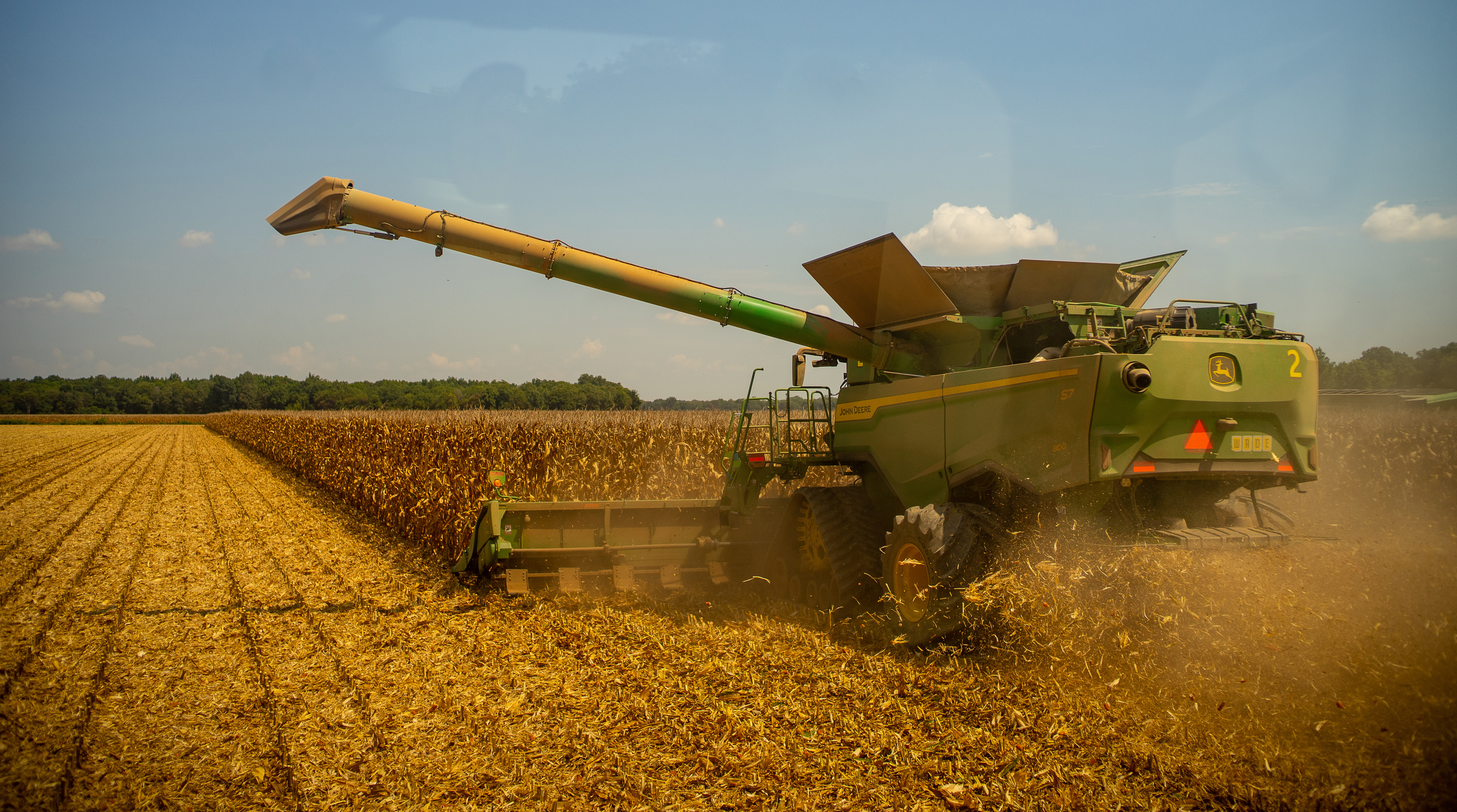
 South Africa can expect wetter-than-normal summer rainfall, suggesting a boost to agriculture along with an increased risk of flooding. (Photo: Alan Chin / Bloomberg via Getty Images)
 It’s official: the La Niña weather pattern is back and that heralds hope for South African maize and other grain farmers this summer season.
“La Niña conditions emerged in September 2025,” the US National Weather Service’s Climate Prediction Centre said.
La Niña typically brings above-average rains to southern Africa and this one is expected to persist into early 2026, coinciding with most of the summer grain-growing season. This can also be a mixed blessing since the risk of flooding events is also significantly raised.
La Niña is caused by cooling sea-surface temperatures in the tropical areas of the eastern Pacific Ocean. Its polar opposite, El Niño, is triggered by a warming of these waters and usually scorches this region with drought.
Read more: Explainer - El Niño’s impact and what to expect from La Niña
Last season, South African maize farmers reaped a bumper crop in large part because of the rains unleashed by the last La Niña. That harvest is now forecast to reach 16.12 million tonnes, 26% higher than the 2023-24 season which was hit hard by El Niño.
Like the previous event, this La Niña is forecast to be relatively weak – a stark contrast with the last El Niño, which was one of the strongest on record.
/file/dailymaverick/wp-content/uploads/2024/02/GettyImages-948476666.jpg "The return of La Niña brings hope for South African maize and other grain farmers. (Photo: Dwayne Senior / Bloomberg via Getty Images)")
Climate change is adding its bite and the issue took centre stage on Wednesday at an agricultural conference in Pretoria organised by AgriSA.
“Spring no longer exists,” Frikkie Mare, CEO of the Red Meat Producers Association, told the conference – a reference to the emerging trend on the Highveld and elsewhere of winter being replaced by a sudden explosion of summer.
“The Highveld is already two degrees warmer than a century ago, double the global average,” Francois Engelbrecht, professor of climatology at the Global Change Institute, said via video link.
“The region is likely to become significantly drier and much hotter. This is really bad news because we are a water-stressed region.”
The upcoming summer in South Africa is forecast to be warmer than usual – but at least it is also expected to be wet. DM