



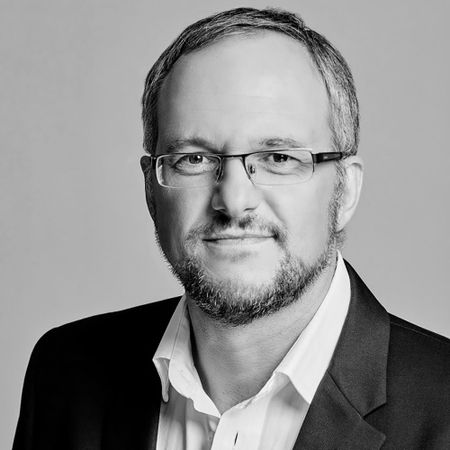
 Illustrative Image: Unite for Change leader, Mmusi Maimane. (Photo: Sharon Seretlo / Gallo Images) | Parliamentary Building (Photo: Daily Maverick) | Boxing glovss and Boxing ring (Images: Freepik)
The decision by the leaders of Good, Rise Mzansi and Build One South Africa to merge raises important questions about how many votes they will win in the local elections. Since the ANC appears to be declining so quickly, there could be more votes up for grabs than ever before.
The merger was widely expected, and had first been touted in the days immediately after last year’s elections. It was obvious then that the three parties had similar platforms and were benefiting from a post-apartheid political identity.
But the biggest party, which essentially pioneered this approach, is ActionSA. And for the moment it is not a part of the merger.
Obviously, one of the bigger factors that will affect this new formation is whether they have to continue competing with ActionSA, or if they end up working together.
It is one of the fascinating aspects of the forthcoming local election that if the polling which has been made public is correct (and it has come from leaked internal party polls), and the ANC is about to lose a large amount of support in some places, there is suddenly a much bigger pool of undecided voters.
To an extent, the local polls might turn into a fight for former ANC voters.
While there will be intense competition for this (MK, for one, will be claiming to be the “real ANC”, as will others), Unite For Change (UFC) might argue that it is the rightful heir to the ANC.
Central to this is whether it can give the impression that it is the best defender of the Constitution which the ANC did more than anyone to create.
If it is able to convince voters that it is the best heir to the visions and aspirations of the ANC in the 1990s, then it might make progress.
Interestingly, there might also be votes from those who previously supported the DA. There may be people who supported the vision of the DA as espoused by Mmusi Maimane when he was its leader. Since then it appears that the DA has lost some votes to other parties.
Voters who feel the DA has gone too far to the right, or is only representing white people, might feel more at home with Maimane at the UFC.
All of that said, it is entirely possible that Helen Zille is able to turn next year’s elections into a binary, and that it becomes an ANC vs DA election.
Obviously this will have different features in different councils, but the DA is likely to work hard to force people into this binary.
The ANC might do the same, and try to make the election about race.
If the UFC is unable to counter this, it risks almost falling through the middle of the election.
Then there is the question of ActionSA.
It seems obvious that the UFC and ActionSA will still be fishing in the same pond of voters over the next year. But for the moment there appears to be no appetite from ActionSA to join it.
This is probably more about the personal attitude of its leader and founder, Herman Mashaba, than anything else. He is unlikely to accept anyone else’s leadership. Or the dilution of his own (his party has still not had a leadership election).
Recent decisions by his party, including the selection of TV presenter Xolani Khumalo as its mayoral candidate for Ekurhuleni, suggest he might be about to go in a populist direction.
Khumalo recently had assault and murder charges against him provisionally withdrawn, following the death of a person he accused of drug dealing on his TV show.
/file/dailymaverick/wp-content/uploads/2025/08/ED_548125-1.jpg "Patricia de Lille. (Photo: Gallo Images / Luba Lesolle)")
/file/dailymaverick/wp-content/uploads/2025/10/ED_577034.jpg "Songezo Zibi. (Photo: Sharon Seretlo / Gallo Images)")
/file/dailymaverick/wp-content/uploads/2024/07/ED_513394.jpg "Mmusi Maimane. (Photo: Gallo Images / Brenton Geach)")
It seems unlikely that such a candidate would be acceptable to people like Songezo Zibi, Maimane or Patricia de Lille.
This then raises the question of whether the UFC will take votes from ActionSA, or whether ActionSA will prevent the UFC from growing.
While the mood of voters is impossible to predict a year out, as previously indicated, Mashaba’s previous voters might be looking elsewhere.
This is because he has gone back on a repeatedly stated promise that he would never work with the ANC. His decision to allow Nasiphi Moya to be elected Tshwane mayor with the support of the ANC might be seen as a betrayal by some of his voters.
One of the more likely candidates for their votes could now be the UFC.
While there are many variables that will determine how far this new formation will go, one of the biggest pitfalls is an obvious one.
The past 20 years have seen a large level of churn among our parties. It has become common to see a new party formed with much fanfare before disputes emerge among its leaders and the entire operation comes to a grinding and embarrassing halt.
Parties have formed in different places only to fall away.
The current leadership strategy adopted by the UFC is unlikely to work over the longer term.
Parties that have had joint leaders do not have a happy history.
In many places, from the US to the UK, Germany, France, Australia, Zimbabwe and Namibia, the identity of the leader becomes the identity of the party.
It would seem impossible to believe the UFC would be able to create a political identity with three separate leaders.
Considering that all three of the current leaders have their own constituencies and are already in Parliament, the scope for discord is huge.
The most likely scenario is that De Lille decides to retire from front-line politics (while she and Zille are the same age, the Good party standing on its own is unlikely to win enough votes for a parliamentary seat in the next national elections), leaving Maimane and Zibi. Since Maimane has led a big national party before, that might tip the balance, with Zibi becoming a very effective and vocal deputy.
However, if this issue is not resolved, it could spell the end of the party.
Our political parties face more factors than ever before, with fractured competition, a declining turnout and features on the ground in different councils all playing a role.
This makes the road ahead for the UFC very complex.
But its leaders might well believe there is a core of people who believe in the Constitution as it is currently, and believe themselves to be progressive.
This might be the secret to its possible future success. DM
*In an earlier version of this article, we said the DA had received its highest share of the vote while Maimane was its leader. This was incorrect. It received more votes in 2014 before he took over from Helen Zille. Sorry about that.