



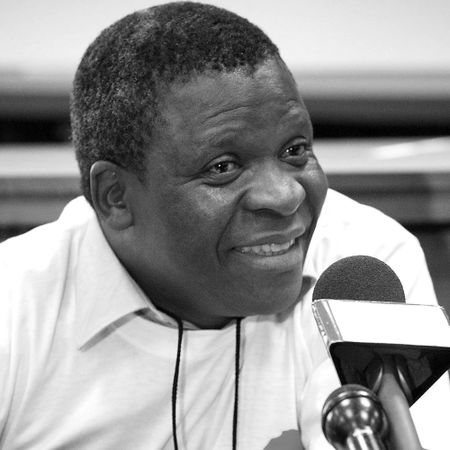
 South Africa uses its trade policy to spite other countries instead of building bridges, says the author. (Photo: Leonid Sorokin iStock)
South Africa (SA) is squandering its credibility in international trade relations. It uses its trade policy to spite other countries instead of building bridges. SA has been actively blocking plurilateral initiatives, which are voluntary, opt-in agreements among a select number of World Trade Organization (WTO) members, from being incorporated into the organisation.
Just last week, at this year’s WTO Public Forum, the organisations’ head, Dr Ngozi Okonjo-Iweala, blasted the country for thwarting the inclusion in the WTO rulebook a trade instrument favoured by the bulk of WTO members and a sizeable number of African countries. This instrument, the Investment Facilitation for Development agreement, is designed to help WTO members to improve the investment and business climate and to make it easier for them to attract investment.
The agreement covers about three-quarters of the WTO membership, nearly two-thirds of which are developing countries, while 30 are African nations. It is extremely important for most African countries, especially at a time when development aid is dwindling, which desperately need foreign direct investment to boost growth.
In a stinging rebuke of SA’s obstructionist tactics, Okonjo-Iweala said: “You can attract investment, but you are blocking it so other poor countries cannot attract. Is that a good thing? Are you a leader by doing that? We have three countries we are working on — South Africa, India and Turkey who do not have reasons for not allowing it.”
Okonjo-Iweala is familiar with SA’s economic challenges, having served on President Cyril Ramaphosa’s economic advisory council. Yet she finds South Africa’s role in the WTO baffling and frustrating.
Serial blocker
Over the years, especially during the ministerial tenures of Dr Rob Davies and Ebrahim Patel, SA has gained notoriety as one of the WTO’s serial blockers, often alongside India. The joke in WTO circles is that SA is India’s lapdog, incapable of thinking for itself.
In the WTO it is easy to block consensus, however sensible a decision or proposal is. This is due to the organisation’s decision-making process, which relies heavily on consensus among its 166 member states. This means that a single member state can foil a decision and bring the organisation to a standstill.
SA must move away from obstruction to constructive engagement. This should start with the country joining the Investment Facilitation for Development agreement, which could contribute to enabling SA to end its investment drought. Plurilateral agreements in the WTO came about because of the sort of stalling tactics that SA is fond of using, mistaking the WTO as a theatre for fighting old anti-imperial struggles. Yet the world has moved on, spurred by rapid global political and economic changes.
Many countries have increasingly adopted a pragmatic posture that sees the WTO as valuable for advancing rule-making in new areas, including on investment facilitation, e-commerce, and trade and climate. For its part, SA has been stunted by ideological dogma, a reflection of its domestic policy confusion.
The investment facilitation for development mechanism is an example of a well-structured plurilateral accord that SA should embrace and deploy to burnish its credentials as an attractive investment destination. It therefore boggles the mind that SA should even countenance blocking this initiative. SA’s reasons for preventing the incorporation of this mechanism into the WTO are largely ideological and conceptual. South African trade officials have argued that this instrument is not part of the Doha mandate and risks fragmenting the WTO.
Yet, this ignores the fact that the WTO’s operations are already suffering immense strain given that decisions are repeatedly blocked by a handful of countries. Plurilateral initiatives can facilitate new rule-making and breathe life into the global trade body, while creating avenues for SA to build bridges and nurture allies in an increasingly fractured world.
SA’s trade posture needs a reset.
/file/dailymaverick/wp-content/uploads/2023/08/iStock-1454531939.jpg "Economic and trade challenges. (Image: iStock)")
Dire state of the economy
One compelling reason is the dire state of the South African economy. The International Monetary Fund projects a 1% growth rate for 2025 — nowhere near what is needed to dent the scourges of high unemployment and widespread poverty. Gross fixed capital formation is stuck near 15% of GDP, far below the National Development Plan’s 25% ambition, following a lost decade for public infrastructure and private capital expenditure. Foreign direct investment fell to R96.5-billion in 2023 from R151-billion in 2022.
In that context, opposing an investment-facilitation tool sends the wrong signal. It also contradicts statements made by South African leaders at investment conferences, where investors are routinely told that the country is open for business. It will be hard for investors to believe such assertions in the face of SA’s efforts to hinder a multilateral consensus to adopt a mechanism that is designed to promote investment facilitation.
The WTO investment facilitation framework is a practical instrument that help governments do the basics better: publish all investment-related measures in one place, standardise forms, set service standards, digitise applications, ensure time-bound approvals and provide focal points (“one-stop shop”) to help investors navigate regulations.
In essence, it seeks to eliminate red tape and pave the way for much-needed reforms. These are all the problems that politicians, including South African leaders, spend time talking about, but do nothing to solve. Yet when a useful instrument is about to be adopted at the WTO, they stand in the way of its incorporation.
Worryingly, SA’s troubling stance threatens to damage the country’s credibility in Africa and across the Global South. When dozens of developing countries embrace an agenda that seeks to lower administrative costs that overburden small firms, obstructing it raises serious questions about SA’s commitment to the global development agenda and about the country’s leadership credentials on the African continent.
Instead of constantly blocking WTO initiatives, SA should spend more time and effort building bridges, cultivating allies and improving relations. At the WTO we must be a voice of reason, a consensus-seeker, and a problem-solver. Given the serious trade challenges our country currently faces, we must seek to project a more positive face to the world by working with others to bolster the multilateral trading system and achieve concrete outcomes at the WTO. DM
Mills Soko is Professor of International Business and Strategy at Wits Business School.