



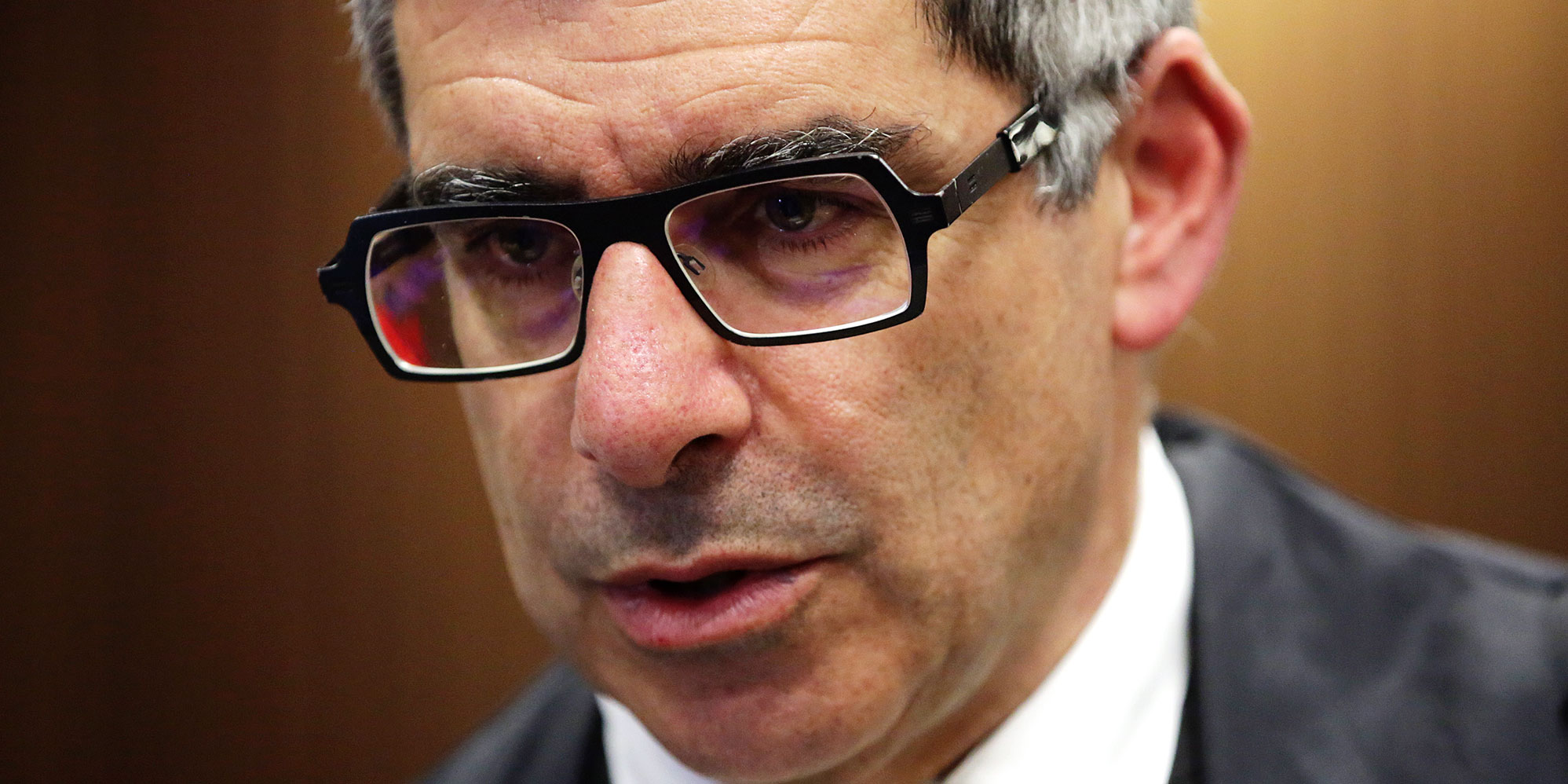
 Advocate Matthew Chaskalson. (Photo: Gallo Images / Phill Magakoe)
 Dapper bow-tied advocate Terry Motau lasted less than 10 days before quitting as chief evidence leader of the Madlanga Commission of Inquiry into Criminality, Political Interference and Corruption in the Criminal Justice System, City Press first reported.
/file/dailymaverick/wp-content/uploads/2025/09/ED_574713.jpg "Advocate Terry Motau at the Madlanga Commission of Inquiry. (Photo: Gallo Images / Luba Lesolle)")
/file/dailymaverick/wp-content/uploads/2025/09/WFD_9074.jpg "Mathew Chaskalson SC with Adila Hassim SC at the Madlanga Commission of Inquiry in Pretoria on 17 September 2025. (Photo: Felix Dlangamandla)")
Matthew Chaskalson takes over as chief, and a fourth advocate will be hired to join the team, which includes senior counsel Mahlape Sello and Adila Hassim.
/file/dailymaverick/wp-content/uploads/2025/07/ED_360179.jpg "Justice Mbuyiseli Madlanga. (Photo by Gallo Images/Daily Maverick/Felix Dlangamandla)")
The commission, chaired by Justice Mbuyisi Madlanga, sitting with two commissioners, has a six-month deadline to deliver a report defined by terms of reference so wide and so sensitive that the task is as high-pressure as piloting.
Read more: Madlanga Commission battles sweeping scope, tight timelines and unwieldy terms of reference
The commission, staffed by only between 25 and 30 people, got out of the blocks much more quickly than any before it, because President Cyril Ramaphosa needs its report to make important appointments and clean up a system still mired in capture and now alleged criminality.
On 6 July, after knocking on closed doors, KwaZulu-Natal provincial police commissioner Nhlanhla Mkhwanazi used a live press conference to blow the lid off alleged political interference and criminal interference at the highest levels of the Cabinet and police service.
/file/dailymaverick/wp-content/uploads/2025/09/WFD_8653.jpg "Tshiamo Sedumedi from Mncedisi Ndlovu & Sedumedi Attorneys, representing the City of Johannesburg's Metro Police Department with Mathew Chaskalson SC at the Madlanga Commission of Inquiry in Pretoria on 17 September 2025. (Photo: Felix Dlangamandla)")
/file/dailymaverick/wp-content/uploads/2025/09/ED_573697.jpg "Advocates Mahlape Sello and Matthew Chaskalson at the Madlanga Commission Of Inquiry on Day 2 at Brigitte Mabandla Judicial College on September 18, 2025 in Pretoria. (Photo by Gallo Images/Lefty Shivambu)")
The Commission of Inquiry now has to unravel a Gordian Knot of criminality and internecine warfare in the police service. Its first sitting on Wednesday, 17 September saw Mkhwanazi expand his initial revelations. Masemola has since added more fuel to the fire.
The country is watching, and in the high-pressure, televised environment, people are taking strain. The advocates who have joined the commission are all top drawer with busy practices, and they need to balance their time.
As more and more information comes before it, the workload is growing into a 24/7 job.
“The commission will not publicly discuss internal staffing matters. The commission is squarely focused on its job, to conduct an inquiry into the gravely serious allegations that South Africa’s law enforcement agencies have been infiltrated and unduly influenced by criminal syndicates and drug cartels. We will not be distracted as the work of the commission is critically important for the rule of law in our country,” said spokesperson Jeremy Michaels.
On Monday, the embattled head of police criminal intelligence, General Dumisani Khumalo, will take the stand. He is likely to drop info-bombs and add to the workload of a commission now at the centre of public debate. Along with his top brass, Khumalo was arrested and charged this year.
If President Cyril Ramaphosa thought the commission would quickly investigate and assess the criminalisation of the criminal justice system, and hand him a neat report, that might not come to be.
There is a good chance he could be summoned. A second inquiry in Parliament into Mkhwanazi’s bombshells starts on 7 October, when he appears for two days.
For more on Who’s Who at the commission, read here. Chaskalson is a seasoned commission evidence leader – he has put in time at both the Marikana Commission of Inquiry and at the Commission of Inquiry into State Capture. DM
*This article has been amended to reflect that General Dumisani Khumalo has been sidelined, not suspended, and that Motau will not return.