




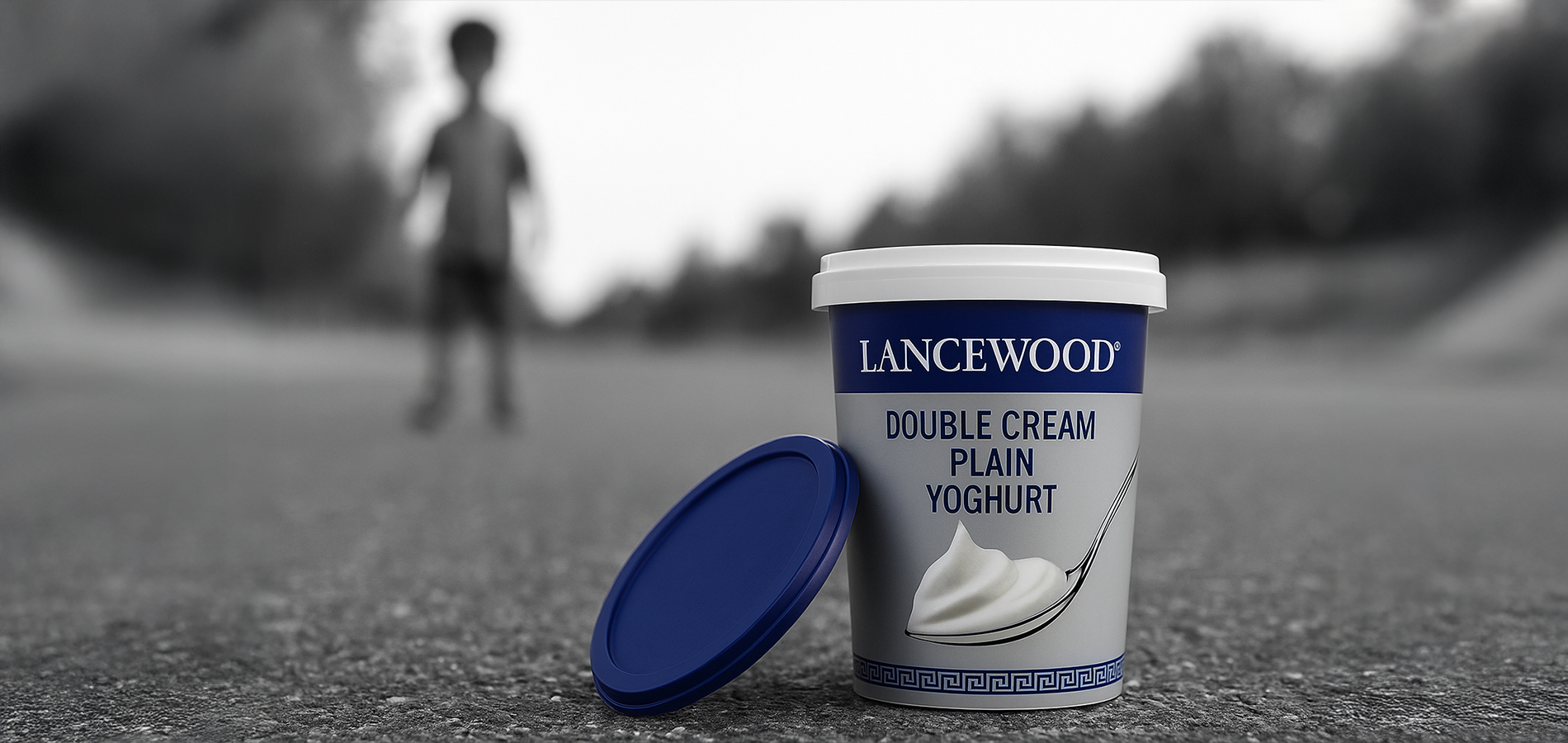
Not so long ago, children lay on the grass and complained that there was “nothing to do”. Today many adults treat that phrase as though their child is struggling for oxygen and rush to remedy the ‘crisis’. Society has conditioned us to believe that every moment must be entertaining, yet boredom is one of the most important ingredients for growth.
A few months ago, my eleven-year-old declared that he was bored. My ‘immigrant’ parent's answer… “So how is that my problem?". A little later I looked outside and saw him and his brother in the street, throwing a yoghurt container lid like a Frisbee, figuring out that at the right angle and spin, it could return like a boomerang. They ran, laughed and eventually perfected their abilities. By the end of the afternoon the plastic disc had become a treasured toy. Weeks later, we are continuously pressured to finish the yogurt at home, to release the more valuable lid to be lost to the nearest roof or tree shortly thereafter. That is the power of boredom: when there’s nothing on offer, children create something from nothing.
Discussing this with a friend reminded me that in our generation's childhood we never dared to tell our parents we were bored simply because that was a sure-fire way to get additional chores around the house.
When did that all change??
Science backs up what that yoghurt lid taught me. Psychologists note that unstructured time forces children to plan, organise materials and solve problems; it helps them develop flexibility and organisational skills. More importantly, when children learn to manage their boredom rather than avoid it, they gain independence and the confidence that they can generate their happiness. Researchers at the University of Virginia say the phrase “I’m bored” can be a gateway to unleashing creativity and social development. Associate professor Jamie Jirout argues that stretches of screen-free time allow curiosity to thrive, leading to creative ideas and greater autonomy. Inviting children to think of different ways to use the materials around them – whether it’s chalk, cushions or sticks – helps them invent obstacle courses and forts and gives them a sense of agency.

Those of us born before smartphones know this intuitively. We grew up without curated feeds and on-demand entertainment. We made cities out of mud and spaceships out of boxes. Somewhere between dial-up internet and TikTok, boredom became an emergency to be solved. We enrol our children in extracurriculars until their calendars resemble corporate diaries and hand over phones at restaurants and in cars. We outsource their imagination to algorithm-driven apps that promise constant engagement at the cost of their agency. Ironically the same imagination that led to the development of these apps in the first place.
The problem is that when every lull is filled with a swipe, children never learn to sit with discomfort long enough to invent their fun. They become passive consumers rather than active creators and miss out on the social skills that come from negotiating with siblings and friends about how to turn a yoghurt lid into a flying saucer. Unstructured play teaches cooperation and empathy far better than any app.
None of this means abandoning our children. Jirout advises parents to provide broad suggestions rather than instructions. “Build a fort” leaves room for creativity; a step-by-step plan does not. It takes practice to resist rescuing them from boredom, but that discomfort is where the magic lies. Instead of filling weekends with back-to-back activities, invite them to plan their afternoon. A child who uses sidewalk chalk to draw a bike track can be challenged to add curves or ramps. Siblings can collaborate on a makeshift theatre or invent a new game.
Allowing our children to be bored is not negligence; it is an act of faith in their innate capacity to imagine and create. It acknowledges that they do not need us or a screen to entertain them; they need us to trust them. My sons discovered hours of joy in a yoghurt lid because they were forced to look beyond the obvious. Imagine what they might build when we step back more often. In an uncertain future it is not rote knowledge or constant stimulation that will serve them best, but the curiosity, creativity and resilience that grow in the quiet spaces between structured activities. Let us reclaim boredom as a gift rather than a problem – for our children. The next time a child complains that they are bored, resist the urge to solve it. Ask instead: “So how is that my problem?”. DM