




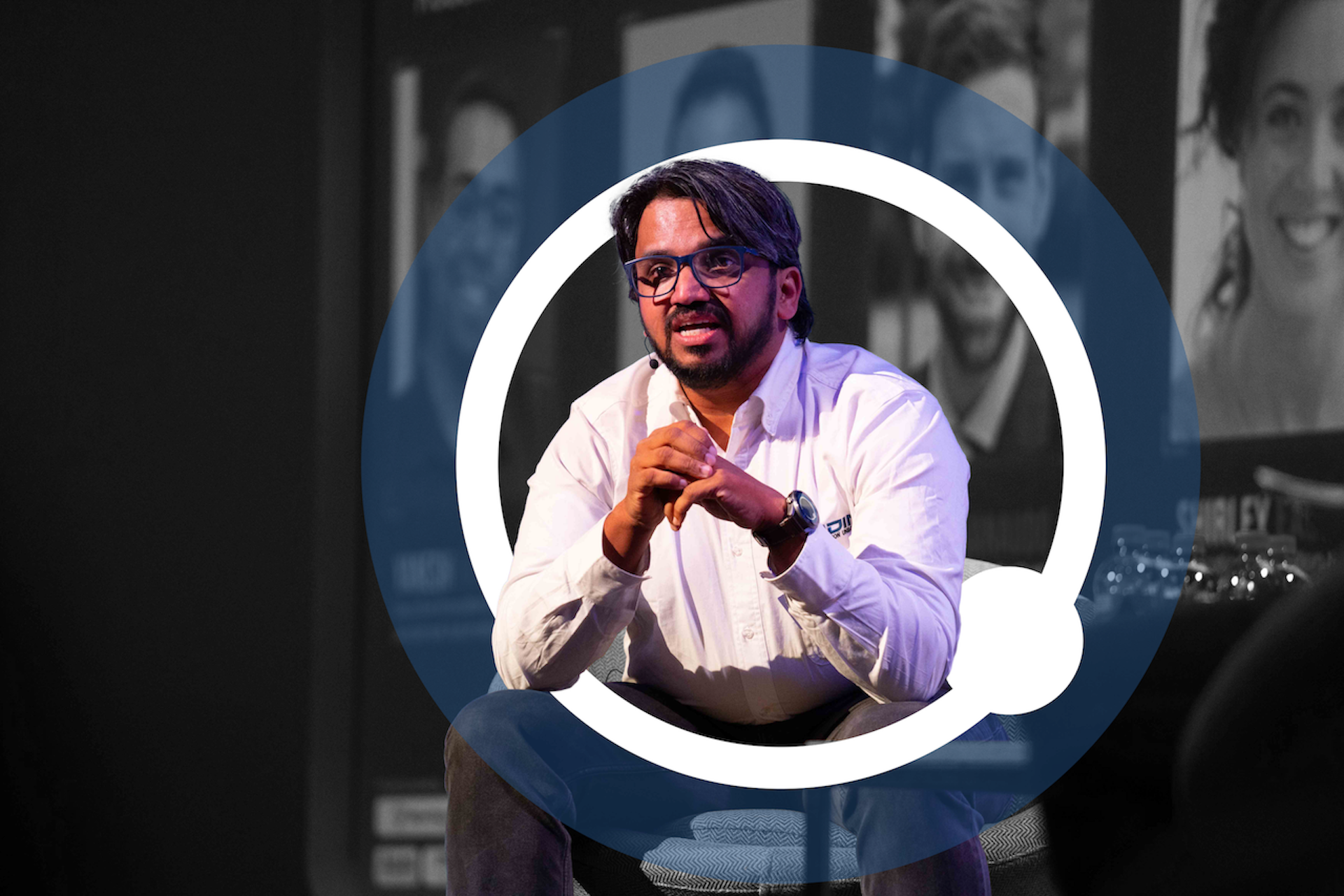
 Ajit Gopalakrishnan, Odin Education head
 Having spent a career in manufacturing, it’s impossible not to recognise the model on which our current system is based – a production line. We take raw materials and pass them through a series of stations, adding components at each one. We establish quality gates at different points, and reject or recycle units that don’t pass our strict criteria. We set our tolerances tighter to reduce variability and increase output. And we do this again and again until the line is fully automated and has lost all of its humanity. Lights out... factory.
In our search for a replacement, we shouldn’t try to adapt or improve our existing system. That’s like trying to iterate a train into a plane. They have vaguely the same purpose but are built on completely different models.
In an unknown future, we must shift the focus from expertise to exploration. From Production line to Playground.
I believe, as humans, we are all born with the necessary skills to explore. Just look to the most human of humans – our children. Specifically, our five- and six-year-olds. Old enough to display the miracle of our natural abilities and young enough to be unindoctrinated by our prejudices. By age six our children have shown, in abundance, the quintessential human attributes for journeying into the unknown: curiosity, creativity, collaboration and compassion.
They are designed to explore, since everything around them is new and enthralling.
Take a moment to contemplate the light in the eyes of every six-year-old. If you are a parent, you have seen this light. We don’t teach our children at that age. We simply watch from the side, and keep them safe, fed and occasionally clean. We provide stimulation and observe with awe the daily transformation. They display such autonomous curiosity and creativity that we have no choice but to collaborate with them on one expedition after the other. We forgive their failures and inconvenient passions. We do this through our equally spontaneous love and compassion for this innocent little human.
And then we send them to school.
Instead our schools need to be re-imagined around playgrounds. Safe spaces full of stimuli. Where we watch from the sides as the children learn about the ‘new’ world, themselves and their place in it through play. Where we don’t teach, we guide. Where children drive the what and how of learning, and our job remains only to un-constrain that effort.
Discovery, learning, critical thinking and adaptability are human attributes. To prepare our society for the unknown future, all we have to do is stop training ourselves out of them. DM
