



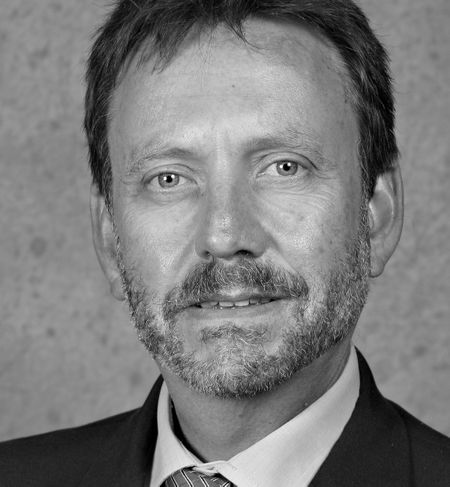
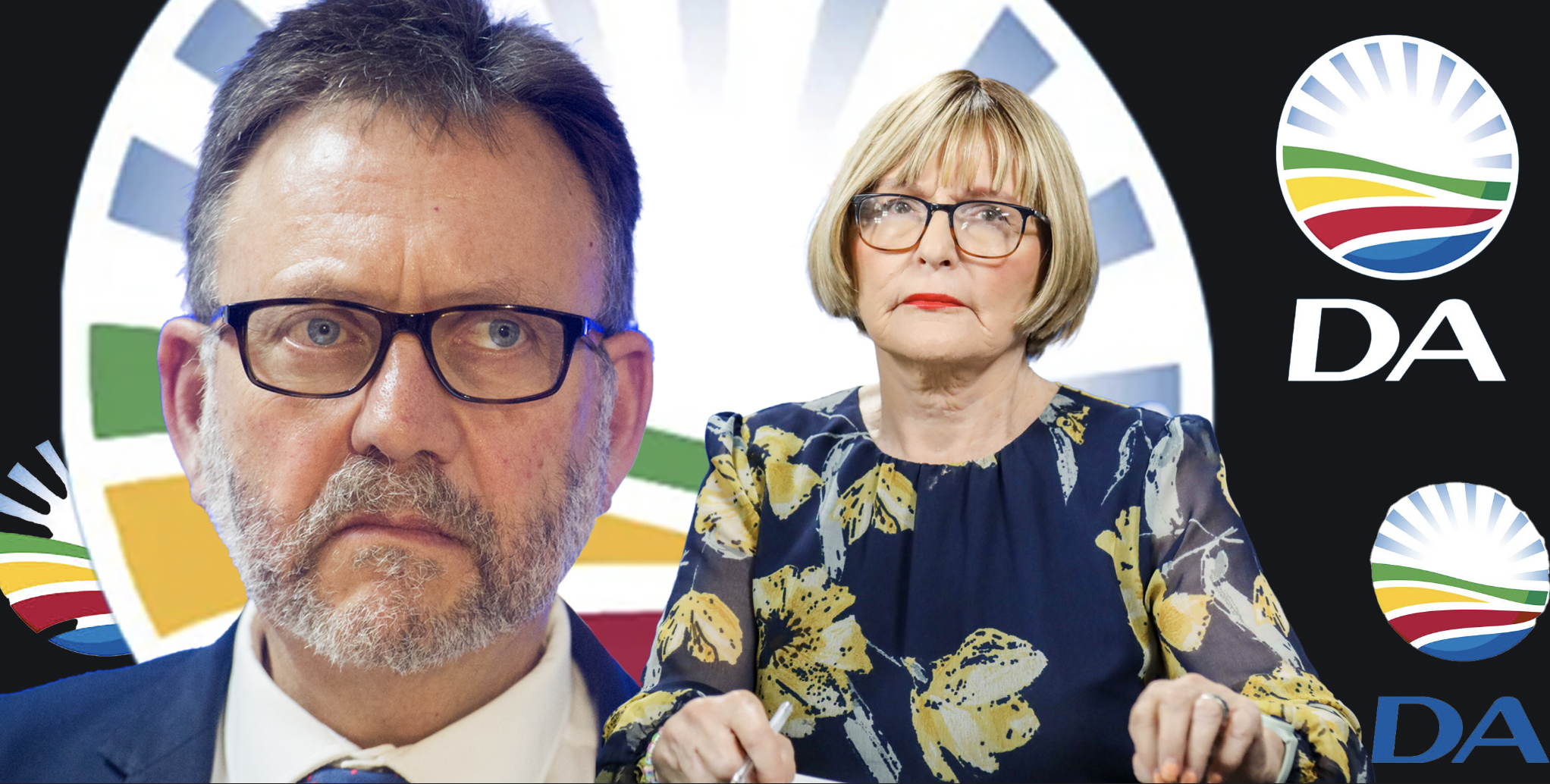
 Illustrative image | Democratic Alliance logos. (Photo: Wikipedia) | The late senior Democratic Alliance leader James Selfe. (Photo: Gallo Images / Netwerk24 / Jaco Marais) | DA Federal Council Chair Helen Zille. (Photo: Gallo Images/OJ Koloti)
 James Selfe, who served for a very long time as the Democratic Alliance’s Federal Council Chairperson, the second most senior position after party leader, started to write his memoirs after a debilitating illness forced his retirement in December 2021. He felt that his contribution, over the span of 43 years in politics, to South Africa’s dynamic democratic progress would be informative of the people he met, the many he worked with, the lawfare campaigns he pursued to defend the Constitution, and the pitfalls, failures, opportunities and successes in the political terrain he worked.
He wrote a number of chapters and overviews of events and people, but the weariness of his illness meant that his written story was incomplete when he died in May 2024. But this does not mean that his insights should not be shared.
His widow Sheila wanted James’ contribution to South Africa’s body politic to be recognised. This extract, the first of four that will follow, are drawn from the drafts James left behind. The fuller chapters may well serve as building blocks when future histories of South Africa are fully researched and published.
James started his political career as a researcher in the erstwhile Progressive Federal Party in 1978, moved on to become its communications director and then executive director. For many years until 2019 he served as the Democratic Alliance’s Federal Council chairperson, the party’s highest decision-making body.
His career as a Member of Parliament started after the 1994 elections in the National Council of Provinces, and it ended when he resigned. He served with distinction on various iterations of the portfolio committee on Correctional Services and led the Democratic Alliance’s lawfare programme which focused on fighting in court government actions that undermined the Constitution. - Wilmot James and Marian Shinn.
(Since publication, the curators of the Selfe memoir have sent a rejoinder to Helen Zille which is included further down).
***
Helen Zille’s political career started after the 1994 democratic election. She felt that our country needed good political opposition. I arranged for her to meet Tony Leon in 1998 when she expressed interest in becoming a public representative for the then Democratic Party (DP), now the Democratic Alliance (DA).
/file/dailymaverick/wp-content/uploads/2025/09/Zille_and_Selfe_in_2010.jpg "Helen Zille and James Selfe in 2010. (Photo: Wikipedia)")
She secured one of five DA seats in the Western Cape Legislative election in 1999 and became the Member of the Executive Council for Education. She soon built a stellar reputation for hard work and strategic vision that led her to excel in the Provincial Legislature, as Mayor of Cape Town, Premier of the Western Cape, and ultimately in leadership positions in the DA.
Between 2003 and 2007, when she held office as chairperson of the DA’s Western Cape Metro Region, she became known for tough leadership, particularly in dealing with the racial nationalists in the party.
/file/dailymaverick/wp-content/uploads/2025/09/0000138739-a.jpg "Former Western Cape DA leader Theuns Botha. (Photo: Gallo Images / Foto24 / Michael Hammond)")
These included the Western Cape provincial leader, Theuns Botha (formerly of the New National Party), who was often in conflict with Helen. Theuns had the support of Tony, who felt indebted for his role in stemming the departure of NNP public representatives during the notorious floor crossing period.
This placed me, as Chairperson of the DA’s Federal Council, in a difficult situation as the many disputes between Helen and Theuns were referred to me. Often, my instinctive sympathies lay with Helen, but she invariably maintained that her position was always right. Negotiating a compromise or settlement under these conditions was nigh impossible. But Helen remembered each time I had not settled in her favour and adduced this as evidence of my “weakness”.
Helen became increasingly, and stridently, binary in her outlook: one was either on her side or was against her. She never forgot an incident where she was not supported and held it against one in perpetuity.
After winning the Cape Town mayoralty in 2006, Helen set her sights on the leadership of the DA to seize control of the party and save it from the “liberal slide-away”.
If her leadership bid failed, she planned to re-establish the DP to oppose the DA at the polls. After she became leader in 2007, she told me that the new party was very nearly formed on several occasions.
She often asked me to become part of her leadership team. I refused. As Federal Council Chairperson I had to ensure that there was a free and fair internal election process, and that that precluded me from taking sides.
That did not mean to say that I did not have views: indeed, I thought that Helen had exceptional leadership qualities – clarity of purpose, and ability to articulate a vision both in writing and in the three official languages of the Western Cape, and a capacity to mobilise and enthuse a new constituency.
My refusal to commit to her cause was the source of suspicion and distrust on her part. I did not realise that she discerned conspiracies that were fanciful. Many estimable people who crossed her experienced her wrath and vengefulness, often for entirely far-fetched and unjustified reasons.
I told her what I have told every leader of the DA: I am loyal to the leader as long as he or she holds that office, and that I would work very hard to make her term successful. This was the start of our changed relationship, hardly an auspicious one.
Helen increasingly thought about how to win the support of significant numbers of black voters, most of whom distrusted us. She reasoned that we needed to do something very significant to attract their support.
/file/dailymaverick/wp-content/uploads/2025/09/0000210003.jpg "Former DA Parliamentary leader Lindiwe Mazibuko. (Photo: Gallo Images / Foto24 / Liza van Deventer)")
It was felt that a “significant” event would be the election of a black parliamentary leader in our 2011 mid-term parliamentary caucus election. The black MP in mind was the charming, smart, and incisive Lindiwe Mazibuko.
Lindiwe’s start as Leader of the Opposition was very promising: her communications were incisive and “on message”. Her office devised a new communications mechanism whereby media statements would, firstly, be vetted by parliamentary whip in charge of communication David Maynier MP, and discussed with Gavin Davis, the Executive Director of Communications. If there was a dispute, it was to be arbitrated. Rather naively, I agreed to be that arbitrator.
This was unacceptable to Helen. She felt that, firstly, she should have been consulted on the changes. Secondly, she believed very strongly that all DA communication should go through a single portal and, thirdly, Gavin was her close confidant.
Her reaction was disproportionate. She became incensed and assumed I was part of some scheme to marginalise Gavin.
Our final major conflict came in 2018 when I appeared before the DA’s selection panel as a candidate for the Western Cape’s list for the 2019 national election. Helen launched unprocedural questions that had nothing to do with my responsibilities as an MP.
When the provisional rankings became available, I was awarded a ridiculously low score and, based on this, lodged a formal complaint. To say that Helen went incandescent with rage would be an understatement. A court challenge loomed.
In the end, the Federal Executive, as the relevant executive, reviewed the lists, and unanimously promoted me to the sixth position on the parliamentary list.
/file/dailymaverick/wp-content/uploads/2025/09/0000237769.jpg "From left: Former Democratic Alliance leader Mmusi Maimane, James Selfe and DA MP Glynnis Breytenbach. (Photo: Gallo Images / Beeld / Felix Dlangamandla)")
Relations between us were patched up in a deal brokered by Glynnis Breytenbach MP, chair of the DA’s Federal Legal Commission. But Helen’s accusations against me cannot simply be erased.
After the 2019 general election, in which the DA lost support, I stood down as Chairperson of the Federal Council. Helen was subsequently elected to the post. I became head of the DA’s new Governance Unit.
But my health deteriorated rapidly, and I retired as a Member of Parliament on December 31, 2021.
Helen’s brand is indelibly associated with the DA. Her tweets sent out the message that the DA did not care about this historical humiliation. There is too little recognition of the pain of the experience of colonialism and apartheid. And there is too little generosity of spirit and repugnance of authoritarianism.
There is too much sneering.
Helen performs the role of CEO, and she determines party strategy. She surrounds herself with acolytes who are mainly concerned with winning back the 400,000 votes lost in 2019. Little attention is paid by the DA to being a party for all the people.
Daily Maverick’s Q&A with Helen Zille
Daily Maverick sent Helen Zille questions related to claims in Selfe’s memoirs. Zille kindly responded in detail to each claim, and we publish it below. Zille has also indicated that she will possibly respond with a longer piece in future.
DM: Selfe claimed that during your time as chairperson of the DA’s Western Cape Metro Region between 2003-2007, you became “increasingly, and stridently, binary” in your outlook. “One was either on her side or was against her. She never forgot an incident where she was not supported and held it against one in perpetuity,” Selfe wrote.
HZ: Everyone knew that I was the architect of the “unity slate” to bring the former DP and NNP factions of the DA together. I did more to initiate and sustain this unity than any other leadership figure in the party. When that failed and it was clear that the NNP were executing an internal putsch (or coup), I mobilised the liberal forces to counter this. I did so with determination. It was the right thing to do. James clearly positioned himself on the side of the NNP in the Western Cape. And this is what I opposed. One was either on the side of the liberals or against us. Indeed, James was against us.
DM: Selfe claimed that after winning the Cape Town mayoralty in 2006, you set your sights on the leadership of the DA “to seize control of the party and save it from the ‘liberal slide-away’ ”.
HZ: As part of our liberal battle to prevent the NNP taking control of the DA, we sought support from the national leadership of the party. When this was not forthcoming, we decided to make a different plan and challenge for the leadership of the party as a whole. We did that successfully. I have explained that fully in my book: Not Without a Fight.
DM: Selfe claimed that, if your leadership bid failed, you planned to re-establish the DP to oppose the DA at the polls. He alleged that after you became leader in 2007, you told Selfe that the new party was very nearly formed on several occasions.
HZ: Yes, indeed, that is true. We did discuss forming a liberal party on several occasions, as the battle for the soul of the DA raged. Certainly, if the DA were entirely captured by the most conservative forces of the old NNP, there would have been no place for liberals in the party. And we would have had to start another party. We were clear about that.
DM: Selfe claimed you often asked him to become part of your leadership team. However, he allegedly refused, saying: “As Federal Council Chairperson I had to ensure that there was a free and fair internal election process, and that that precluded me from taking sides.”
HZ: James’ own version shows that this cannot be true. He was openly and continuously obstructing the liberals. How would I have asked him to be part of my campaign team? However, as chair of the Federal Council, he was automatically part of the DA’s leadership team. He was elected to that position and it was not for me to invite him to be part of the leadership team. He was there by virtue of his position. As I said in my own book, James was extremely “pragmatic” when it came to dealing with various issues of principle.
DM: Selfe further claimed that his refusal to commit to your cause “was the source of suspicion and distrust” on your part. He alleged: “I did not realise that she discerned conspiracies that were fanciful. Many estimable people who crossed her experienced her wrath of vengefulness, often for entirely far-fetched and unjustified reasons”.
HZ: Let’s get one thing straight. This was the liberal cause, not my cause. I was leading a large group of liberals who were worried about the party’s drift towards the NNP. But it is nonsense to suggest this was a conspiracy theory. It was a clear drift, facilitated from parts of the party’s leadership. I did not like James’ manipulative way of doing things under the table. This gave many people good reason for suspicion and distrust.
I have referenced a few of these in my book: for example, his support for a formula for compiling election lists that were highly favourable to the old NNP faction of the party. I stood up very strongly against that, and I am glad I did. He had pushed it through the Federal Council without explaining the implications of his formula to the delegates. This is what I mean by James “putting his fingers on the scales”.
DM: Selfe claims that after Lindiwe Mazibuko’s start as Leader of the Opposition, he agreed to be an arbitrator if there was a dispute to be arbitrated. This was in relation to the DA’s then communications mechanism whereby media statements would, Selfe alleged, firstly, be vetted by parliamentary whip in charge of communication David Maynier MP, and discussed with Gavin Davis, the Executive Director of Communications.
However, Selfe claimed: “If there was a dispute it was to be arbitrated. Rather naively, I agreed to be that arbitrator. This was unacceptable to Helen. She felt that, firstly, she should have been consulted on the changes. Secondly, she believed very strongly that all DA communication should go through a single portal and, thirdly, Gavin was her close confidant. Her reaction was disproportionate. She became incensed and assumed I was part of some scheme to marginalise Gavin.”
HZ: This is a profoundly distorted version of the facts. The DA had a formally established method of issuing communications in a coordinated way. We had a national director of communications at the Federal Head Office, and communications from all sections of the party were coordinated through him. This was Gavin Davis, who was doing an excellent job.
There was an underhand and unilateral attempt to change this structure by James without consulting me, as the then leader, or any other party decision-making body. Obviously, the leader has to be consulted when a major change in the locus of managing communications is proposed. And I was angry at the underhand method applied.
This was indeed a scheme to marginalise our system of communications and establish a new one by stealth. It is profoundly disingenuous of James to deny it. This exemplified the way James sometimes operated, and I drew the line against it. Of course, he didn’t like it. There was nothing naïve about James. It was all carefully orchestrated.
DM: Selfe claimed that a “final major conflict” between him and yourself came in 2018 when he appeared before the DA’s selection panel as a candidate for the Western Cape’s list for the 2019 national election.
He claimed: “Helen launched unprocedural questions that had nothing to do with my responsibilities as an MP. When the provisional rankings became available, I was awarded a ridiculously low score and, based on this, lodged a formal complaint. To say that Helen went incandescent with rage would be an understatement. A court challenge loomed. In the end, the Federal Executive, as the relevant executive, reviewed the lists and unanimously promoted me to the sixth position on the parliamentary list. Relations between us were patched up in a deal brokered by Glynnis Breytenbach MP, chair of the DA’s Federal Legal Commission. But Helen’s accusations against me cannot simply be erased.”
HZ: This is a self-serving and inaccurate account of events! In fact, the truth of this series of events, perhaps more than any other, reflects how James operated.
I was chair of the Western Cape selection panel, and I set out below what happened – a version that can be corroborated by others on the panel. We sat over several weekends. We interviewed scores of people. James came for his interview. ALL INTERVIEWS ARE RECORDED TO MAKE SURE THE RECORDINGS CAN BE REVIEWED IF THERE IS AN APPEAL.
Obviously, I knew this, so I would not be stupid enough to ask unprocedural or unfair questions. I had an entire panel there who were witnesses to the procedure. James gave a terrible interview. I asked him a few follow-up questions as we always do, and he profoundly fumbled his answers. We scored him fairly according to the criteria, and indeed he did not get a good point score, but he ended up in an electable position.
However, he believed it was his right to be close to the top of the list. It would have been wrong to score him in the way he expected because his interview had been so weak. This meant that our system was working and panels were scoring fairly.
Afterwards, when he alleged unfairness, I said: “Please take it on appeal and look at the tape recordings. The appeal panel can see if we scored you fairly or not”. But, amazingly, the tape had vanished. ONLY the tape of his interview and one adjacent interview could not be retrieved, out of the scores of interviews. You don’t have to be a conspiracy theorist to smell a rat.
As the tapes were in the safekeeping of a staff member who reported to James, I could not believe the innocent explanation that there had been a “technical fault” or that just this one particular tape, out of all the rest, could not be located. It all sounded very Richard Nixon to me. I am certain that if the tape could have helped in James’ appeal, it would have been there.
Furthermore, in a bid to try to improve his position on the ranked list, James tried to inveigle another interview for himself with the Gauteng Selection Panel. This was totally unprocedural and against the rules of the party. I, together with a lawyer who had also served on the Western Cape Selection Panel, decided to challenge this in court.
I never went public about this in order to protect the party. But the DA’s lawyers advised James that my case would succeed and he decided to abandon his attempt to improve his position by breaking the rules. He finally relied on the Federal Executive (of which he was the chair) to lift him to position six on the list.
Even though he had recused himself from that particular Fedex meeting, it remained a profound conflict of interest that the body he chaired could raise him by so many positions on the ranked candidates list. One day I will write up the full account of this disgraceful chapter in the DA’s history.
DM: Lastly, Selfe claimed: “Helen’s brand is indelibly associated with the DA. Her tweets sent out the message that the DA did not care about this historical humiliation. There is too little recognition of the pain of the experience of colonialism and apartheid. And there is too little generosity of spirit and repugnance of authoritarianism. There is too much sneering.”
HZ: Well, given the history of the battle for the liberal soul of the party, and the unhelpful role that James had played in it, his statement above is deeply ironic. No one currently in the DA was more involved in the fight against apartheid than I was. My tweets were decontextualised and sent into the stratosphere by social media for reasons that soon became apparent. Even the DA’s own research at the time showed that a very large percentage of black voters agreed with me. But this research was covered up. Why? James was in charge at the time. Perhaps he should have revealed the full account of what was going on.
Draft of James Selfe’s submission to the (Athol) Trollip Commission.
(1) Thanks very much for the opportunity. Want to give a full account of the circumstances and why I believed that I should register an appeal, even before the lists became public.
(2) My interview before the Selection panel took place on Saturday, 17 November last year (2018). I was the third candidate to be scheduled to be interviewe,d and my slot was for 9 am. In fact, it took place much later as Grant Twigg arrived late owing to the traffic.
(3) In due course, I was presented with three choices for a speech topic. I chose to speak on the Zondo Commission in the context of a constituency report-back meeting with reference to the implications this had for governance.
(4) I delivered the speech, running slightly over time. Then, rather unexpectedly, the chairperson of the panel said that she would like me to pretend that she was a member of the audience. She then asked me two follow-up questions relating to whether, within the context of the separation of powers, one ought to have a judicial commission of enquiry into an essentially political matter. I replied that it was always undesirable to dram the bench into political controversy, but that it was essential that the truth be tol, more particularly because the NPA was at that stage leaderless.
(5) I was then asked, and I answered the five questions randomly generated by the DACSS. I should have been asked six, but the sixth questions related specifically to provincial government and, as I was not standing for the provincial legislature, I was not required to answer it – although I could have.
(6) Thereafter, I imagined that the interview was over, but instead, the chairperson indicated that she wished to ask additional questions related, as she put it, to my values and behaviour.
(7) It was my very clear understanding that all candidates would be evenly and equitably – i.e. on the basis of the speech and the answers to the questions. It was only if one followed this methodology that one would be able to score candidates objectively as to whether they were competent to be MPs or MPLs.
(8) However, while I was waiting for the interviews to begin, I was approached by Vanessa Sumares, the provincial administrator, with a query from the chairperson of the panel to the effect as to whether a panel could ask a question that was not generated by the system.
(9) For the reasons already stated, I believed that such questions ought properly to be disallowed. However, mine was a compromised position, and I consulted Douglas Gibson, a former colleague and the chairperson of the Gauteng Selection Panel. His response was that if there was a matter that emerged from the application (eg an undisclosed criminal record) one could do so. I advised Vanessa accordingly.
(10) So then at the conclusion of the formal interview, the chairperson announced that she wished to ask me additional questions related, as she put i,t “to your attitudes and values”. She proceeded to ask whether, in the light of the Party’s values of freedom, fairness, opportunity and diversity, I thought that the Party had be (sic) fair to Patricia de Lille.
(11) I answered that the Party was probably not fair but that she had done the Party huge brand damage, by her actions and omissions, and that justified such action.
(12) She then asked me a series of questions relating to the so-called ‘patronage clause’ in the Nominations Regulations. These questions were framed in such a way that it implied that I had somehow manipulated the outcome of the Federal Council.
(13) I stress that I did not regard the questions themselves or the way they were phrased as relevant in any way to my abilities as a Member of Parliament. They related to my responsibilities as Chair of the Federal Executive. I believed then, and I believed now, that they were designed to reflect on my integrity and to skew the Selection Panel’s regard for my substantive interview. And I believe that the intention was deliberate and vengeful.
(14) It may be asked why I answered them at all. The reason is that I did not want to appear defensive, since my actions were at all times sanctioned by the Federal Executive.
(15) On my return home from the interviews, I telephoned Athol Trollip, Glynnis Breytenbach and Douglas Gibson, and told them of my experience, and sought their advice about what I should do. Glynnis advised me to write down the account of what happened while it was still fresh in my mind, and I did so in the form of a letter to Athol Trollip and her. I submit this as Annexure A.
(16) I decided not to appeal immediately in terms of section 14.2 of the Nomination Regulations, since I did not want to disrupt the proceedings. I also wanted to establish as as I could whether any other candidate had been asked similar prejudicial questions.
(17) However, once the process of selection panel interviews were concluded, I wrote to Athol Trollip on 12 December 2018 at the request that he refer my complaint to the FLC (the DA’s Federal Legal Commission). (Ordinarily, I am the person who refers matters to the FLC, but this was clearly conflicted.) This request is submitted as Annexure B.
(18) I deliberately requested that, should the FLC be inclined to uphold the appeal, the recording (minus the tendentious questions) be shown to a selection panel from a different province.
(19) Athol Trollip referred the matter to the FLC on 13 December 2018. This is submitted as Annexure C.
(20) I am unsure of the sequence of events thereafter, but I am aware of the finding by the FLC. As I understand it, the FLC requested the recording of my interview to assess the validity of my claims. In the process, it found out that my interview and that of eight other candidates had not been recorded. The FLC accordingly found that the interviews should be redone with a different panel, should the affected candidates wish this.
(21) This set in motion this inquiry.
(22) Although this has not been put to me directly, I am aware of a narrative about my interview and subsequent events, and I thought I should address the narrative.
(23) The narrative is that I had a poor interview and that, as a resul,t I conspired to have the recording erased. This conspiracy was apparently with Tharina Abell. The purpose of erasing it was to force another interview at which I would perform better.
(24) I deny this in the strongest terms. First, I needed the recording to demonstrate that I had been prejudiced by the chairperson’s line of questioning. It was quite simply not in my interests to erase it or have it erased.
(25) Secondly, Tharina Abell did not, and still does not, have access to the recordings, which are still in the possession of the province. Although the province is supposed to send the copies through to the FHO (DA’s Federal Head Office), the Western Cape has not yet done so.
(26) Thirdly, even had the FHO been copied, it would only be a copy that it had. The original remains with the province.
(27) Thus, I had neither the motive, nor the means to erase the interview. Indeed, one could argue that, if there was a motive to erase the recording, it lay with the others who wanted to conduct a biased and prejudicial interview. I repeat: I wanted the recording to show the bias and the prejudice.
(28) It is also part of the narrative that I appealed after I found out my interview score. I deny this too. My score and my position are of secondary significance – for me, there was a principled issue that there had been an abuse of the process. I waited until the Selection Panel concluded its work and then submitted an appeal. Indeed, I was asked by Werner Horn, who was conducting a preliminary enquiry on behalf of the FLC, why I did not wait until the lists were available before appealing. I reiterated to him that this was not about my electability, but about an abuse of process. DM
Wilmot James and Marian Shinn comment: For 43 years, James Selfe (1955-2024) played a significant role in the evolution of South Africa’s major liberal political party – now known as the Democratic Alliance. He started as a researcher in the erstwhile Progressive Federal Party in 1978, moved on to become its communications director and then executive director. For many years, until 2019, he served as the Democratic Alliance’s Federal Council chairperson, the party’s highest decision-making body.
His career as a Member of Parliament started in 1994 in the National Council of Provinces, and it ended when he resigned, due to ill health, from the National Assembly in December 2021. He served with distinction on various iterations of the portfolio committee on Correctional Services and led the Democratic Alliance’s lawfare programme, which focused on fighting in court government actions that undermined the Constitution.
Curated by former DA MPs Wilmot James and Marian Shinn with the support of Sheila Selfe and the Selfe family. We thank Sheila Selfe for making James Selfe’s memoirs available to us.