




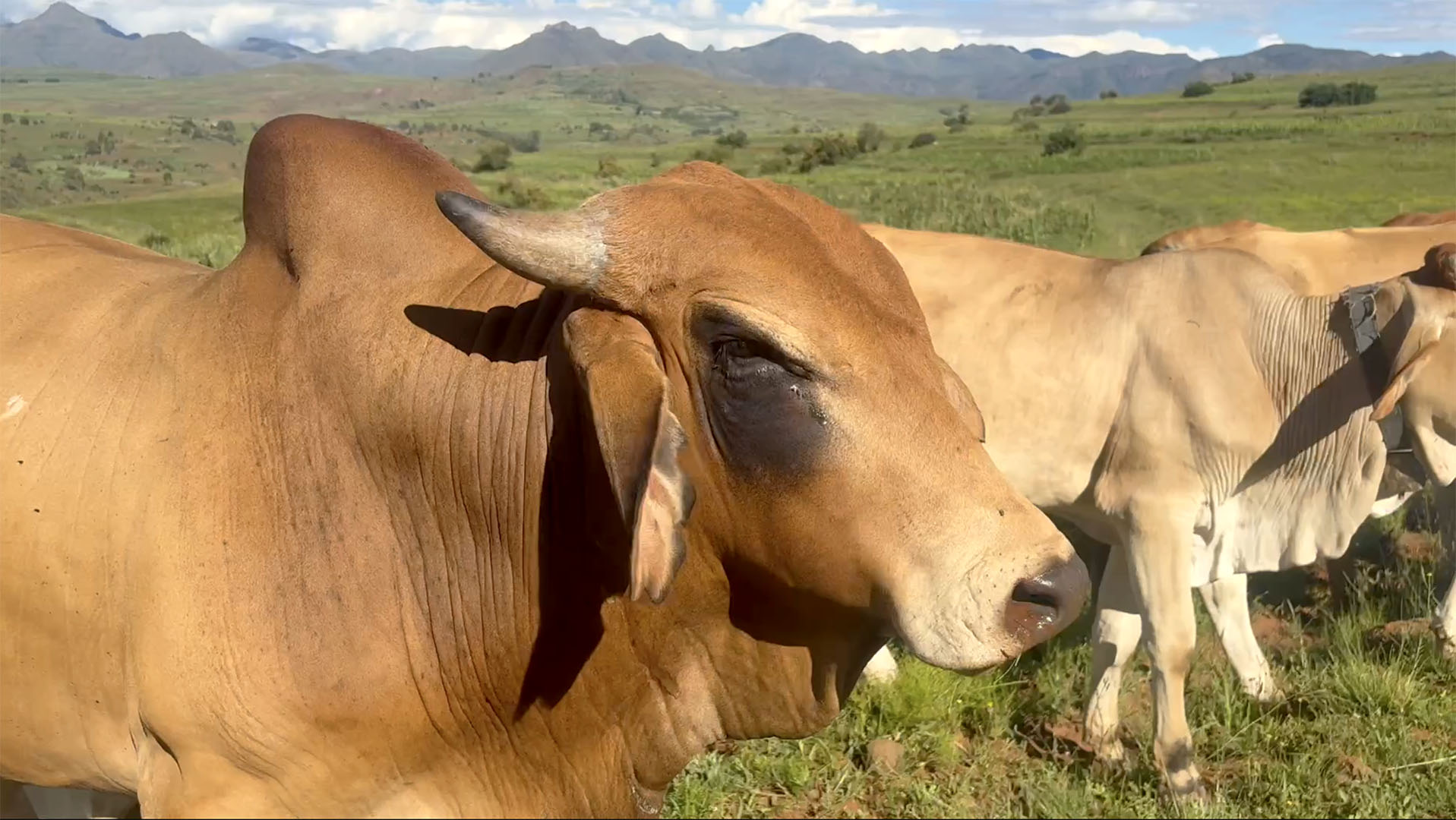
 Cattle herding is one of the oldest forms of animal husbandry for indigenous communities in this
part of the subcontinent. But the practice of leboella in Lesotho — the widely used system of
rotating herds between summer and winter pastures so that the veld can rest and recover — is
hard to do when the commonage has shrunk over generations and household numbers grown.
Moving herds in keeping with the needs of the veld is also difficult with the modern-day arrival of
fences, notions of private land ownership, or, in this case, the nation state that puts a hard border
across traditional herding routes. Many of the old customs that govern how people share grazing
spaces have been lost. (Photo: Leonie Joubert)
Cattle herding is one of the oldest forms of animal husbandry for indigenous communities in this
part of the subcontinent. But the practice of leboella in Lesotho — the widely used system of
rotating herds between summer and winter pastures so that the veld can rest and recover — is
hard to do when the commonage has shrunk over generations and household numbers grown.
Moving herds in keeping with the needs of the veld is also difficult with the modern-day arrival of
fences, notions of private land ownership, or, in this case, the nation state that puts a hard border
across traditional herding routes. Many of the old customs that govern how people share grazing
spaces have been lost. (Photo: Leonie Joubert) By Heather Schlitz and Cassandra Garrison
The updated numbers, which have not been previously reported to the public, showed 649 currently active cases.
"That's absolutely concerning," said Neal Wilkins, CEO of conservation and cattle group East Foundation. "Having a 50% increase in month-over-month numbers, particularly in the extreme heat, means they haven't gotten it under control."
The vast majority of cases were identified in cattle, though Mexican government data also showed infestations in dogs, horses and sheep.
Screwworms are parasites that eat warm-blooded animals alive and can devastate cattle herds and local wildlife.
Since an outbreak began in 2023, screwworms have advanced northward from Central America into Mexico and inched closer to the U.S. American ranchers and livestock industry players have closely monitored the fly's progress northward, fearing an infestation that would cost Texas, the biggest U.S. cattle-producing state, about $1.8 billion, according to U.S. estimates.
Female screwworm flies lay hundreds of eggs in wounds on any warm-blooded animal. Once the eggs hatch, the larvae use their sharp, hooked mouths to burrow through living flesh — feeding, enlarging the wound and eventually killing their host if left untreated.
On Sunday, Reuters reported the first human case in the United States of travel-associated New World screwworm from an outbreak-affected country. The case, investigated by the Maryland Department of Health and the U.S. Centers for Disease Control and Prevention, was confirmed by the CDC as New World screwworm on August 4, and involved a patient who returned from travel to El Salvador, HHS spokesman Andrew G. Nixon said in an email to Reuters.
The U.S. Department of Agriculture is sending a team to Mexico in two weeks to verify that Mexico is following protocol to prevent screwworm's northern spread, Deputy Secretary Stephen Vaden said on Tuesday.
(Reporting by Heather Schlitz and Cassandra Garrison; Editing by Leslie Adler)