



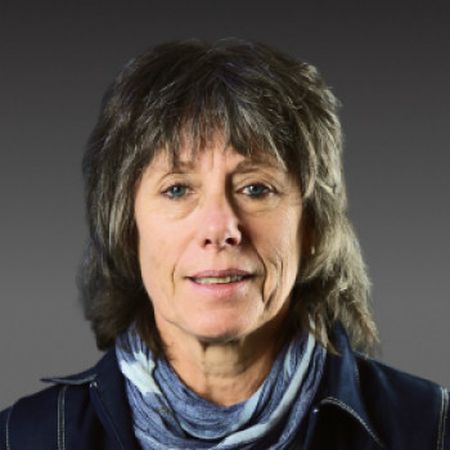
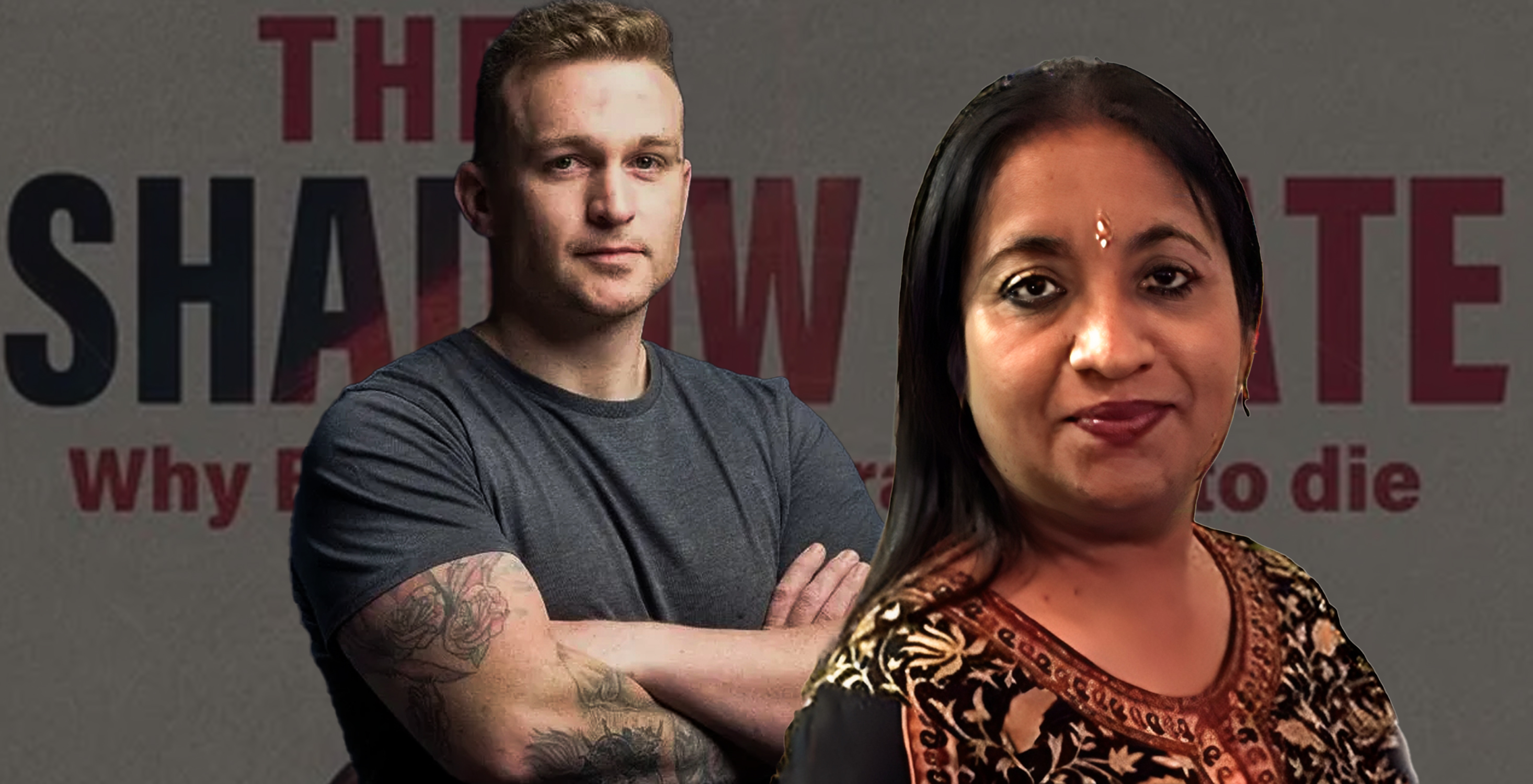
 Illustrative image | Investigative journalist Jeff Wicks. (Photo: News24) | Babita Deokaran. (Photo: Facebook)
 The courage it takes to put your life and family at risk for the greater good is one cultivated in fire. Several rings of fire.
Knowing that the individuals who are about to be exposed are deeply connected to powerful politicians and the underworld, and have easy access to quick-boy assassins in a country crippled by endemic corruption, is frightening.
With two decades in journalism, News24 investigative journalist Jeff Wicks — a two-time recipient of the prestigious Taco Kuiper Award — has joined the ranks of South African journalists who have chosen this difficult and life-altering path.
As a whistleblower, Gauteng Department of Health official Babita Deokaran, a single mother, was such a threat that she had to be eliminated, violently. This happened after her direct superior, Lerato Madyo, ignored the warnings. The truth always seeks the light.
Negotiating private spaces
A promise Wicks made to Deokaran’s grieving family and her beloved daughter, Thiara, was that this book would honour her memory, her life and her unfailing moral compass.
Each step of the way, Wicks navigates the often unwelcome intrusion of journalists into private spaces with tenderness and respect. Holding these emotions while girding his loins for battle required mammoth strength.
Wicks goes after all those who dropped the ball, from the SA Police Service (SAPS), to the Directorate of Priority Investigation, to Deokaran’s superiors. He names all those who bravely picked it up, including Captain Freddy Hicks and Deokaran’s shattered brother Rakesh.
This is an investigation which puts the Gauteng Department of Health, law enforcement management and the ANC to shame.
It highlights the crucial role of investigative journalism, deeply embedded in the communities of South Africa.
SAPS gross incompetence
We know the tragic ending of this story: Babita Deokaran was fatally shot in her car outside her townhouse in Winchester Hills, Johannesburg, on 23 August 2021 at about 8.20am.
Her helper, Elizabeth Khumalo, who was also in the car, saw a BMW pull up next to them and ducked when the shots slammed into the car and Deokaran.
Postmortem findings were that she died of “multiple gunshot wounds to the neck, torso, right and left upper limbs, associated with injuries to the chest wall, right lung, diaphragm, liver, inferior vena cava and left kidney”.
Those who wanted her silenced made sure to do so.
Hicks arrived at the scene much later that day, after other members of the SAPS had been there, only to discover that no photographs of the crime scene had been taken, and Deokaran’s bullet-ridden car had been left in the driveway. Her brother Rakesh was left to park it in the garage at her complex.
Even worse, we learn in the book, Deokaran’s cellphone and laptop with crucial information were recovered by her brother.
The SAPS had failed to do even the basics.
But thanks to that very incompetence, Wicks was able to obtain Deokaran’s cellphone and laptop after they had lain sealed and untouched in an SAPS office for months.
However, that was soon to be rectified when Hicks led a group of specialist police officers who quickly arrested six hitmen.
Vusimuzi “Cat” Matlala, the high-living tenderpreneur with tentacles reaching deep into the SAPS and the ANC, is there somewhere near the centre of Wicks’ narrative.
Read more: Joining the dots — SAPS infighting casts a long shadow
Wicks’ telling of the bizarre tale that unfolded is as mesmerising as a cobra.
The thin black line
It used to be ink — now it is pixels — but the thin black line of journalism still holds in South Africa between those who seek to abuse power and those who have no means to fight it.
Years of experience covering State Capture, right back to the Arms Deal and even before, have rendered South African working journalists battle-ready. There are countless veterans in the media who, before this, fought apartheid and whose examples are there to follow.
Before embarking on this piece of analysis, I had posted on my Facebook page a short and quick review of the book, noting how Wicks wrote about the personal cost, the threats, the tailing by strange cars and his deep anxiety and fear for his family.
All of my colleagues who work with this kind of material have had to accept that we might die suddenly and violently.
These are the journalists doing the legwork, gathering the receipts one by one, joining the dots over months, exposing the criminals and grifters.
Tembisa Hospital was set up as a model Covid-19 facility, and it turned in an instant into a politically connected mafia milking machine.
In Wicks’ case, the stakes were high, so high that a journalist could very well find themself in the gunsights. And so, other ways were found by News24 to expose what was on Deokaran’s laptop. It is all in the book.
Hypervigilance
My colleagues have played out scenarios of how we might react should our children or loved ones be in danger, or what we would do should an assassin appear at our car window.
What this does is lead to a lifetime of hypervigilance, which we have to learn to turn into a tool that does not destroy us.
When asked for comment, the relentless SA Revenue Service whistleblower, Johann van Loggerenberg, who, alongside Pravin Gordhan (and many others involved), felt the sharp end of lawfare, responded: “I believe the dynamics raised here aren’t spoken of, thought of, or considered most times.
“Often, when bad people are held to account in whatever way, too little thought goes into what it cost people to achieve that. It is often just accepted as is, taken for granted, so to speak.
“It is one of those concepts that I believe has the potential to raise our spirit of humanity a bit, as it is a shared dynamic between honest and good journalists, those law enforcement and government officials who do their best under trying circumstances, and those in the private sector and within civil society and academia that together, form the proverbial ‘thin blue line’ that stands between us becoming a captured and Mafia state in totality, and this incredibly uncomfortable realm we find ourselves in.
“Well done to all.” DM