




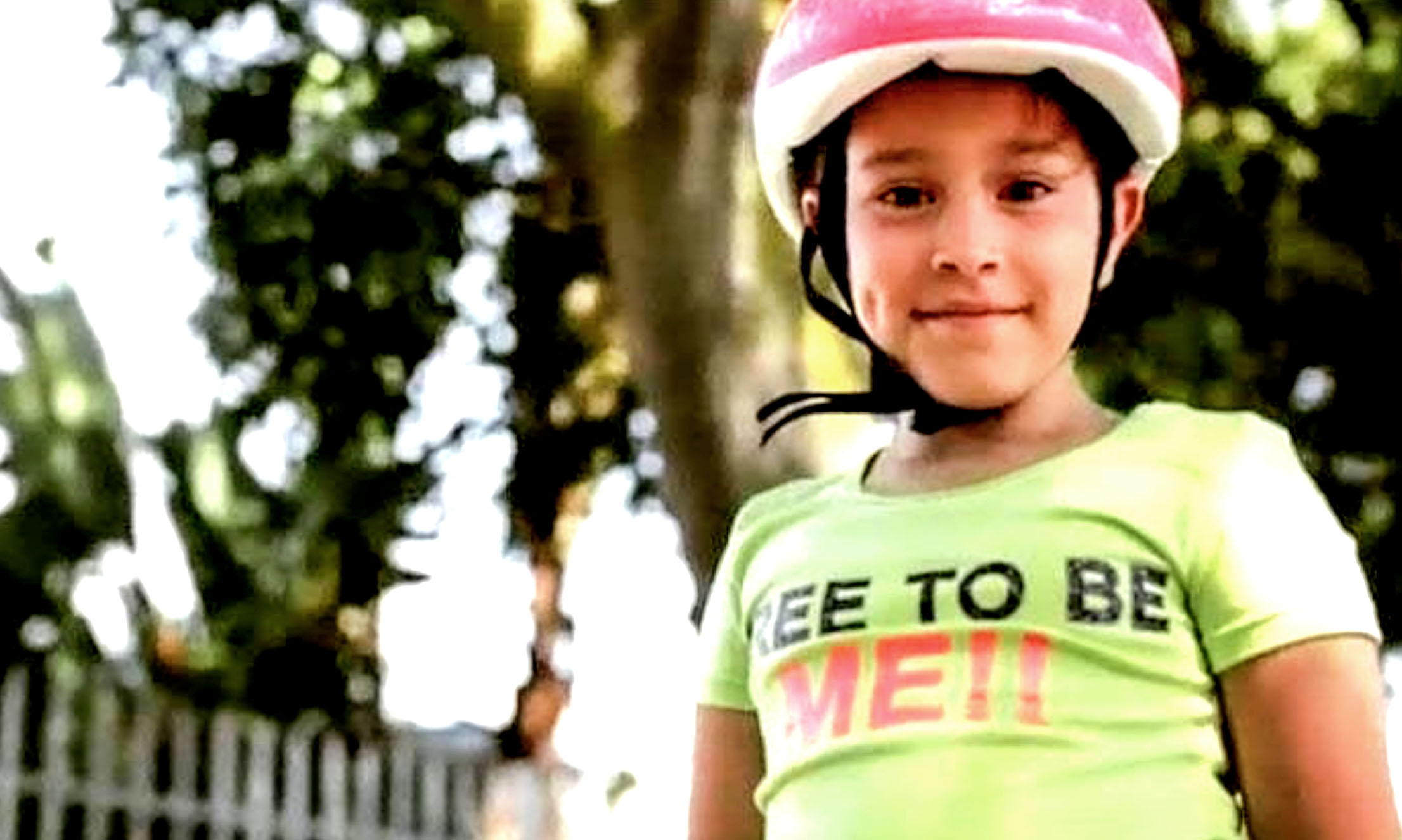
 Daniela Rodriguez‘s fight for citizens started when she was only seven years old. She has finally been registered as a South African citizen nine years after the Supreme Court of Appeal ordered the Department of Home Affairs to do so. (Photo: Supplied)
 Sixteen-year-old aspiring national volleyball player Daniela Rodriguez has spent more than half of her life waiting for the South African government to recognise her as a citizen. This meant that for 11 years, Daniela could not do the thing most South African kids take for granted.
Born in Cape Town in 2008 to Cuban parents, Daniela grew up calling South Africa home. Over the years, she grew to love volleyball, with dreams of one day representing South Africa at the highest level. But unlike other young athletes, her path was blocked by something entirely unrelated to her sporting talent — she had no country to call her own.
Under Cuban law, Daniela was disqualified from Cuban citizenship because of her parents’ permanent emigrant status. While she was born in South Africa, she was never recognised as a South African citizen either, because neither of her parents was South African.
Daniela essentially fell through the cracks of nationality laws and citizenship provisions. This left her in legal limbo: stateless, invisible to the system, and unable to do things most people take for granted.
Her situation should have changed in 2014 when the Gauteng Division of the High Court in Pretoria declared that the then five-year-old was a South African citizen and ordered the Department of Home Affairs to enter her details into the national population register, to issue her with a South African identity number and a new birth certificate reflecting the same. Two years later, in 2016, the Supreme Court of Appeal upheld the High Court judgment and directed the department to comply with this order by 6 November 2016.
“It’s been years of fighting and we are still here asking the department to do its job,” said Daniela’s mother, Kenia Rodriguez.
However, on Thursday, 14 August 2025, Daniela's citizenship struggles finally changed for the better.
A breakthrough
After home affairs’ nine-year failure to comply with the high court and Supreme Court of Appeal orders, the department informed Daniela and her mother that she had been registered as a citizen and could finally apply for her ID. This comes after years of inaction and silence from the department, which prompted the Rodriguez family’s legal representative to send a letter of demand to Home Affairs Minister Dr Leon Schreiber.
In the letter, Liesl Muller, a senior advocate at the Centre for Child Law, informed Schreiber and the department that if it did not comply with the order, the family would have no choice but to approach the high court on an urgent basis for appropriate relief, including an order finding the minister and the director-general in contempt of the court’s order.
Daniela and her mother spent the entire day at a Department of Home Affairs office on Friday, determined to leave the office with an ID number for her. On Wednesday, 20 August, she was finally able to apply for her ID.
While Daniela’s fight for citizenship began more than a decade ago, there was a renewed sense of urgency because the 16-year-old athlete had been invited to participate in Volleyball SA’s Champions Cup — an opportunity that, if she were to do well, would offer a pipeline to representing South Africa at the national level. However, without an ID number or ID document, she would have been robbed of the opportunity to register and participate.
For Daniela, the Department of Home Affairs’ official recognition of her as an SA citizen is the key to a new chapter. It means that as soon as she gets her ID, she can finally register for Volleyball SA’s Champions Cup and play at the nationals in September.
“Daniela is super happy and keen to start helping the other children like her. She wants to start a support network for children without a recognised citizenship and make their experiences a national priority,” Muller said.
Read more: David vs Goliath: Administrative abuse of moms results in legal action against Home Affairs
A wider problem
While Daniela’s story is one of triumph after years of delays, it also highlights a trend of non-compliance with court orders at the Department of Home Affairs.
Last week, Daily Maverick reported on how the Department of Home Affairs had failed to register Primrose Modisane as a South African citizen, despite also having a court order. Only after the threat of a public press conference did the department register her as an SA citizen.
There was an additional directive handed to home affairs in the order in Daniela’s case. The minister of Home Affairs was told to make regulations under section 2(2) of the Citizenship Act within 18 months of the order being handed down.
Section 2(2) of the South African Citizenship Act (No. 88 of 1995) says:
“Any person born in the Republic and who is not a South African citizen by virtue of the provisions of subsection (1) shall be a South African citizen by birth, if—
(a) he or she does not have the citizenship or nationality of any other country, or has no right to such citizenship or nationality; and
(b) his or her birth is registered in the Republic in accordance with the Births and Deaths Registration Act, 1992 (Act 51 of 1992).”
However, since section 2(2) was added to the act, it has been virtually impossible to implement because there is no application form and the department does not have the systems in place to make it practical.
That means Daniela’s win is the exception, not the rule. Without the regulations in place, other stateless children remain trapped in the same legal limbo she endured for more than a decade.
“Daniela was lucky to have a legal team and a clear court victory,” Muller said. “But until the regulations are written and implemented, other children in South Africa will continue to grow up without a nationality, despite being entitled to one. There may not be millions of stateless children, but there are enough to be concerned that the department is wilfully not acting on the order.”
Statelessness is not just a legal problem; it’s a human one. Without citizenship, children cannot easily access higher education, secure formal employment or even travel. Many are excluded from sports, arts programmes and other opportunities that could shape their futures.
Daily Maverick reached out to the Department of Home Affairs, questioning why the regulations had not been adopted, but had received no response by the time of publication. DM