



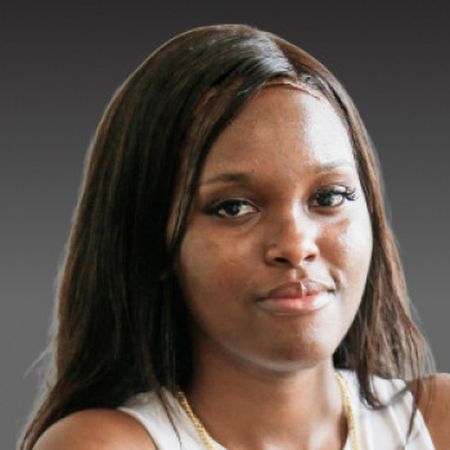
“Babita Deokaran was assassinated four years ago, but we collectively are not going to go away until the people who ordered that assassination are known and are prosecuted and are put in prison… Fighting for Babita Deokaran is not just about fighting for criminal justice, it is also about fighting for social justice.
“It’s about fighting for what Babita stood for as the head of finance in the Gauteng health department, because Babita was killed for doing her job, and the reason Babita was doing her job was because she was trying to protect the resources that are allocated to provide public healthcare services to the people of this province, and she took that job seriously as a civil servant.”
These were the words of activist Mark Heywood at a symposium hosted by the Ahmed Kathrada Foundation on Friday, 22 August 2025, dedicated to tackling the persistent issue of corruption in Gauteng’s health sector.
Read more: Babita Deokaran killing: renewed calls made to track down the murder masterminds
With critical discussions and reflections on how to protect lives and restore integrity within the province’s healthcare system, the symposium also served as a solemn tribute to Deokaran, whose determined efforts to expose corruption cost her life, shining a spotlight on the urgent need for accountability and reform in the health services.
Why Deokaran was assassinated
Deokaran was a dedicated civil servant, and during 30 years of government service she had climbed the ranks of the Gauteng Department of Health, starting as an accounting clerk and working her way up to chief director of financial accounting.
“I don’t think Babita would necessarily have thought of herself as a whistleblower. She was a civil senior civil servant who was being faithful to the job that she was appointed to do. She knew that, in terms of our Constitution, access to healthcare services is a fundamental right. Everyone has a right of access to healthcare services,” said Heywood.
Deokaran had noticed that Tembisa Hospital had much more orders than other hospitals, often for seemingly unnecessary items at inflated costs — such as for 100 office chairs, skinny jeans or art and craft supplies to the tune of half a million rand.
On 11 August 2021, she alerted the department’s chief financial officer that their lives could be in danger. Between her phone correspondence and thousands of Gauteng health department emails, there was a trove of evidence that Deokaran had unwittingly discovered a vast extraction network that had been siphoning off Tembisa Hospital’s budget.
“Morning CFO, I am just worried that the guys in Tembisa are going to realise we are onto something. Our lives could be in danger,” she said.
Twelve days later, Deokaran was dead. On 23 August 2021, in a hail of bullets outside her Johannesburg home, Babita Deokaran’s life was violently ended, a tragic chapter in South Africa’s battle against corruption.
Koogan Pillay, speaking on behalf of the Deokaran family, said they would like to see how to prevent the healthcare system in Gauteng from collapsing, the fast-tracking of the investigation into the masterminds behind the killing, and, equally importantly, the implementation of the Zondo Commission report.
“At the heart of whistleblowing is that we are failing with basic service delivery, those lovely Batho Pele principles, and now to try to save the healthcare sector. So I think Babita’s memory should not be erased. She was not a whistleblower, she was a patriot, an honest patriot and a true human rights defender,” he said.
Investigation ‘is a priority’
Speaking at the symposium, Leonard Lekgetho, chief operations officer of the Special Investigating Unit (SIU), said they remembered Deokaran as a courageous truth teller who stood for justice and who reminded us that integrity was never in vain, even when it came at a heavy cost.
“The loss of Babita is felt deeply because she carried the weight of truth on behalf of others, and may her bravery inspire us to keep fighting for accountability, fairness and a better future. Though her life was cut short, her courage lives on — speaking out took a great strength, and we honour her. Her voice should continue to echo through our action in terms of making sure that corruption is really fought,” he said.
Regarding the investigation, Lekgetho said he could confirm that it was progressing very well and that there had been considerable outcomes.
“We have prepared 111 disciplinary referrals regarding the Tembisa Hospital to the Department of Health and the hospital, so that they can take action against the officials who are involved in corruption. We also have 25 administrative referrals where they really need to take action against some of the companies that were involved, and we have four criminal referrals regarding corruption that we have identified, but the investigation is still ongoing,” he said.
Lekgetho said the SIU was pursuing civil litigation to cancel corrupt contracts and recover funds.
“Just to show the complexity of the investigation, we can indicate that we are currently looking at 4,000 tenders, and out of those we have identified 200 service providers that managed to benefit. As we are currently analysing the finances, the amount keeps on going up and up, and currently, based on what we have identified, we are looking at R2-billion of tenders that went out, and most of them were through corrupt activity and we are following up on them,” he said.
Lekgetho said the investigation was a top priority, and that he could confidently confirm that the report had been completed and submitted.
Greater transparency needed
Three days after the attack, six alleged hitmen from KwaZulu-Natal (five of whom came from the same valley) were arrested. Award-winning News24 journalist Jeff Wicks has devoted years to unravelling the dark web of who ordered her murder and the evil behind it.
In his new book, The Shadow State: Why Babita Deokaran had to die, released on Friday, 22 August 2025, Wicks intricately unpacks what he discovered. Speaking during the symposium, Wicks said we should remember and honour the sacrifice and courage she showed in the face of systemic corruption.
Deokaran’s work culminated in a four-year investigative project into large-scale corruption at a health facility, uncovering a staggering extraction of more than R 2.3-billion in just two years.
“It's truly mind boggling the amount of money that was able to be extracted, and remember, it was extracted in a four-month period, and that will give you a sense of the scale and the reach and the depravity of this extraction project, because that’s exactly what it was. Babita died for knowing the truth about what was happening,” said Wicks.
He noted that protracted disciplinary processes allowing culprits to resign without consequences, and intentional acts like arson targeting procurement documents continued to hinder investigations. Transparency remained a critical issue, especially with resistance from the health department in releasing crucial records related to corrupt transactions.
“A big point of consideration for me when pursuing this story was transparency, and the lack of transparency on the part of the Gauteng Department of Health. The only reason we were able to reveal the depth and scale of what Babita found out was because we had the ledgers, unimpeachable evidence that the health department could not deny.
“They tried. In the early days, they told us that Tembisa Hospital boss Dr Ashley Mthunzi had nothing to do with this, or that it preceded his time. We published his signature on the purchase orders, and then the Gauteng health department stopped talking to us,” said Wicks.
He added that there was evidence that these same syndicates were preying on other hospitals in the network, and that they had been locked in a two-year legal battle with the Gauteng health department to hand over those purchase orders and records.
“They are still fighting us, and that makes you wonder why. We will continue that fight, because these syndicates do not only prey on Tembisa Hospital and the Gauteng health department. The depth of what we found at Tembisa is being replicated across the country, and what we need now, and what we must agitate for through civil society, is greater transparency, and the door that we knock on is the National Treasury,” he said.
The high risk faced by investigators and auditors
Deokaran played a crucial role in exposing corruption within the Gauteng health sector, not merely as a whistleblower but as a forensic professional committed to uncovering irregularities in the course of her work.
“She was instrumental to the investigation, and she paid the ultimate cost for just doing her job,” said Wicks.
Karam Singh, a consultant at Corruption Watch, told Daily Maverick that Deokaran was “doing her job” as an internal official who “came across information which compromised people”, distinguishing her from typical whistleblowers.
Singh highlighted the serious vulnerabilities faced by investigators and auditors, particularly when their identities were exposed, including assassination attempts on officials at the South African Revenue Service (SARS). Despite the severity of these threats, he pointed out that the current legal framework did not offer sufficient special protections for those at risk.
The legislative framework in place primarily focused on protected disclosures, aiming to prevent the unauthorised sharing of sensitive information. Over the years, amendments had broadened the scope of this legislation to include a wider range of individuals beyond the traditional employment context — a necessary change following earlier criticism that the law was too limited.
However, Singh emphasises that the core challenge lies not just in the legal provisions themselves, but in their enforcement and operation within the broader social and political landscape.
“I think the general challenge is around enforcement; we live in a society where there’s a lack of trust for law enforcement and the system doesn’t give people confidence that if they come forward their anonymity will be protected and that they won’t face other kinds of detriment, occupational detriment, threats and the like,” he said.
These concerns have not gone unnoticed. The Department of Justice has acknowledged the issue, which also emerged in the findings of the Zondo Commission. The department published a research paper on the topic and invited public comment as part of the process toward new legislation. Yet, despite the clear warning signs and growing frustration, meaningful action has been slow to materialise. Naledi Kuali, Defend Our Democracy’s executive director, said this was a grave concern.
“We have seen an increase in the deaths of those investigating sensitive matters and those who have disclosed. The need for reform is urgent, and the recent deaths further highlight the urgency of this matter,” she said.
Kuali added that existing legislation could be amended to provide a more holistic approach to the protection of whistleblowers.
“The idea is to ensure protection, provide recourse as well as incentive to actually disclose, as opposed to just hoping people disclose at great risk to themselves only to be left hanging without long-term support,” she said.
The human cost of corruption
Many people with cancer in Gauteng have been unable to access the treatment and care they require in recent years. Cancer Alliance, represented by lawyers from the human rights organisation Section27, took Gauteng health officials to court for failing to use R784-million allocated in March 2023 by the Gauteng provincial Treasury for addressing radiation and surgical backlogs in the province.
Thato Moncho, a person living with cancer, spoke about the impact of corruption on ordinary citizens.
“Corruption is killing cancer patients. I am dying, I am not going to be able to see my child. Stand up and fight the corruption that is killing us on the ground level. This is the reality — had I got treatment on time I would be a different person by now. For the sake of Babita, we need to stand up and fight against corruption and fix our country ourselves, because they are not going to fix it for us,” she said. DM