




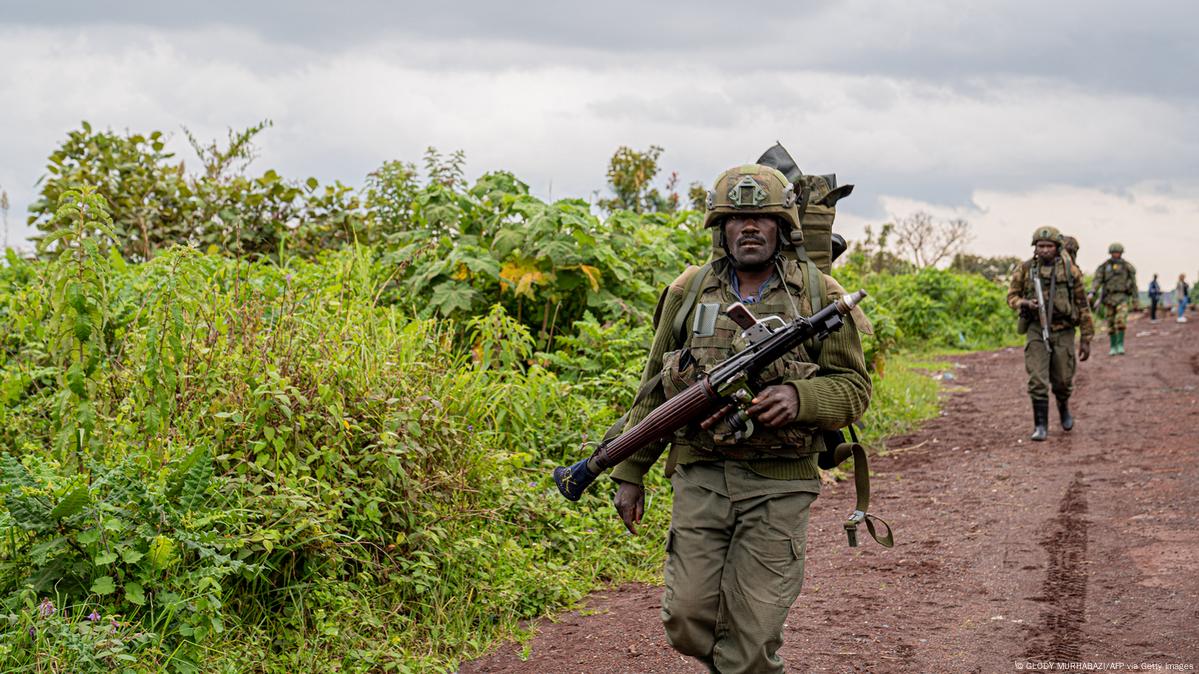
 Photo: Getty Images
 Under the watchful eye of M23 rebels in the hills around the Congolese town of Rubaya, a line of men in rubber boots ferry sacks full of crushed rocks up winding paths cut into the slopes.
The labourers are hauling coltan ore, a mineral that powers the modern world. The ore will be loaded onto motorbikes and eventually shipped thousands of kilometres away to Asia. There it’s processed into tantalum, a heat-resistant metal that fetches more than $300 per kilogram and is in high demand by makers of cellphones, computers, aerospace components and gas turbines.
Rubaya produces about 15% of the world’s coltan, all dug manually by impoverished locals who earn a few dollars a day. Control of this mine is the biggest prize in a long-running conflict in this central African nation.
The area was seized in April 2024 by M23, a rebel group the UN says has plundered Rubaya’s riches to help fund its insurgency, backed by the government of neighbouring Rwanda. The armed rebels captured even more mineral-rich territory in eastern Democratic Republic of Congo (DRC) this year.
The region and its mineral wealth are in the spotlight because M23 and the DRC pledged to sign a peace deal at a ceremony in Qatar’s capital, Doha, this month. The US is mediating parallel talks between the DRC and Rwanda, dangling potentially billions of dollars in investment if hostilities cease.
On 12 August, the US Treasury sanctioned other alleged participants in minerals smuggling in the DRC, including Pareco-FF, a pro-government militia that the US said controlled the Rubaya mining site from 2022 to early 2024, before M23’s takeover.
M23’s advance poses the most serious threat to the Kinshasa government in at least two decades of conflict rooted in Rwanda’s 1994 genocide, during which about one million of Rwanda’s Tutsi ethnic group were killed by Hutu militias.
Rwanda’s government has long denied that it traffics in coltan looted from its neighbour or that it backs M23. But Rwanda’s ruling party, mainly headed by Tutsis, shares the same concerns as the Tutsi-dominated M23 insurgents over the purported threat posed by rival Hutu groups operating in the eastern DRC.
M23 now controls two key DRC cities – Goma and Bukavu – on the border with Rwanda. UN investigators say that it is through these cities that minerals are illegally trucked to Rwanda, where the ore is mixed with Rwandan coltan production in a bid to disguise its provenance before export.
Reuters reporters visited Rubaya in March and were told by M23 officials that the rebels had imposed a tax on mineral traders of 15% on the value of coltan they buy from the informal miners who work the area.
Mud and motorbikes
Simply reaching Rubaya’s sprawling, beehive-like maze of pits is a major undertaking. Reuters journalists who visited the mining sites in March had to abandon their four-wheel-drive Land Cruisers after the vehicles became stuck on the muddy road from Goma. They walked 5km to reach the town and then hopped on the back of motorcycles with rebel officials to reach the pits.
Activity in Rubaya begins before dawn, when thousands of miners descend on the pits cut into the rolling hills of North Kivu province, where many toil in 12-hour shifts.
The tunnels can be as deep as 15m underground. Once fragments of ore are dislodged, porters carry sacks of the rubble to the surface. There, other workers, including women and children, wash the ore before laying it in the sun to dry. It is then stacked on the backs of motorbikes that carry it to one of several depots in the nearby town of Rubaya, where it is sold to traders.
UN experts and human rights activists have long warned that profits from illegal mining are funding conflict. They say the trade has brought little wealth to local people and that child labour is common.
/file/dailymaverick/wp-content/uploads/2025/08/2de733c4534fbe2f23f22dfe9e6ce949.jpg "A coltan mine around the Congolese town of Rubaya. (Photo: Getty Images)")
Some US entrepreneurs have also set their sights on Rubaya’s coltan treasure as President Donald Trump seeks to broker a peace deal to end the conflict and promote development of the region’s mineral wealth.
Texas hedge fund manager Gentry Beach, who is chairperson of investment firm America First Global and helped raise funds for Trump’s election campaign in 2016, was part of a consortium looking to negotiate rights to the Rubaya mine, according to a person with direct knowledge of the matter. The Financial Times earlier reported Gentry’s interest in Congo’s coltan.
The source told Reuters that Beach’s group had proposed to the DRC government taking a majority stake in the mine, with Kinshasa retaining a 30% interest. Beach confirmed his interest in the project to Reuters, but declined to provide additional details.
Some US legislators are pushing back. In an 8 August letter to Trump and US Secretary of State Marco Rubio, more than 50 Democratic congress members criticised what they said was the administration’s lack of transparency in its negotiations with the DRC. They also raised concerns about a potential conflict of interest in a Trump ally angling for rights to develop the Rubaya mine.
White House deputy press secretary Anna Kelly said in a 5 August statement that the agreement between the DRC and Rwanda arranged by Trump had the potential to lead to lasting peace and stability in the region. The president’s vision was a “win-win outcome where all parties benefit… through cooperation and shared prosperity”.
The US-backed accord does not include M23, which is part of a separate, parallel mediation led by Qatar that seeks to end hostilities. The success of these talks in Doha is key to any lasting peace – and to making Rubaya safe for investment and development by Western mining interests.
Some diplomats and analysts are dubious about the prospects for a speedy resolution.
The DRC and M23 pledged in Doha to reach a peace deal by 18 August. But progress has been jeopardised by the killing of at least 319 civilians in eastern DRC last month, according to the UN, which says M23 carried out the attacks.
Meanwhile, the US-brokered deal calls for Rwandan troops to pull out of the DRC. But Rwandan President Paul Kagame said last month he was not sure the agreement would hold.
Another formidable undertaking would be transforming Rubaya’s crude system of coltan extraction into a modern operation, said a diplomat who is closely following events. “No one talks about the feasibility of giving out these mining concessions and running them, especially since the whole mine is artisanal mining,” he said. – Reuters/DM
This story first appeared in our weekly Daily Maverick 168 newspaper, which is available countrywide for R35.
