



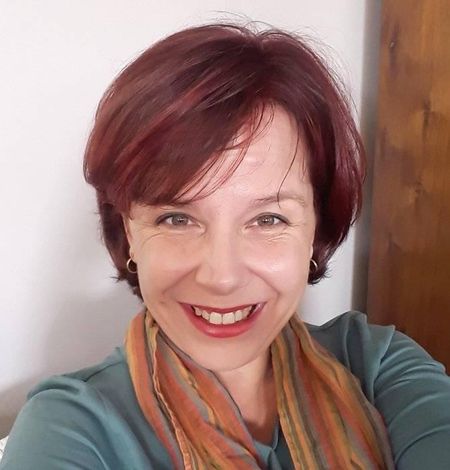
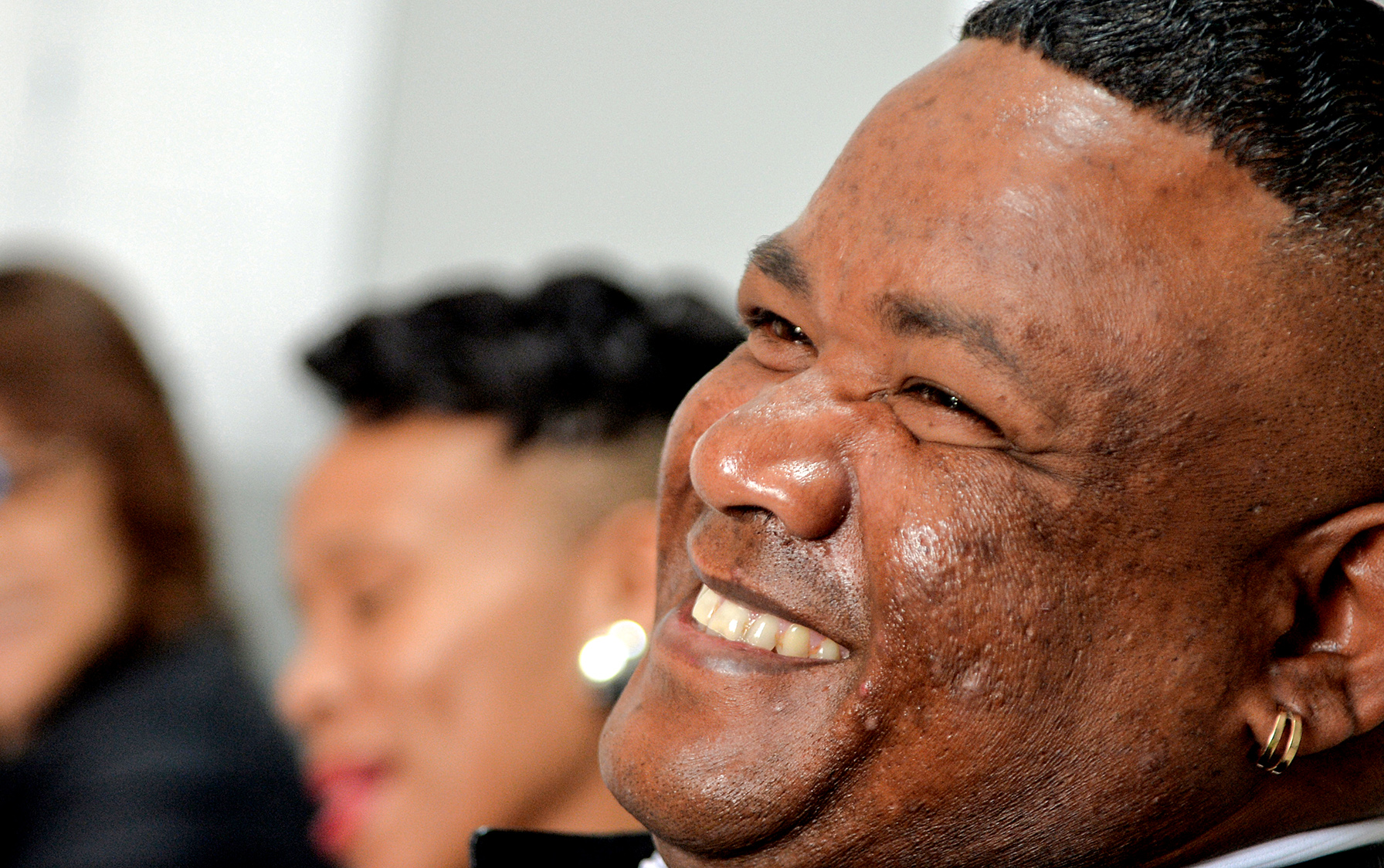
 Murcian de Hart is the first recipient of a non-compatible blood group donor kidney at the Eastern Cape’s Livingstone Hospital Renal Unit. (Photo: Deon Ferreira)
 Actually, Kelly-Ann de Hart, will tell you, their story goes back more than two decades, to her matric farewell, where she met Murcien and fell in love.
/file/dailymaverick/wp-content/uploads/2025/08/DSC_7217-copy.jpg "Murcien’s wife, Kelly-Ann de Hart, donated a kidney for the transplant. (Photo: Deon Ferreira)")
“This is my high school sweetheart. I was 17 when we met. He was 19. It was after my matric farewell that we met. I was still in my ball gown. When I stepped out of the car my friends had organised a blind date for us,” she said.
Murcien is a patient at Livingstone Hospital’s renal unit, and the first from this unit to receive this type of transplant. According to explanations provided by Glycorex, a medical technologies company, they have developed a filter that allows doctors to filter out the antibodies in a patient's blood plasma that would cause rejection due to blood group incompatibility.
In Murcien’s case, hospital transplant coordinator Lucille Claassen said eight of his close family members, who had the same blood group, were rejected because of other health conditions like high blood pressure and diabetes. His wife Kelly-Ann, however, was in perfect health.
In stepped Dr Jason Ensor, who spearheaded the transplant.
He explained that the first non-compatible blood donor kidney transplant in South Africa was performed at Groote Schuur Hospital in 2023. When he heard of the De Hart family’s situation, he approached the Groote Schuur team, led by Dr Zunaid Barday, who accepted Murcien as a patient.
/file/dailymaverick/wp-content/uploads/2025/08/DSC_7274-copy.jpg "Livingstone Hospital transplant coordinator Sister Lucille Claassen (right), was with the De Hart family throughout the process, including breaking the news eight times to Murcien de Hart that his donors were unsuitable. (Photo: Deon Ferreira)")
“Everything else worked out well,” Ensor said. He added that their renal unit had a really strong relationship with the one at Groote Schuur Hospital. “They trust us here as a satellite unit,” he said. “It was this strong relationship that allowed us to pursue the other option.”
Aftercare
Ensor said the aftercare for this type of transplant was not much different from a routine surgery.
“If you need a blood transfusion you need to be more aware and be cautious about it,” he said. “But in general it is just the routine follow-up.
“Donors are a limited resource and there is a limit to the amount of patients you can take up for dialysis. Finding new options for donors will help more people down the line.”
The head of the unit, Dr Robert Freercks, said: “It is hard to overstate how amazing it is when someone comes forward and offers one of their kidneys to someone else. We have seen amazing things. It is a real act of love. I also want to mention our deceased donors. Registering as an organ donor is such an important thing,” he said.
He explained that previously, a transplant like Murcien’s would have been impossible, and without a doubt the kidney would have been rejected.
/file/dailymaverick/wp-content/uploads/2025/08/DSC_7254-copy.jpg "Murcien and Kelly-Ann de Hart with Livingstone Hospital transplant coordinator Lucille Claasen and the doctors looking after him, Dr Rob Freercks, who heads the renal unit, Dr Rob Freercks (at the rear) with Dr Siyabonga Mbijekana, Dr Jason Ensor, who facilitated access to the Groote Schuur programme (left) and Dr Noel Walton (right). (Photo: Deon Ferreira)")
Freercks said kidney disease was a massive problem globally, and particularly in South Africa. He said the burden of non-communicable diseases like hypertension and diabetes in combination with communicable diseases like HIV and TB drove the incidence and the progression of chronic kidney disease in South Africa. The current forecast was that chronic kidney disease would be the fifth largest cause of death by 2040. It was the 16th just a few years ago. Second to Alzheimer’s Disease, it was the fastest-growing health problem globally.
He added that new medications had come to market in recent years to slow down the progression of chronic kidney disease.
“But we really have to focus on preventing it,” he said.
Transplant coordinator Claassen said she met Murcien in the renal clinic.
“He was not on dialysis at the time but his disease eventually progressed to end-stage kidney disease, and he needed peritoneal dialysis,” she said. “A few of his brothers all had some form of hypertension and were rejected as donors. A suitable donor fell through. Kelly-Ann also offered but her blood group was not the same. Murcien’s blood group is A+ and Kelly-Ann’s is B+. So when we heard that there is an option that she could donate, I called her back.”
Murcien said he was first diagnosed with kidney disease in 2012, and it got progressively worse.
Rejected
“It was very disappointing to hear that a donor had been rejected,” he said. “When I heard that my wife could now give me a kidney I wanted to know how it was going to go.”
In November last year the couple went to Groote Schuur for the transplant.
“Our son is a very inquisitive child,” Kelly-Ann said. “He started asking questions. He wanted to know everything from A to Z. They have both been really supportive of their dad. You can see how happy they are now that dad is back.”
Kelly-Ann said her parents had stayed with the grandchildren in Schauderville while Murcien’s parents supported them at Groote Schuur Hospital.
“For me the most amazing thing was on the second day after the operation, to see him walking into the room as strong as he did. It was only the second day,” she said. “I have never seen him so happy. There was no pain. He was always in so much pain for 11 years.”
Freercks said there was a significant increase in life expectancy after a kidney transplant.
“It is by far superior to dialysis,” he said. A patient at their clinic had had a transplanted kidney for 46 years.
Ensor said it could not be overstated how much a successful kidney transplant added to a patient’s quality of life.
“They come in so sick that the dialysis makes them feel better,” he said. “But it is not normal. So when they get a kidney transplant, they realise how healthy they can feel.” DM