



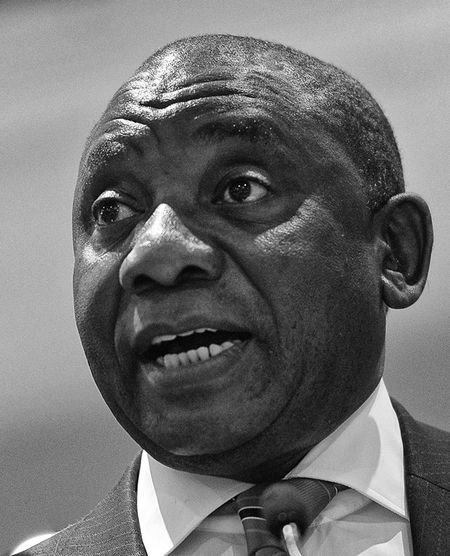
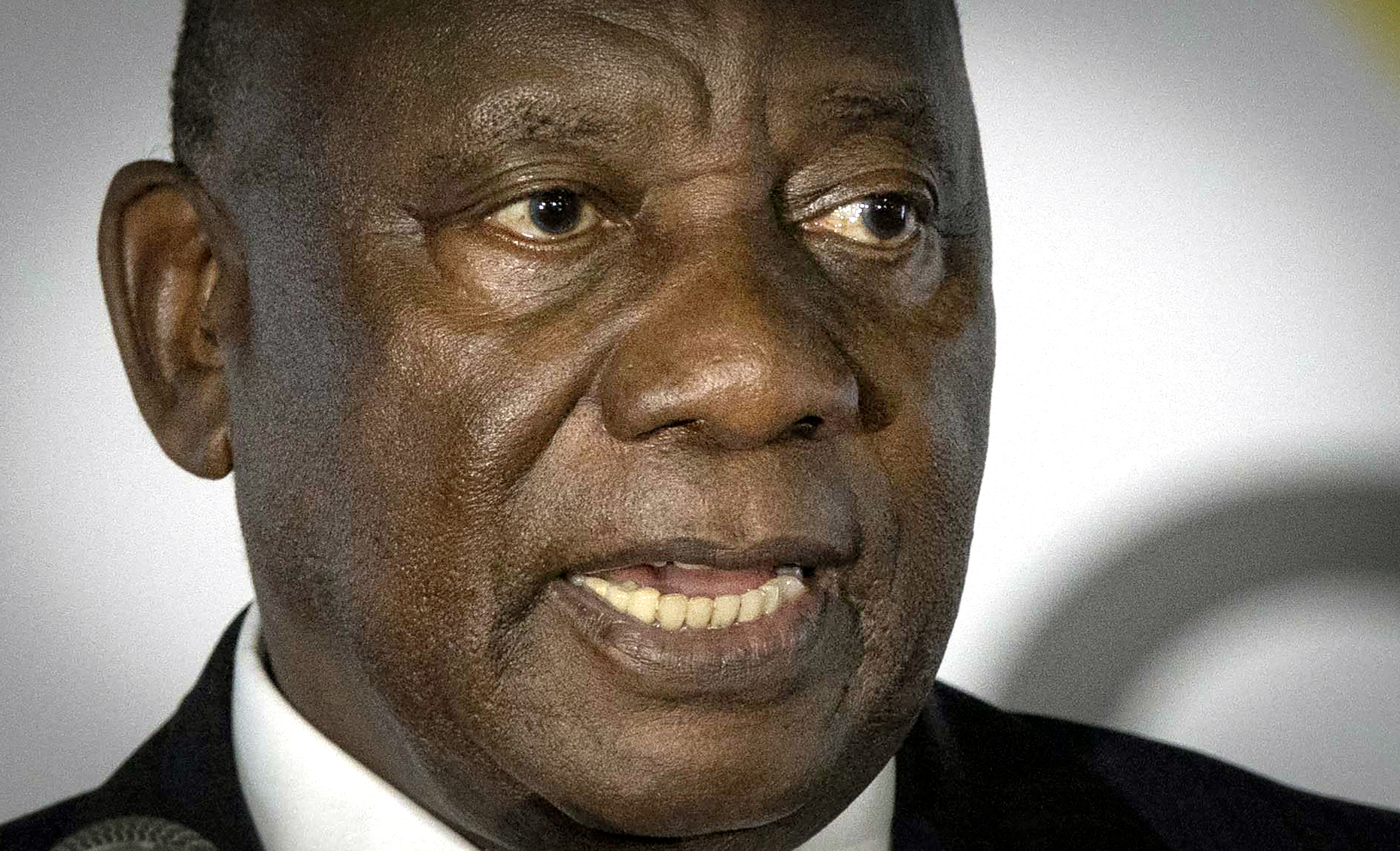
 President Cyril Ramaphosa addresses the media during the G20 foreign ministers meeting at Nasrec in Johannesburg on 20 February 2025. (Photo: EPA-EFE / Kim Ludbrook)
 The decision by the US to impose a 30% tariff on South African imports highlights the urgency with which we have to adapt to increasingly turbulent headwinds in international trade.
The US is South Africa’s second-largest trading partner by country and these measures will have a considerable impact on industries that rely heavily on exports to that country and on the workers they employ, as well as on our fiscus.
Domestic sectors such as agriculture, automotive and textiles have historically benefited from duty-free access to the US market under the African Growth and Opportunity Act (Agoa).
Our trade relations have historically been complementary in nature. South African exports do not compete with US producers and do not pose a threat to US industry. It remains our aspiration that this should continue. Largely, our exports are inputs into US industries and therefore support the US’ industrial base. South Africa is also the biggest investor from the African continent into the US, with 22 of our companies investing in a number of sectors including, mining, chemicals, pharmaceuticals and the food chain.
South African imports ultimately benefit US consumers in terms of both choice and cost. By way of example, citrus production is counter-seasonal and does not pose a threat to US production. Furthermore, production by US companies has been on the decline for a number of years as the US sector grapples with low yields, a citrus greening disease and other factors unrelated to competition from imports. Imports from South Africa, the world’s second-largest citrus exporter, have filled a gap and contributed to stable supply and prices for US consumers.
As government, we have been engaging the US to enhance mutually beneficial trade and investment relations. All channels of communication remain open to engage with the US.
Our foremost priority is protecting our export industries. We will continue to engage the US in an attempt to preserve market access for our products. We must also accelerate the diversification of our export markets, particularly by deepening intra-African trade.
Reducing overdependence on certain markets is a strategic imperative to build the resilience of our economy.
With a view to helping our producers and exporters aggressively explore alternative markets, we have established an Export Support Desk to assist affected producers. We will in due course be announcing the modalities of a support package for companies, producers and workers that have been rendered vulnerable by the US tariffs. This intervention will also play a key role in guiding industries looking to expand into new markets in the rest of Africa, Asia, the Middle East and markets we already have trade agreements with.
Strengthening regional value chains will be key to building resilience for our export markets in the longer term. Much as strengthening and establishing alternative value chains will take time, this moment presents us with an opportunity to push forward with the implementation and expansion of the African Continental Free Trade Area (AfCFTA). Reducing overdependence on certain markets is a strategic imperative to build the resilience of our economy. It will also enable us to expand the frontiers of opportunity for South African businesses, goods and services.
In the coming months we will be scaling up our trade missions into new markets in Africa and beyond, as well as the National Exporter Development Programme whose aim is to grow the pool of export-ready companies.
Read more: Redi Tlhabi breaks down Trump’s tariff chaos with Phillip van Niekerk
It is important to understand that South Africa is not alone in facing high tariffs from the US. A number of export-reliant developed and developing economies, including several on the continent, are also grappling with these measures.
The international trading system is changing. Complacency will not serve us, and building resilience is imperative. As government we remain committed to ongoing engagement with the US and building trade resilience. DM
This is the President’s weekly letter to the nation, released on Monday.