




 Wildlife has started returning at DRDGold mine dumps. (Photo: Felix Dlangamandla)
 ‘Caution: Wild Game on Site” proclaims a sign on the perimeter fence featuring the silhouette of a wildebeest in a red triangle.
The setting for the sign is highly unusual: the entrance to the massive Brakpan Tailings Facility, which has risen from the residue of the mine dumps that DRDGold is remining and rehabilitating around Johannesburg.
/file/dailymaverick/wp-content/uploads/2025/07/Ed.jpg "A sign at the entrance to the Brakpan Tailings Facility on 11 July 2025. (Photo: Ed Stoddard)")
“We noticed wildlife like warthogs and jackal returning to the area,” CEO Niel Pretorius told Daily Maverick during a recent visit to the site, which included a helicopter ride over it and several of the dumps that DRDGold is remining.
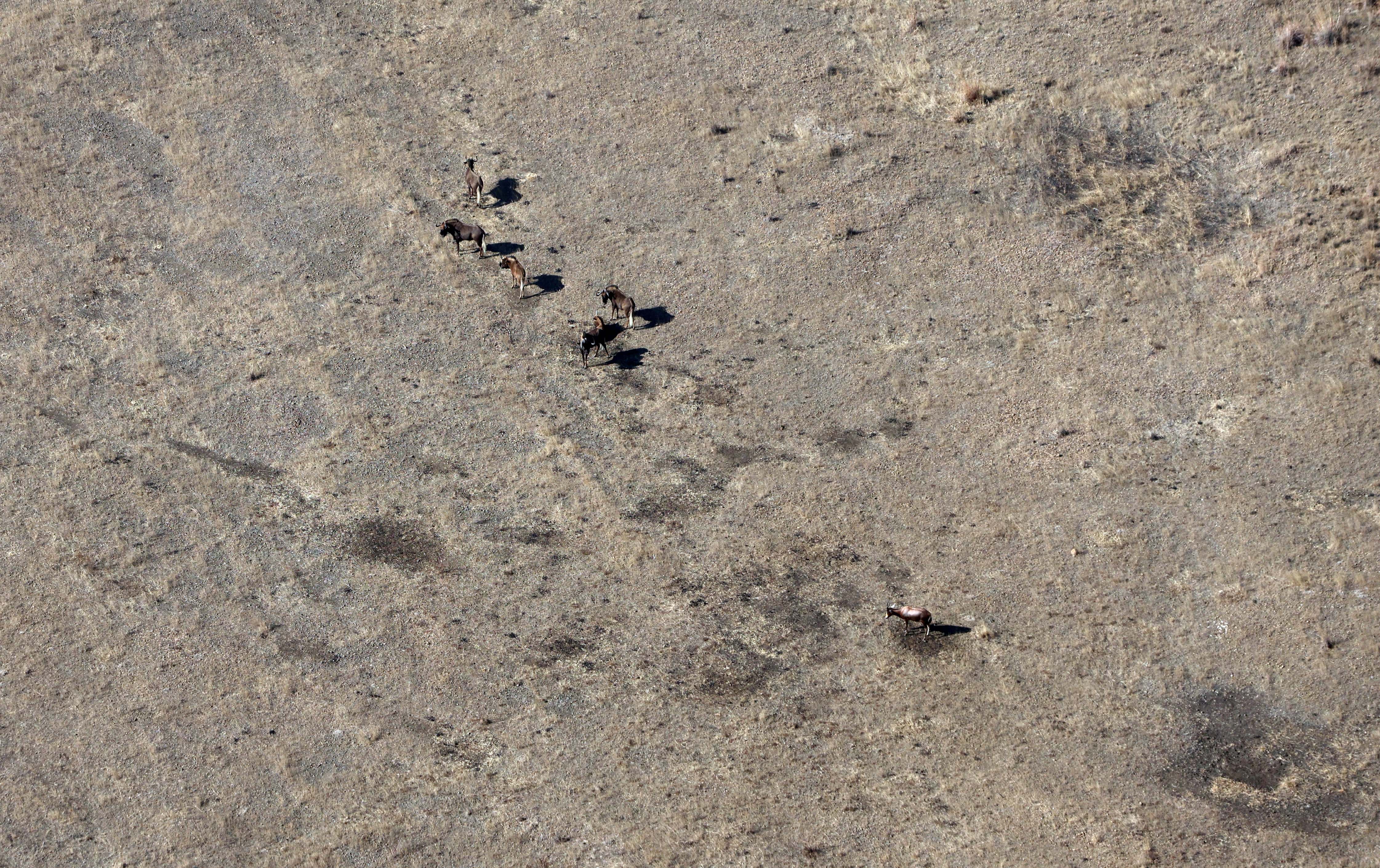
“So we decided to reintroduce more game here,” he said. Black wildebeest, blesbok, zebra and sable have been brought in and now graze the grasslands around the hulking tailings dam. More than 20km of sturdy fencing surrounds the facility, enclosing more than 900ha in total.
/file/dailymaverick/wp-content/uploads/2025/07/6I1A0348.jpg "DRDGold CEO Niel Pretorius. (Photo: Felix Dlangamandla)")
Local poachers also noticed the returning wildlife and had been hunting game with dogs until the erection of the fence.
The facility has a nursery where indigenous trees are grown. Natural soil is spread on the rising banks of the dam, allowing vegetation to naturally take root. DRDGold carries out “concurrent rehabilitation”, meaning that it vegetates the tailings dam as each new layer is added.
“The biodiversity here is natural and that is why it attracts birds and [other] animals,” Pretorius said as he pointed to the towering tailings structure that soared into the blue of a crisp Gauteng winter’s day.
The resilience of nature is astonishing. Given half a chance, the wild can quickly reclaim land and habitat radically altered by humanity. And no industry has left spoor in its wake on the scale of mining. Johannesburg’s mine dumps are starkly visible testimony to that point.
/file/dailymaverick/wp-content/uploads/2025/07/WFD_0291.jpg "DRDGold has for 20 years been re-mining the mine dumps around Johannesburg for gold and rehabilitating the landscape. (Photo: Felix Dlangamandla)")
/file/dailymaverick/wp-content/uploads/2025/07/WFD_0682.jpg "A mega-dump spawned by the re-mining of other dumps: The Brakpan Tailings Facility on 11 July 2025. (Photo: Felix Dlangamandla)")
/file/dailymaverick/wp-content/uploads/2025/07/WFD_0480.jpg "A water gun shoots a spray of H20 into a mine dump, the start of a process that will produce a gold bar at the end and level the dump on 11 July 2025. (Photo: Felix Dlangamandla)")
/file/dailymaverick/wp-content/uploads/2025/07/WFD_0459.jpg "4L3 between Germiston and Joburg, a mine dump in the process of being reclaimed as the life of the mine winds down on 11 July 2025. (Photo: Felix Dlangamandla)")
/file/dailymaverick/wp-content/uploads/2025/07/WFD_0357.jpg "4L3 between Germiston and Joburg, a mine dump in the process of being reclaimed as the life of the mine winds down on 11 July 2025. (Photo: Felix Dlangamandla)")
/file/dailymaverick/wp-content/uploads/2025/07/WFD_0274.jpg "DRDGold has for 20 years been re-mining the mine dumps around Johannesburg for gold and rehabilitating the landscape. (Photo: Felix Dlangamandla)")
/file/dailymaverick/wp-content/uploads/2025/07/WFD_0168.jpg "DRDGold has for 20 years been re-mining the mine dumps around Johannesburg for gold and rehabilitating the landscape. (Photo: Felix Dlangamandla)")
/file/dailymaverick/wp-content/uploads/2025/07/6I1A0250.jpg "4L3 between Germiston and Joburg a mine dump in the process of being reclaimed as the life of the mine winds down on 11 July 2025. (Photo: Felix Dlangamandla)")
/file/dailymaverick/wp-content/uploads/2025/07/6I1A0240.jpg "4L3 between Germiston and Joburg, a mine dump in the process of being reclaimed as the life of the mine winds down on 11 July 2025. (Photo: Felix Dlangamandla)")
/file/dailymaverick/wp-content/uploads/2025/07/6I1A0158.jpg "4L3 between Germiston and Joburg, a mine dump in the process of being reclaimed as the life of the mine winds down on 11 July 2025. (Photo: Felix Dlangamandla)")
/file/dailymaverick/wp-content/uploads/2025/07/WFD_0045.jpg "Employees at DRDGold tailings treatment operations in Brakpan on 11 July 2025. (Photo: Felix Dlangamandla)")
Bird’s-eye view
A helicopter ride from the Brakpan facility provides a bird’s-eye view of the unfolding transformation of these mine dumps, long an iconic feature of the City of Gold’s landscape.
DRDGold has for decades spun cash from these mine-made hills. Remining these assets for the discarded gold that remains locked inside has paid dividends like clockwork for the past 18 years – and current red-hot gold prices are bound to boost that liquidity flow.
In the process, a toxic environmental and health legacy of South Africa’s mining industry is being addressed.
“Gold mine tailings, a legacy of the mining industry, harbours [a] significant amount of radon gas, a classified human carcinogen. Radon exposure, especially near tailings, is a significant public health threat, potentially leading to increased risk of lung cancer, leukemia and chronic obstructive pulmonary disease,” says a recent study in the journal Frontiers in Public Health.
The dust from the Crown Tailings complex in Nasrec, which will be mined in five years, has “been completely contained by vegetation”, Pretorius remarked as the helicopter passed over it.
“This process was started in 2007 and has been taken to the point that very little, if any, dust gets blown off the complex and into the surrounding residential areas, borne out by the ongoing samples taken from 23 sampling points around the complex,” he said afterwards.
Flying over the 4L3 site between Germiston and Joburg reveals a formation that now resembles a gigantic layer cake with the icing removed.
“It is in the process of being reclaimed as the life of the mine winds down,” Pretorius said.
The Rosherville site, in its final stages of rehabilitation, may become part of the Transnet inland port complex. New green belts, factories and residential complexes – in short, mixed uses – have also sprouted from reclaimed land.
Other mine dumps still have a towering presence but are earmarked for gold extraction and eradication.
From the helicopter, a water gun could be seen shooting a stream of H₂O into the side of one such site. It evokes a water pistol squirting a spray into a monstrous sandcastle. But it is the start of an elaborate chemical and engineering process that will produce a bar of gold at the end while simultaneously levelling the heap for reclamation.
South Africa’s gold mining industry has many legacies. The industrial revolution it triggered gave rise to Africa’s most developed economy. But for decades the industry relied on a brutally exploited migrant black labour force – laying the economic foundations for the predatory apartheid state – and the descendants of that unjust arrangement now seek illicit gold as zama zamas.
The mine dumps and old tailings dams are also vivid remnants of this past, and the gold they contain cannot be mined by zama zamas, who dangerously ply their trade underground. But these assets hold significant wealth and companies such as DRDGold are profitably extracting this resource while changing the Johannesburg skyline and environment.
Over the past 12 years, DRDGold has removed and reprocessed about 140 mine dumps, restoring 700ha of land.
Remined mine dumps also spawn offspring in their likeness, and the Brakpan Tailings Facility is effectively a mega-dump and the final resting place for the material reclaimed by DRDGold, which does not produce any new waste from its operations.
Returning to that site, we spied from the air some black wildebeest and blesbok, their dark and ochre coats standing out amid the shimmering golden hues of the wintry highveld grasslands.
The juxtaposition was striking: a massive, vegetated tailings facility looms over the surrounding plain where antelope and other critters roam.
A Johannesburg without mine dumps and old tailings dams will not look the same. But it will be a cleaner and healthier place for both humans and animals. DM
This story first appeared in our weekly Daily Maverick 168 newspaper, which is available countrywide for R35.
