




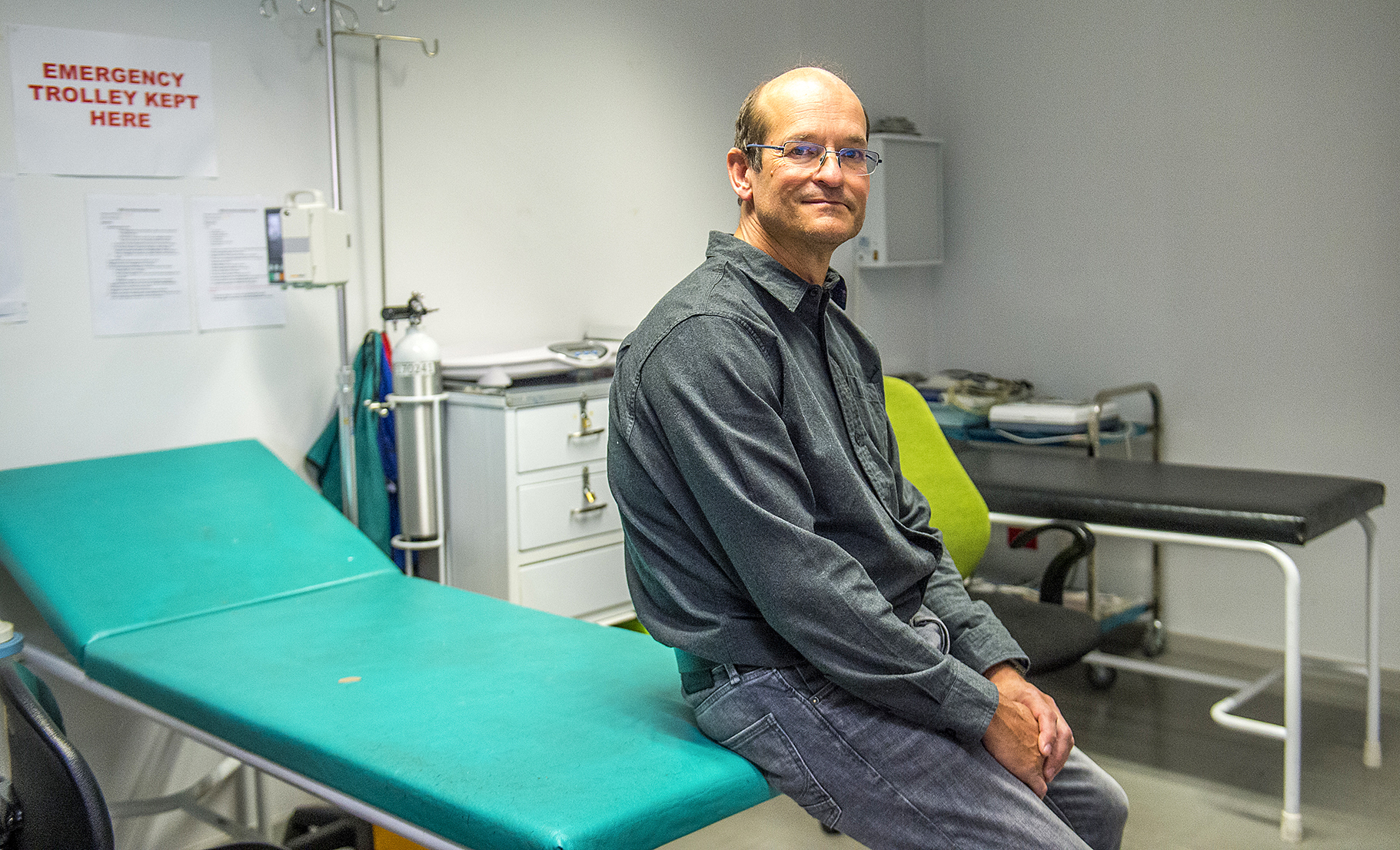
 Francois Venter is clear that the politicians are ignoring public health warnings as HIV services collapse. Promises remain unfulfilled, while deaths and infections rise. (Photo: Bhekisisa Centre for Health Journalism)
 Tragically, we have politicians showing the same disregard for despairing public health experts sounding the alarm and civil society’s calls for engagement. Treasury’s token contribution, President Cyril Ramaphosa’s and the Government of National Unity’s (GNU) silence, Deputy President Paul Mashatile’s empty promises and Health Minister Dr Aaron Motsoaledi’s fabricated success, mean the current child and adult deaths and unnecessary infections are mounting.
Exactly six months after the abrupt withdrawal of billions of rands in support to South Africa from the US President’s Emergency Plan for Aids Relief (Pepfar), there is still no plan.
In May, in response to concerns about HIV service weaknesses, Motsoaledi claimed 520,000 people were initiated on HIV treatment between February and April, a number already almost halfway towards his “Close the Gap” campaign target. This remarkable success claimed by the minister occurred during a collapse in funding, staffing and testing, and was achieved simply with “roadshows” and unnamed community programmes.
This would represent one of the most remarkable HIV global service delivery achievements yet, given three months of massive funding withdrawal and service collapse.
Yet, in the past few weeks:
- National Health Laboratory Services data shows CD4 test volumes are down sharply from 2024. If more people were entering care, these numbers would rise. This is the clearest indicator we have that far fewer people are entering care. The minister’s claim that more than 500,000 people were added to the number on HIV treatment is thus implausible;
- New data from Johannesburg show HIV diagnoses and people starting treatment are down nearly one-third since Pepfar’s withdrawal. In Gauteng, the province with the highest HIV burden, the minister’s 520,000 number should be immediately reflected in numbers like these. Yet we are seeing the numbers go down rather than up;
- Community monitors from Ritshidze – an organisation that monitors the ARV programme – report steep drops in testing, medicine pickups and staff capacity in government facilities offering HIV services. “Do more with less” is not a realistic strategy to address this;
- Early infant diagnosis rates have somewhat recovered, too late for many. Infants with HIV have extremely high mortality. These are the bodies behind the pause the minister refuses to call a collapse;
- A report by Avac, an HIV advocacy organisation, showed most key population programmes have been terminated. “Key populations” refers to groups at particularly high risk of HIV such as sex workers and men who have sex with men. The government claimed that the patient files from the clinics that provided services to key populations have been transferred to other clinics. But staff at some of the defunded organisations providing these services have told me, despairingly, that key population clinic files now sit, unopened, in overwhelmed clinics;
- The Clinical HIV Research Unit in Johannesburg shut its cervical cancer screening and prevention clinic in June; and
- The Global Fund, our significant remaining donor, cut funding to South Africa’s current grants by 16%, reducing it by R1.4-billion. The Treasury “emergency” funding announced last week amounts to roughly half of what the Global Fund cut, and only 6% of the Pepfar cut.
Repeated offers of help and pleas for meetings and consultations from local experts and civil society have been ignored by the country’s leaders. This includes a letter signed by numerous organisations and individuals from across the country’s most respected institutions, setting 7 July as a deadline for a response.
Constant promises that the “plans” for mitigating the HIV programme will be released have not materialised. Reassurances that provinces are getting support is not being experienced by any of the provincial colleagues I speak to.
Mashatile has doubled down on the 520,000 number, telling Parliament that the withdrawal of Pepfar funding “has spurred on” the government to become more “self-reliant”, using BRICS, Lotto and domestic funding to plug the gap, with no details as to how this will happen. He claimed no patient will suffer, despite local studies warning of massive waves of new deaths and infections, multiple anecdotes in the press to the contrary, and submissions by public figures to the Portfolio Committee on Health on service interruptions.
Both Mashatile and Motsoaledi have repeatedly lamented, correctly, the severe reliance of our health system on external donors, but have not acknowledged that they have been fully responsible for the health system for almost all of Pepfar’s existence.
Concerned academics directly responsible for shaping the Department of Health’s HIV response, who have called for the minister to explain his 520,000 figure, have not been answered.
This crisis is fixable. It requires immediate reinvestment in defunded organisations, the rehiring of experienced managers and an honest medium-term plan for service integration within our health system. None of this is happening.
There is no urgency, no leadership and no public plan. Motsoaledi says there is “no collapse” but patients are dying without diagnosis, and others are acquiring HIV without prevention. Call it what you want. The system is failing. The minister’s claims of “no collapse” ring hollow for the people left stranded with no services, waiting to die for want of a diagnosis and treatment, or unnecessarily contracting HIV for lack of effective prevention.
Recent local modelling has shown the Pepfar collapse may result in tens of thousands of preventable deaths, if services are not replaced. The Ramaphosa-Motsoaledi-GNU era risks a ruined legacy, not for failing to stop this crisis, but for pretending it wasn’t happening. DM
Professor Francois Venter is a clinician researcher at Wits University. He led a large Pepfar programme until 2012 and has had a support role since then. He and his unit do not receive Pepfar, CDC or USAID funding.
This opinion piece was published by Spotlight and GroundUp. Sign up to the Spotlight newsletter.
