




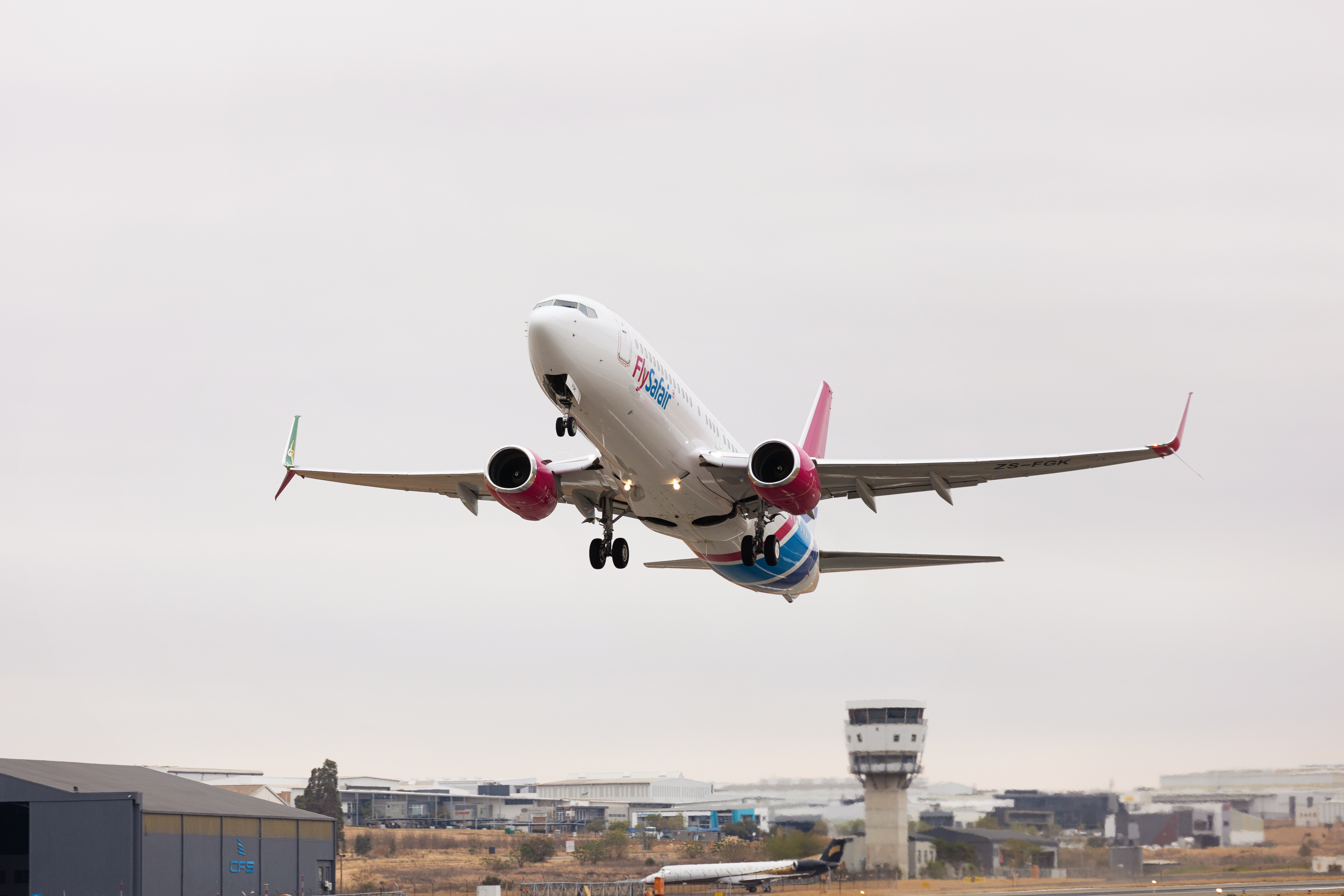
Customers are encouraged to consult the Travel Updates page on flysafair.co.za for the latest information. Airport teams remain on standby to assist with rebookings, refunds, and alternative arrangements.
“We regret the disruption caused to our customers and are doing everything possible to support those affected,” says Kirby Gordon, Chief Marketing Officer at FlySafair.
Dispute overview: a matter of economic sustainability
The current industrial action stems from a pay dispute between FlySafair and Solidarity, the union representing a portion of the airline’s pilot workforce. While the union has publicly framed its demand as a 10.5% increase in base salary, the full package, including flight pay, bonuses, and other benefits, amounts to a 20.1% increase in total cost to company.
By contrast, FlySafair’s current offer includes a 5.7% increase on base salary, which is 1.5% above inflation. When fully costed, the offer equates to an 11.29% increase in total cost to company. The airline maintains that this is a fair and responsible offer, particularly in a macroeconomic environment where most businesses are offering increases of 4% or less.
“We must balance competitive pay with the responsibility we have to our 1,700 employees, the affordability we offer South African travellers, and the long-term health of the business,” says Gordon.
FlySafair captains currently earn between R1.8 million and R2.3 million annually, placing them in the top 1% of earners in South Africa. Many earn more than members of the airline’s Executive Committee.
The airline argues that the union’s demands are not only economically unsustainable but also risk undermining the long-term affordability of air travel for South Africans.
/file/dailymaverick/wp-content/uploads/2025/07/FSA-1.jpg)
/file/dailymaverick/wp-content/uploads/2025/07/FSA-6.jpg "FSA (6)")
Pilot utilisation and regulatory compliance
Concerns have been raised about pilot workload. However, FlySafair captains averaged 63 hours of flight time last month, well below the regulatory maximum of 100 hours set by the Civil Aviation Authority. For comparison, a standard full-time employee typically works around 160 hours per month. The airline maintains that its pilot utilisation is efficient, compliant, and in line with global aviation norms.
Labour relations and escalation
The union initially called for a one-day strike, strategically timed to coincide with the end of the school holidays. In response, FlySafair issued a defensive lockout, a standard labour relations mechanism. Due to the nature of airline rostering, this meant affected pilots would not be rostered for seven days. Solidarity then escalated the action to a two-week strike.
FlySafair has not rejected CCMA intervention and continues to engage with the commission and the union in good faith. The airline emphasises its commitment to constructive dialogue and resolution.
/file/dailymaverick/wp-content/uploads/2025/07/FSA-3.jpg "FlySafair aircrafts on the tarmac.")
Broader impact and strategic outlook
FlySafair acknowledges the disruption caused to customers and is working to minimise the impact. The airline also highlights its responsibility to its 1,700 other employees, whose livelihoods are linked to the company's financial sustainability.
“This is not a position any business wants to be in. We are committed to resolving this matter constructively and quickly, while protecting the long-term viability of the airline and the affordability of air travel in South Africa,” says Gordon. DM