




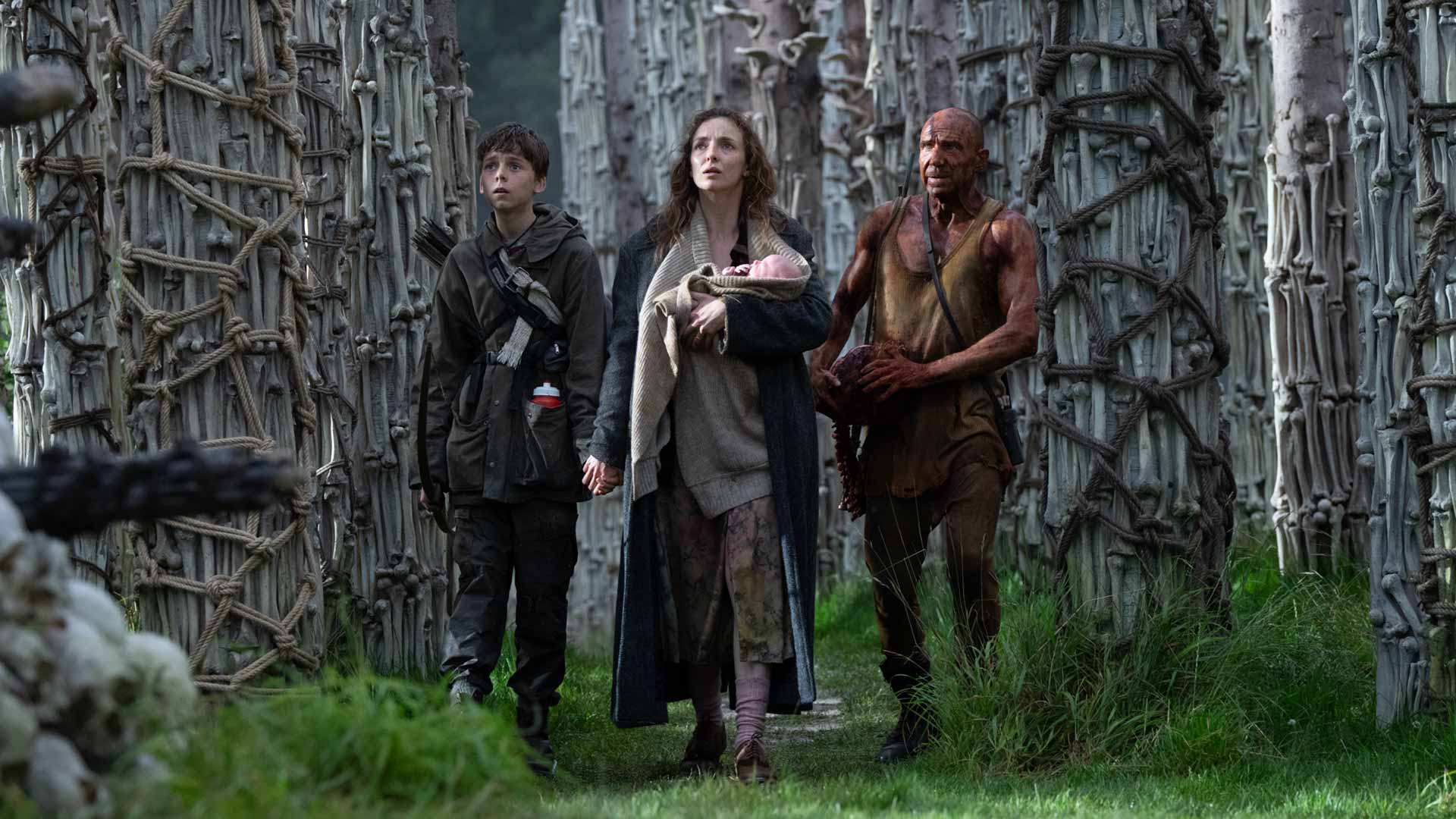
 Image credit: Miya Mizuno/Columbia Pictures/Sony Pictures
 Zombie media may feel tired now for many, but back in the early Noughties, the horror sub-genre received an adrenaline shot, largely thanks to two movies and two filmmakers. One was the Dawn of the Dead remake that marked the feature film debut of Zack Snyder in 2004. Predating that effort, though, was 2002’s 28 Days Later from already established British director Danny Boyle, who had the likes of Shallow Grave, Trainspotting and The Beach under his belt.
Dawn of the Dead and 28 Days Later were notable for popularising the concept of the Rage Zombie, taking the traditional shuffling undead and turning them into literally rabid creatures, infected via blood and saliva, and transformed into the stuff of nightmares: aggressive, unpredictable and nearly impossible to outrun.
If zombies from the mid-20th century onwards have become a commentary on consumerism, the new breed reflected the shift into late-stage capitalism and its ravenous consumption practices.
Two decades later, both Snyder and Boyle are back on zombie turf, both delivering post-outbreak tales where characters venture into quarantine zones and must contend with different tiers of undead, including intimidating, unstoppable Alphas. There are a number of similarities between 2021’s Army of the Dead and the newly released 28 Years Later, but it’s arguably only Boyle who is once more freshening up the familiar.
28 Years Later is a wild ride, making multiple tonal pit stops: You want breath-holding, armrest-clawing chills? Post-apocalyptic societal explorations? Body horror? Quiet musings on mortality? The kind of heartbreaking deaths that the likes of The Last of Us and The Walking Dead have done so well? Acrobatic wire stunt action scenes with gory finishers straight out of a video game? 28 Years Later crams all these, and more, into its sub-two-hour running time.
The surprising thing is how well handled the content mix is. For the most part. The film kicks off with a flashback to the original Rage Virus outbreak from a child’s perspective, which, combined with a title card, is all you really need for context if you’re coming in clean to the 28 franchise. Things are self-explanatory and standalone.
From 2002, the film jumps forward 28 years, to show what life has become in walled-off and abandoned Britain (Europe apparently managed to suppress the infection) from another child’s perspective.
/file/dailymaverick/wp-content/uploads/2025/06/Chang-28-Years-Later.png "Image credit: Miya Mizuno/Columbia Pictures/Sony Pictures")
Twelve-year-old Spike (Alfie Williams) lives on the defended tidal island of Lindisfarne, which has retained a rustic normality. The community may have been founded in 2002, but it feels more like something from the 1910s, with no electricity, running water or connectivity, along with society roles like farmer, fisherman and scavenger. Also lacking are medical supplies, so following a harrowing “first kill” mission to the Northumbria mainland with his imperfect father Jamie (Aaron Taylor-Johnson), Spike heads back with his ailing mother Isla (Jodie Comer) to find the lone doctor in the area.
28 Years Later could have been relentlessly bleak and terrifying, but Boyle – reunited with 28 Days Later writer Alex Garland, now an acclaimed filmmaker in his own right – refuses to let the movie wallow in post-apocalyptic gloom.
It’s been a while since we’ve seen anything from the Oscar winner (for Slumdog Millionaire), and it’s possible that audiences have forgotten the director’s high-energy, kinetic style. In 28 Years Later, that means shaky cam chases, shot on iPhone 15 Pro Max and other smaller digital cameras, to capture the panic of the moment, plus editing that often breaks free of time.
Sometimes that means you aren’t sure if you’re looking at past, present or future events. Other times, the action is intercut with stock footage and medieval battle re-enactments, implying how British society has regressed, with scruffy villagers using bows and arrows against the savage, Pictish-like infected, who now roam the countryside in packs, nude and filthy.
/file/dailymaverick/wp-content/uploads/2025/06/28YEARSLATER-061725-04-80d85d18c211472b81eb2a1ea409567e.jpg "Image credit: Miya Mizuno/Columbia Pictures/Sony Pictures")
28 Years Later doesn’t just rely on visual interest to freshen things up, though. The film includes a surprising amount of heart and humour, with Williams, Comer and an especially likeable Ralph Fiennes – who demonstrates avuncular flashes of David Attenborough – all ensuring the film’s climax will uppercut you in the feels.
Not every creative choice has the same impact, mind you.
The introduction of Edvin Ryding’s Swedish Nato soldier has a lot of potential to explore the difference between the audience’s present-day sensibilities and frozen-in-time, quarantined England. However, it’s barely mined for comic effect before being abandoned.
The final scene, too, which acts as an introduction to Nia DaCosta’s 28 Years Later: The Bone Temple, a sequel shot back-to-back with this film, is not so much cheeky in its lack of resolution as jarringly cartoonish, given the grittiness that has come before.
/file/dailymaverick/wp-content/uploads/2025/06/28-years-later-atj-featured.jpg "Image credit: Miya Mizuno/Columbia Pictures/Sony Pictures")
Then again, life is messy and unpredictable in the direction it can go. 28 Years Later reflects that, and with Boyle lined up to return for the third and final part of this new trilogy, all penned by Garland, viewers seem set for a vigorous and gory coming-of-age saga that will be memorable, no matter what. DM
28 Years Later is in select cinemas now, having been released on 20 June.
This story first appeared in PFangirl.