




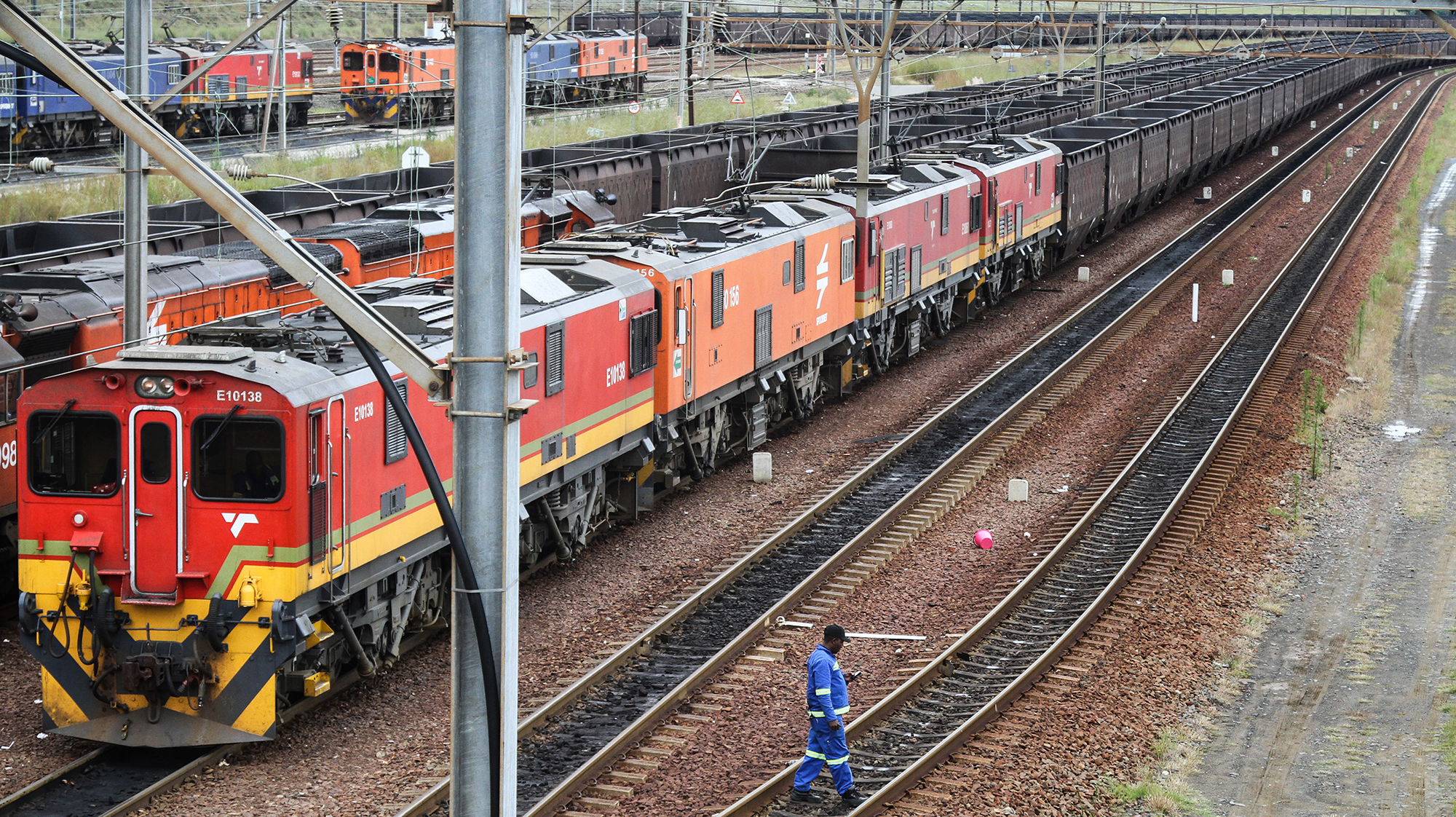
 A locomotive pulling empty freight wagons at the Transnet rail depot in Ermelo. (Photo: Dean Hutton / Bloomberg via Getty Images)
 Transnet’s grand locomotive deal was meant to modernise South Africa’s rail backbone. Instead, it opened a funding pipeline that flowed through Gupta-linked Trillian Capital Partners and followed Brian Molefe all the way to Eskom. His most recent arrest shows how State Capture’s roots still shadow the present.
Molefe, Siyabonga Gama, Anoj Singh and Thamsanqa Jiyane — names synonymous with the systematic State Capture in the Zuma years, named and shamed in the Zondo Commission report — appeared in the Palm Ridge Specialised Commercial Crimes Court on Monday.
They are charged with fraud, corruption and breaching procurement laws tied to Transnet’s multibillion-rand locomotive procurement. They were each granted bail of R50,000 (a fraction of the billions embezzled from the public purse), and the matter was postponed to 6 October for further investigation. It is a long game, and they are all skilled players.
Ambitious plan
In 2011, Transnet unveiled the Market Demand Strategy (MDS), an ambitious plan to shift freight from road to rail and modernise ports and pipelines.
The centrepiece: acquiring more than 1,200 new locomotives, sourced through the Chinese manufacturers CSR and CNR, alongside deals with the firms GE and Bombardier for locally built units. Initial cost estimate: about R38-billion for 1,064 locomotives, which ballooned to about R54-billion.
Zondo found that procurement deviations, cost escalations and contract irregularities had created fertile ground for looting.
The Gupta playbook
Transnet, of which Molefe was then the CEO, signed advisory contracts with Regiments Capital, which then linked to Trillian Capital, a firm created by Salim Essa to bridge Regiments and Gupta networks.
The R93-million payment at the heart of this week’s arrest: Trillian invoiced Transnet for advisory fees on the 1,064 locomotives, signed off by Singh and Gama. Within days, about R74-million was siphoned onwards. Zondo flagged this as a classic laundering move, funnelling out public money under layers of transaction fees and project support.
Transnet to Eskom
In 2015, Molefe was parachuted to Eskom as CEO to tackle load shedding, and the same advisory pattern reappeared. Trillian became a key Eskom consultant, landing hundreds of millions of rands in payments despite lacking proper contracts or deliverables.
Molefe’s brief stint at Eskom ended in controversy over the Gupta-linked Optimum Coal Mine deal and his illegal pension payout, which the courts later forced him to repay. Zondo’s final reports called Molefe’s Transnet-Eskom arc one of the clearest examples of the rot that moved with the man.
Why this matters
The Investigating Directorate Against Corruption says the arrests show how persons in positions of trust turned state contracts into private cash channels.
Molefe and Singh’s arrest ties the original Transnet locomotive inflation directly to the Trillian web that also leached millions off Eskom.
Nearly 12 years since the MDS was signed off, the court will test whether the State can successfully prosecute those involved in the scam that Zondo laid bare.
South Africans still shoulder billions in repayments for the locomotive orders: major funding came from US Exim Bank, Export Development Canada, Barclays, Investec and other financiers.
Local assembly promises were partly delivered — the Koedoespoort Plant in Pretoria built GE and Bombardier units — but many sit idle, unusable due to supply deadlocks of parts. Prasa has split its procurement from Transnet’s freight vision entirely, as the rail corridor remains riddled with theft, underuse and ageing stock.
Now it’s up to the National Prosecuting Authority to show it can break the cycle of impunity Zondo warned about. DM