




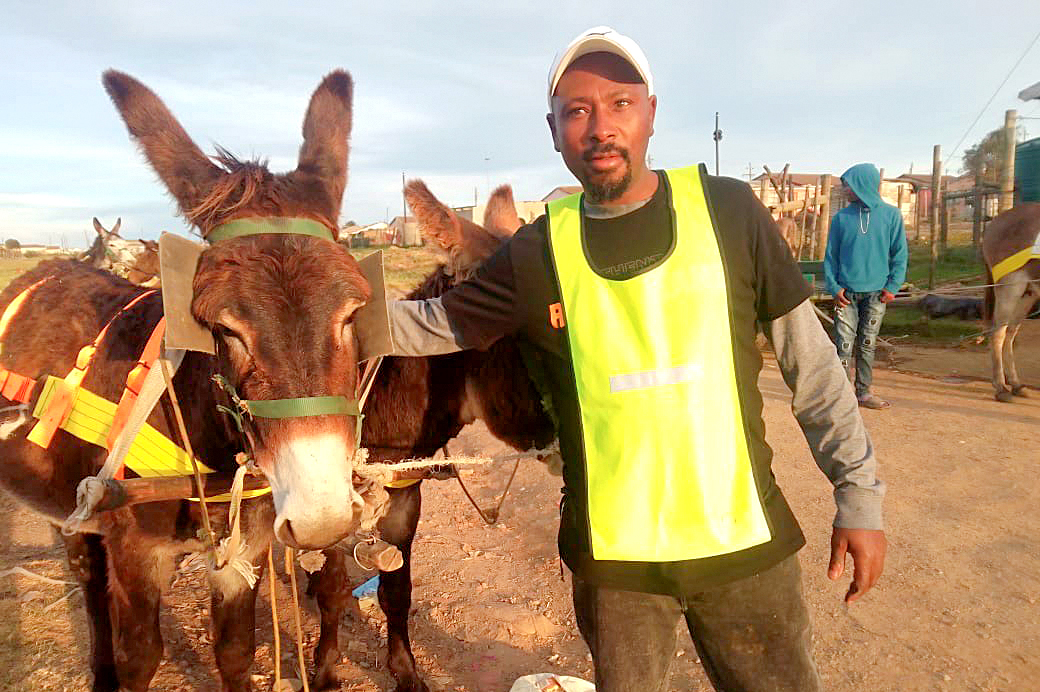
 Zwelithini Gula and his horse, Percy, won the hearts of many with their amazing story, coupled with a few prizes. (Photo: Supplied)
 When Philippa du Toit moved her non-profit organisation, Blind Love Africa, to Makhanda (Grahamstown) in 2020, she had no idea the impact her work would have on the community – especially the donkeys, which the small town is famous for.
A few years before Du Toit arrived, Annerie Wolmarans, founder of the Makana Donkey Association, hosted the Makana Donkey Carnival annually. Though she has since passed on, Du Toit unknowingly carries on her legacy, with her zeal and heart for donkeys, and their wellbeing.
While running errands one day, Du Toit bumped into Wolmarans’ husband, who commended her for the work she was doing.
“He introduced himself and spoke about his late wife, then told me all the wonderful things she did and how excited he was that I was continuing with it. That really warmed my heart.”
Though met with hesitation and discouragement at first, Du Toit quickly worked her way into the hearts of donkey owners and their families.
“I was pleasantly surprised by the love the children of the donkey owners have for the animals. You could tell they are an integral part of the families, which warmed my heart,” she said.
Du Toit added that she’s not a fan of pointing fingers or constantly complaining about what isn’t going right. Instead, she believes in rolling up her sleeves and doing what she can.
“I realised that the donkey owners are like-minded,” she said. “Sometimes, when you see the state of the donkeys and their carts, you can be tempted to think they have been neglected, but it’s a poverty issue, really,” she added.
/file/dailymaverick/wp-content/uploads/2025/06/dd30bc03-0ff7-4bec-8f23-33986ef0096c.jpeg "Donkeys from all over the town came together to get rabies shots, much-needed maintenance equipment and spa treatment at Donkey Day in Makhanda, Eastern Cape. (Photo: Supplied)")
Donkey Day
Blind Love Africa recently received funding from Animal Aid Abroad, an organisation that cares for working animals across the world.
“Through that funding, we were able to assist quite a few donkey owners,” said Du Toit.
The funding also helped bring back Donkey Day — a celebration not only of the hardworking donkeys and their dedicated owners, but also a day when the animals get a well-deserved spa treatment.
On the day, hooves were trimmed, carts repaired, two vets addressed medical issues, and the donkeys were treated to fresh water and plenty of hay. Each donkey owner received a water bucket, a rope halter, a grooming brush and hoofpicks.
“Thanks to the girls at the Diocesan School for Girls and other sponsors, the donkey owners were served with braai meat, some hotdogs, and burgers as well. It was really such a success — the power of community is quite a marvel to see.”
The Donkey Day came back at a crucial time, and was quite an iconic step for the community, said vet Annie Mears. “The animal population gets a lot of help on the day, help that they don’t have access to throughout the year. We vaccinated quite a few donkeys for rabies, and provided treatment for ticks and worms, treated wounds, and advised owners on how to keep their feet safe and healthy.
“We also just provided information and education on how to maintain good health for the donkeys. I really enjoyed getting to know some of the owners and hearing their stories as well,” she said.
/file/dailymaverick/wp-content/uploads/2025/06/16c90452-c81f-4cad-bcbc-95dd17098aaf.jpeg "Horses that needed their hooves trimmed were catered for. (Photo: Supplied)")
Percy the loved donkey
One donkey that has stolen the hearts of many — including his owner, Zwelithini Gula, and his two children, Mbalentle and Kuyintando — is Percy, a donkey who, with just a little kindness and mercy, persevered through an experience that almost ended his life.
“When I first met Percy, he had just been stabbed above his eye, and his wound was terribly infected. He was very thin and not well taken care of. I took him in and my children fell in love with him. I have 10 other donkeys, but he just came in and stole the show.”
“Like I said, I have other donkeys, but wherever I go, I don’t leave my Percy behind. He might be a favourite, but don’t tell the others,” Gula chuckled.
Community
Du Toit admitted there’s still more work to be done. “The Donkey Day was a success, but there are still many donkeys that need primary healthcare — especially stray donkeys that are at risk of being impounded or used for illegal donkey skin trades.”
There’s still hope. Residents, business owners and farmers, who were initially hesitant, are now fully on board and actively involved in caring for Makhanda’s working donkeys.
“See, community!” Du Toit excitedly concluded. DM