




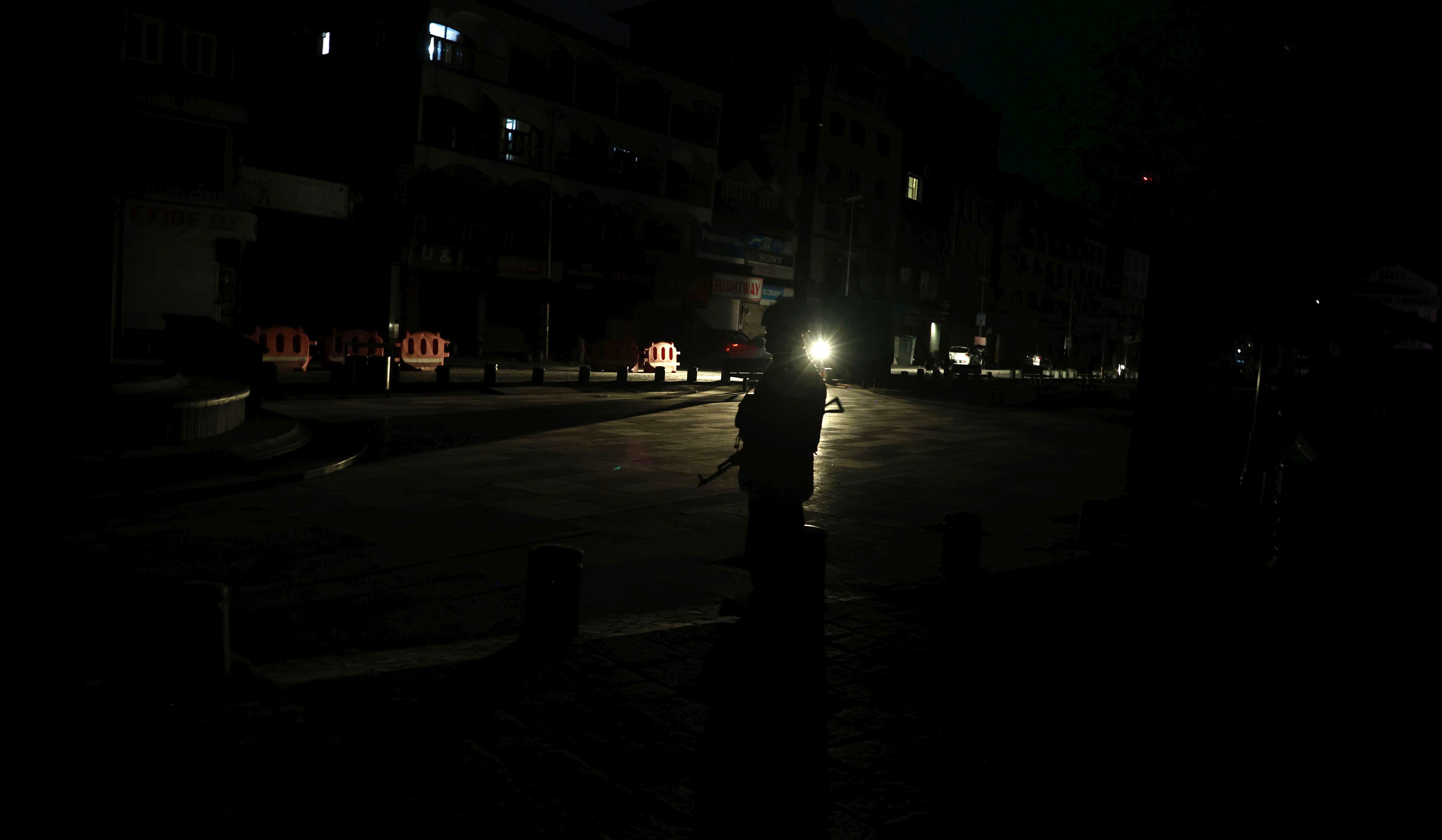
 An Indian paramilitary soldier stands guard on a street during a blackout in Srinagar, the summer capital of Indian Kashmir, 08 May 2025. The Indian government has issued a red alert across the Indian-administered Kashmir amid escalating tensions with neighboring Pakistan. EPA-EFE/FAROOQ KHAN
 The ambassador, Rizwan Saeed Sheikh, made the comments in an interview with CNN in which he also said the responsibility to de-escalate tensions between the two countries lay with India after two days of clashes.
"I think there have been contact at the level of NSCs, but then this escalation, both in terms of the actions that have been taken and in terms of rhetoric that is coming out, has to stop," Sheikh said in the interview without giving more details about the contacts.
"Now the responsibility for de-escalation is on India, but there are constraints on restraint. Pakistan reserves the right to respond back. There is enough pressure from our public opinion on the government to respond," he added.
Many global powers, including the U.S., have urged New Delhi and Islamabad to de-escalate tensions and keep lines of communication open. Washington has called for direct dialogue.
On Thursday, Pakistan and India accused each other of launching drone attacks, and Islamabad's defence minister said further retaliation was "increasingly certain," on the second day of major clashes between the nuclear-armed neighbours. Two days of fighting have killed nearly four dozen people.
The latest escalation in the decades-old India-Pakistan rivalry began on April 22 when Islamist militants killed 26 people in India-administered Kashmir in an attack that New Delhi blamed on Islamabad, which denied the accusations and called for a neutral probe.
(Reporting by Kanishka Singh in Washington; Editing by Leslie Adler and Michael Perry)
Comments
Scroll down to load comments...