




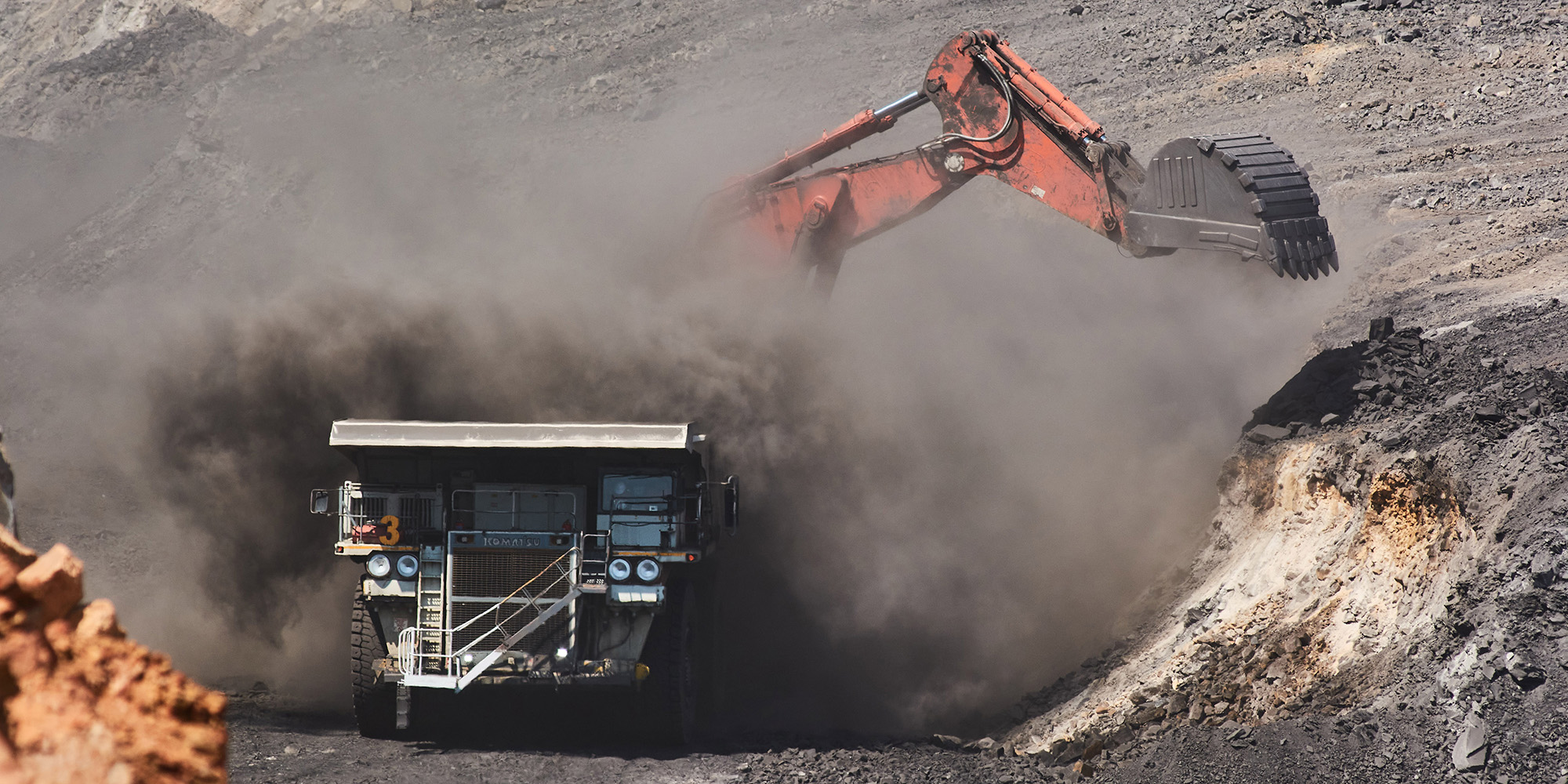
 A dump truck is loaded with excavated rock at the Mafube open-cast coal mine in Mpumalanga. (Photo: Waldo Swiegers. / Bloomberg via Getty Images)
 The decline of South Africa’s coal industry is not a distant possibility — it’s happening now, and it’s happening fast. As we speak, communities are feeling the pinch and our energy landscape is shifting beneath our feet.
In July last year, South Africa’s then new energy minister, Kgosientsho Ramokgopa, vowed to “accelerate the shift to renewable energy from coal” — one of the latest signs that the era of coal is coming to an end. We must act now to secure justice and jobs in this rapidly unfolding transition.
For decades, coal has been the lifeblood of our economy, generating about 86% of our electricity and employing more than 120,000 workers in the coal value chain. But the industry is in decline, with investment dropping by 10% annually since 2009. Major banks and investors are divesting from coal and even South Africa’s biggest coal customers, such as India, are committed to reducing imports.
The impact is already being felt in places such as Mpumalanga, where four municipalities — eMalahleni, Steve Tshwete, Msukaligwa and Govan Mbeki — are heavily dependent on coal mining. These communities are facing an uncertain future as the transition accelerates.
Based on projections from the Trade and Industrial Policy Strategies, the coal sector could lose about 20,000 jobs every decade. If proactive measures are not taken, this would decimate coal-dependent towns as unemployment and poverty rates are already dire. In 2019, in the four most coal-dependent municipalities, 56% to 61% of the population was below the South African upper-bound poverty line.
Opportunity
But this transition, while challenging, also presents an unprecedented opportunity. The shift to a more sustainable, diversified economy could create millions of new “climate jobs” – decent, people-driven jobs that reduce the causes and impacts of climate change. Research suggests that up to three million such jobs are possible in South Africa.
These aren’t just pipe dreams. The renewable energy sector alone could create 150,000 direct and permanent jobs in the next decade if we commit to achieving 50% renewable energy.
Ecosystem restoration could provide 400,000 jobs, securing water access by restoring damaged rivers and wetlands. The housing and construction sector could generate 250,000 jobs in building energy-efficient, low-cost housing.
However, we cannot simply hope these jobs will materialise on their own. We need urgent, coordinated action to ensure a just transition — one that doesn’t leave coal workers and communities behind. We need a national structure to lead on a comprehensive Sector Jobs Resilience Plan to address the needs of those most vulnerable to the changes already under way.
This plan should include several key elements:
- Immediate economic diversification in coal-dependent regions. We must invest now in developing new industries in these areas, from renewable energy generation to coal waste beneficiation and mine rehabilitation;
- Active labour market policies. We need to quickly identify the skills and needs of vulnerable workers, provide training and career counselling and create job search resources;
- Robust social protection. Income support during the transition is crucial. This could include retrenchment packages and expanded public works programmes in coal towns; and
- Innovative repurposing of mining lands. We should explore creative ways to use former mining sites, from agriculture to adventure sports and green spaces.
The timeline for this transition is not in the distant future — it’s now. In this decade, we expect to see a 10-20% decline in coal usage. By the 2030s and 2040s, this decline will accelerate sharply. Every year we delay action, more workers and communities are left vulnerable.
Funding a just transition is a challenge we must meet head-on. The government has already committed R1.5-trillion to future electricity production, but much of this is still earmarked for coal and nuclear. South Africa’s fossil fuel subsidies tripled between 2018 and 2023.
Moreover, a report by the Centre for Environmental Rights states that South Africa’s largest institutional investor, the Government Employees’ Pension Fund, is investing R130-billion in coal, oil and gas companies. We need to urgently redirect these funds towards renewable energy and just transition initiatives.
Critics may argue that this transition is too costly or too disruptive. In particular, powerful business and political leaders are lobbying to avoid transitioning away from coal as they are personally benefiting from the coal value chain.
Benefits of acting now
But the cost of inaction or delayed action cannot be ignored. Climate change threatens not just our economy, but our very existence. Moreover, clinging to our coal-dependent past will leave us behind as the world moves towards cleaner and cheaper energy sources.
By acting now, we can position South Africa as a leader in the new green economy, creating more jobs and more sustainable prosperity for all our citizens. We can transform our coal-dependent regions into hubs of innovation and sustainable development.
The path ahead is challenging, but it’s one we must walk — and walk quickly. We have the resources, the expertise and the resilience to make this transition a success. What we need now is the political will and the collective determination to make it happen.
It’s time to build a fairer, cleaner, and more prosperous South Africa — one where no worker is left behind, and where the promise of a better future is within reach for all. DM
Taiji Morgan and Sibusiso Mazomba work at the African Climate Alliance, a youth-led grassroots organisation acting and advocating for Afrocentric climate justice. African Climate Alliance was a lead applicant on the victorious Cancel Coal court case – the first youth-led climate change court case in South African history.