




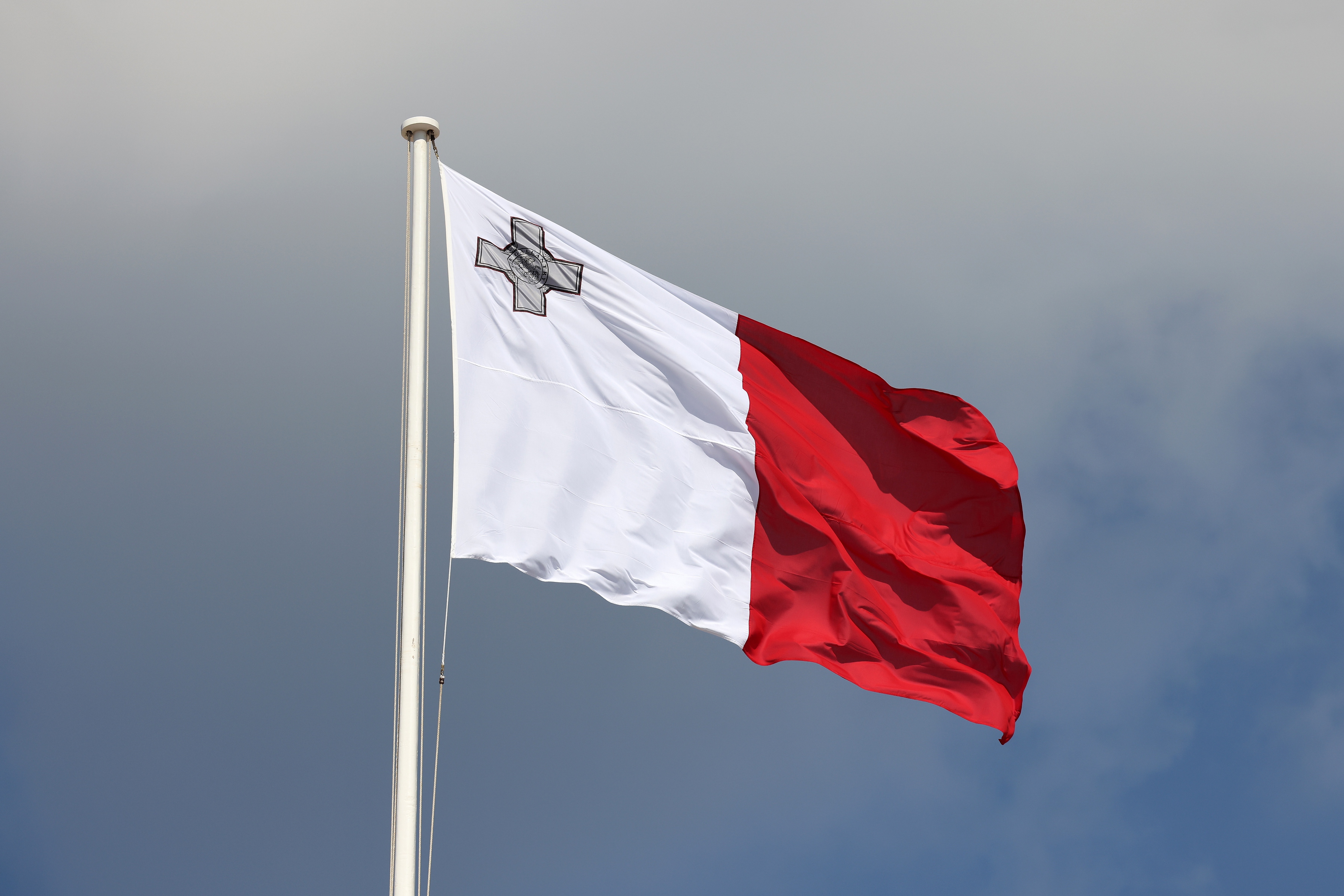
 Malta's flag flies at the Auberge de Castille (not in picture) during the first meeting during the 10th Summit of the Leaders of the Southern Countries of the European Union, in Valletta, Malta, 29 September 2023. The EU-Med9 meeting brings together the leaders or representatives of Spain, Portugal, France, Italy, Greece, Malta, Cyprus, Slovenia and Croatia. EPA-EFE/Domenic Aquilina
The EU Commission in 2022 took Malta to court over the scheme, which grants foreigners a passport and thereby the right to live and work in any EU country in return for an investment of around 1 million euros ($1.14 million).
The court said that although member states can determine how they grant or withdraw nationality, Malta's scheme eroded the principle of mutual trust between member states upon which the common area is based.
"A member state cannot grant its nationality – and indeed European citizenship – in exchange for predetermined payments or investments, as this essentially amounts to rendering the acquisition of nationality a mere commercial transaction," the court said.
"Such a practice does not make it possible to establish the necessary bond of solidarity and good faith between a member state and its citizens, or to ensure mutual trust between the member states."
Malta has repeatedly insisted that it was correct in its interpretation of EU treaties.
It suspended the programme for Russian and Belarusian nationals following the start of the war in Ukraine, but it continued to operate the scheme for other nationalities.
The referral of the case to the EU Court of Justice came after years of wrangling with Malta about tweaks to the scheme. An infringement procedure about the programme was initiated by the EU Commission in October 2020, but led to no tangible changes.
($1 = 0.8778 euros)
(Reporting by Charlotte Van Campenhout and Bart Meijer; Editing by Sharon Singleton)
Comments
Scroll down to load comments...