




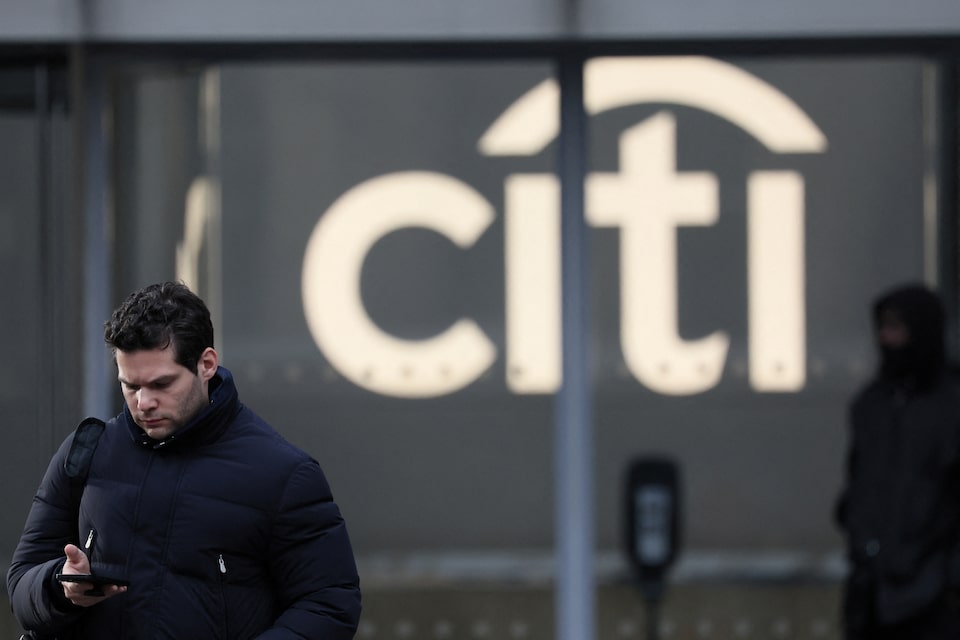
 A worker exits the Citi Headquarters in New York, U.S., January 22, 2024. REUTERS/Brendan McDermid/File Photo
Corporate America was once eager to champion diversity in the workplace. Under hostile pressure from President Donald Trump’s administration, executives from Citigroup to McDonald’s are no longer so willing. This backsliding has taken many forms, but the threat of legal action is a ratchet forcing bosses in the same direction.
Diversity, equity and inclusion (DEI) policies aimed at addressing demographic disparities proliferated among workplaces in recent years, especially following protests over George Floyd’s murder in 2020. Two-thirds of companies in the S&P 500 Index issued a statement on the killing, according to advocacy group As You Sow; by 2023, half tied executive compensation to DEI metrics, consultancy Mercer found.
That wave is now rolling back. On Thursday, Citi boss Jane Fraser said the bank will no longer require a diverse set of candidates for job interviews. Facebook owner Meta Platforms said it would end a similar hiring approach,and mothball representation goals. McDonald’s is ditching diversity targets – and even the word “diversity” itself, favoring “inclusion” instead. Goldman Sachs dropped a requirement that boards it advises on initial public offerings include women and minorities, the New York Times reported.
This might seem hypocritical. Take Walt Disney, for instance. The company led by Bob Iger once fought with Florida Governor Ron DeSantis over legislation that banned classroom discussion of gender and sexuality. It held up diversity efforts as a reflection of its audience. Yet it’s now performing a McDonald’s-style linguistic switch-up: executives once compensated for “diversity and inclusion” goals will be rewarded for “talent strategy.”

Management is in a genuinely difficult position. The Supreme Court’s 2023 decision to end university admissions practices preferencing certain backgrounds could, theoretically, apply to human resources departments. Exploratory lawsuits could become enormously consequential test cases. A suit lodged against Starbucks by the attorney general of Missouri this month over DEI policies refers to the college case; a group of investors sued retailer Target over its practices.
President Trump’s executive, diversity mandates both within the government and the companies it deals with adds to the pressure. Worse is the US Department of Justice, which in February said that it intends to “investigate, eliminate and penalize illegal DEI” preferences.
The vagueness of this threat is its own compliance mechanism – no CEO wants to catch a federal probe and will therefore likely try to self-police. Industries to which Trump’s Republican Party is hostile – including media giants like Disney – will have to be most on guard. Those like energy, which scores at the bottom of As You Sow’s racial justice scorecard, may be less so. The DEI re-evaluation scramble is working as intended.
CONTEXT NEWS
The US Department of Justice on February 5 issued a memo designed to eliminate diversity, equity and inclusion programs that “violate the text and spirit of our longstanding federal civil-rights laws" and "undermine our national unity." The federal law enforcement intends to investigate and penalize companies in the private sector that have received federal funds and have DEI mandates and policies in place.
Editing by Jonathan Guilford and Streisand Neto
Citigroup Chief Executive Jane Fraser said the bank will no longer require a diverse slate for job interviews and is dropping targets to diversify the workforce, Reuters reported on February 20.
Comments
Scroll down to load comments...