




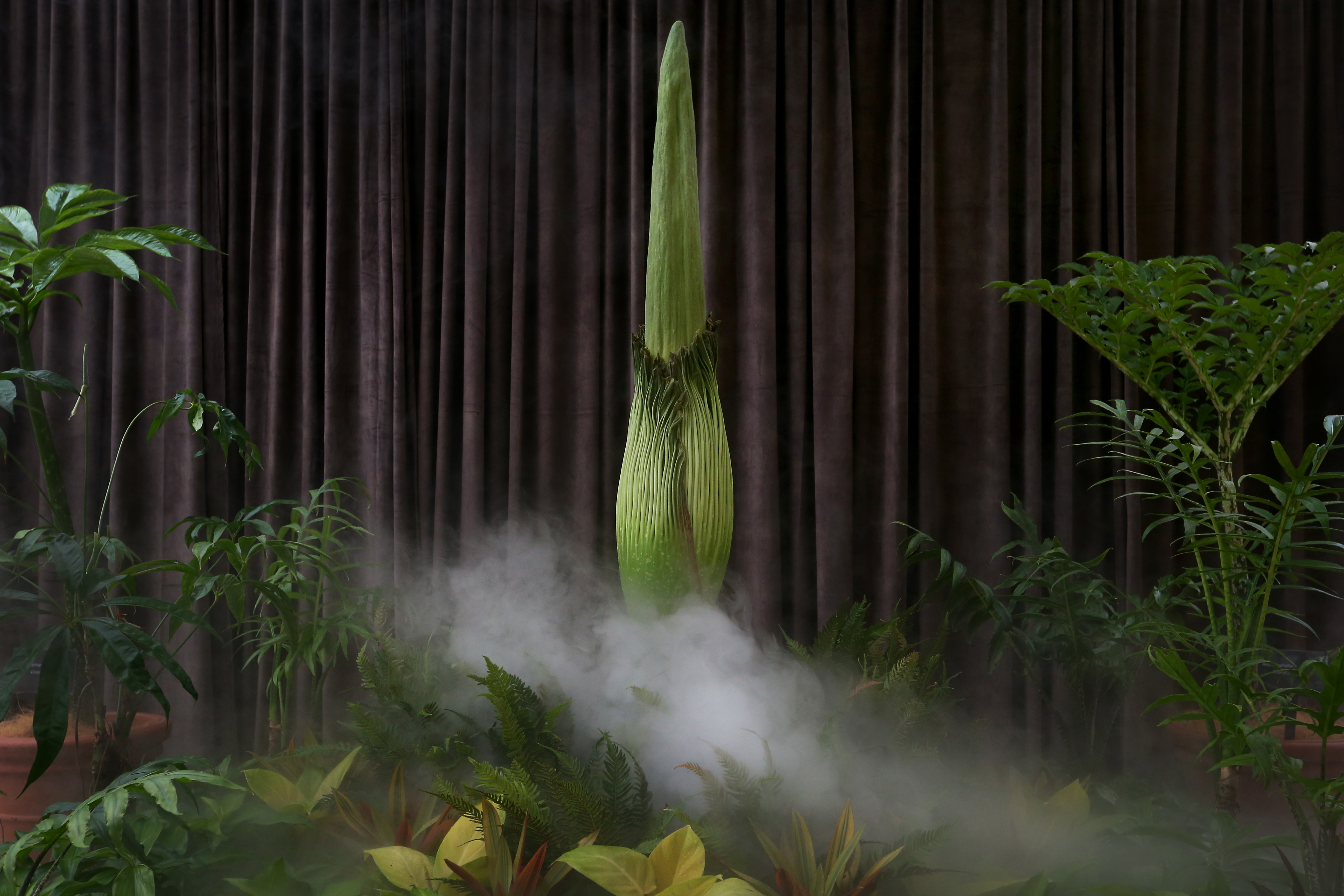
 A corpse flower, affectionately named "Putricia" goes on public display as it prepares to flower at Royal Botanic Garden Sydney on January 18, 2025 in Sydney, Australia. An amorphophallus titanium flower, also known as "corpse flower" (Bunga Bangkai in Bahasa Indonesia), renowned for its foul odor reminiscent of rotting flesh, is set to bloom at the Royal Botanic Garden Sydney for the first time in nearly 20 years, with the flowering period expected between January 15 and 20, 2025. This rare event, which occurs only once every few years and lasts just 24 hours, will be open to the public by donation, with the garden remaining accessible until midnight during the bloom. (Photo by Lisa Maree Williams/Getty Images)
For the past week, curiosity seekers have been visiting the specimen nicknamed Putricia – a combination of “putrid” and “Patricia” – at the city’s Royal Botanic Garden. The institution stayed open until midnight on Thursday to accommodate the crowd.
The corpse flower's scientific name is amorphophallus titanum and is called bunga bangkai in Indonesia, where it is found in the wild. The oversize flower features fluted crimson petals and can measure more than a metre (3 feet) across with a pointed centre stalk that can top 3 metres (10 feet).
The plant typically does not bloom more than once every few years and it lasts only about a day. A specimen has not bloomed in Sydney since 2010.
As the long-awaited unfurling of Putricia’s petals began on Thursday afternoon, queues lengthened and visitors waited as long as three hours.
“The fact that it's so huge, it takes so long [to bloom], and it smells so foul really attracts people to it,” Sydney Botanic Gardens chief scientist Brett Summerell said.
"I liken the smell to a dead possum," he said.
Sydney resident Rebecca McGee-Collett, who waited 90 minutes to see the flower on Thursday evening, said the flower was beautiful but the smell was "like hot garbage".
A live stream of the plant has accumulated close to one million hits.
(Reporting by Christine Chen and Stefica Bikes in SydneyEditing by Alasdair Pal)
Comments
Scroll down to load comments...