




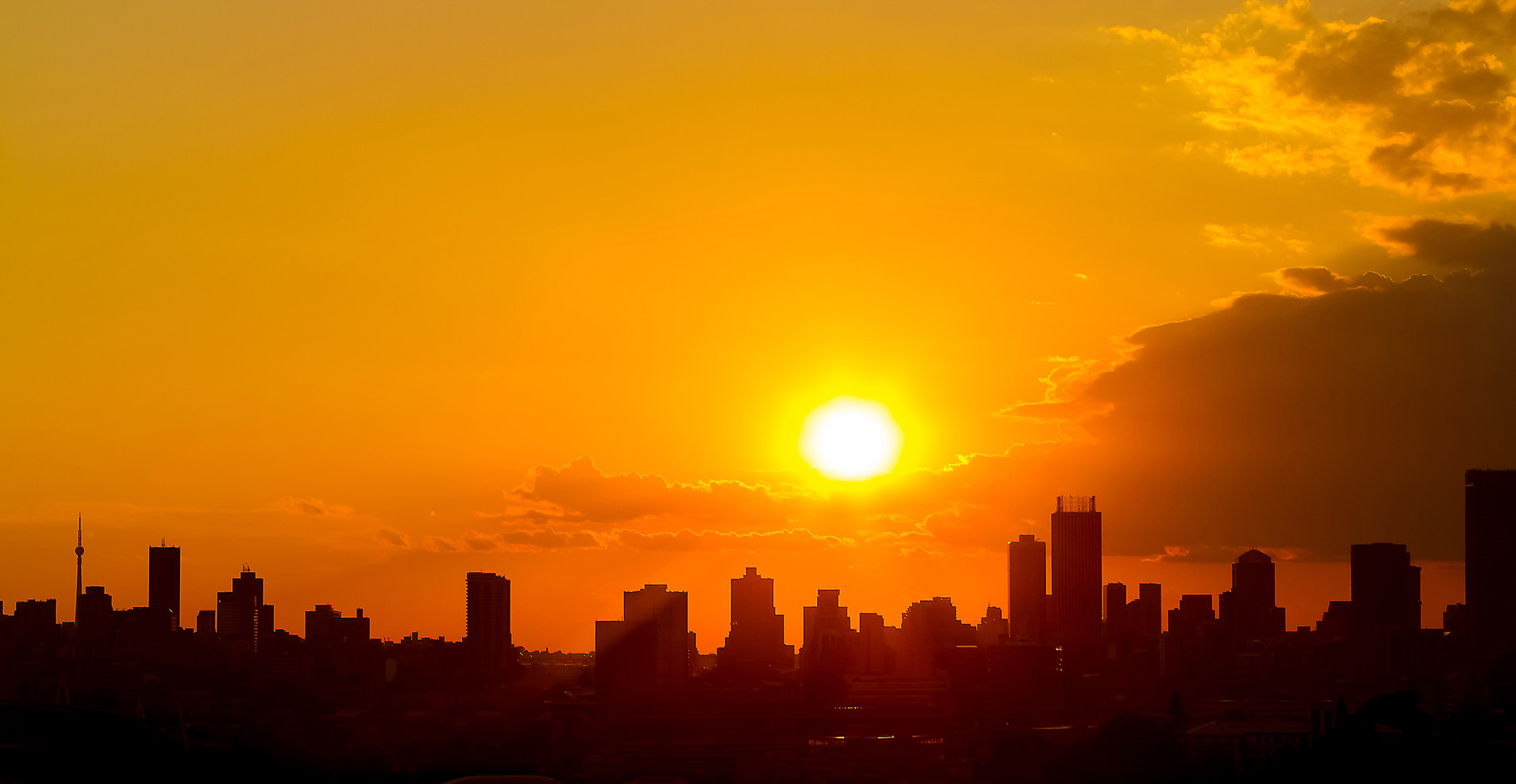
 (Photo: iStock)
 While it is still early in the summer season to be certain, meteorologists are predicting that South Africa could experience its hottest summer on record. This comes as 2024 is set to become the hottest year globally since reliable measurements began in the late 19th century (1880s), marking the first time the planet surpasses the critical 1.5°C warming threshold above pre-industrial levels.
“Current heatwave conditions and the ongoing global warming trend suggest that this summer could indeed be one of the hottest on record,” said chief meteorologist at Vox Weather Annette Botha.
However, she cautioned that it was too early to definitively state whether it would break records, as summer temperatures could vary significantly depending on weather patterns in the coming months.
Botha said meteorologists assessed a summer’s heat by calculating the average temperature over the summer period, typically from December to February in the Southern Hemisphere. This involved averaging daily maximum temperatures across all days in that period and comparing it with historical data.
Global trends becoming local realities
On 11 November, the World Meteorological Organisation (WMO) revealed that 2024 was on track to be the hottest year on record. Global temperatures are expected to reach 1.55°C above pre-industrial levels, marking the warmest year since reliable records began.
Samantha Burgess, Deputy Director of the Copernicus Climate Change Service (C3S), said that with their latest data from the penultimate month of the year, they “can now confirm with virtual certainty that 2024 will be the warmest year on record and the first calendar year above 1.5°C”.
Francois Engelbrecht, Professor of Climatology at Wits University’s Global Change Institute, highlighted that at the time of the IPCC 2021 report, authors projected that the first individual year during which the threshold would be exceeded would likely be the mid-2020s.
“It’s all happening as the science has been projecting,” he said.
Attempting to limit global warming to 1.5°C is one of the main goals of the Paris Agreement.
While Burgess explained that a year-long breach didn’t mean this long-term target had been breached, she warned, “it does mean ambitious climate action is more urgent than ever”.
The Intergovernmental Panel on Climate Change (IPCC) defines this exceedance as a 20-year period where the global average temperature consistently surpasses 1.5°C compared to pre-industrial levels (the late 19th century).
Engelbrecht told Daily Maverick that the midpoint of this 20-year period marked the official timing of the breach.
In 2021, the IPCC projected this official breach would happen in the early 2030s.
But Engelbrecht, who was a chapter lead for that IPCC assessment, said that if they had made that assessment now based on the continued carbon oxide emissions and 2024 being so exceptionally warm, they would have said the permanent exceedance would have been likely to occur in the late 2020s.
“We are probably already living within the first twenty-year period, that on the average will exceed the 1.5°C threshold,” he noted.
Scientists were hoping for drastic cuts in emissions, with the 2018 IPCC report calling for a 45% reduction in greenhouse gas emissions from 2005 levels by 2030 – which is what was needed to keep global warming below the critical threshold of 1.5°C.
“these cuts did not materialise, and we are still seeing increases in carbon dioxide emissions, with the exception of during the Covid-19 pandemic period,” said Engelbrecht.
As major emitters like the United States and China fail to commit to significant greenhouse gas cuts by 2030, Engelbrecht says that the focus must shift to staying as far below 2°C as possible.
“If we cannot make 1.5°C, it’s not just a matter of, okay then we go to 2°C,” John Christensen, director of the Unep Copenhagen Climate Centre and lead author of this report, previously told Daily Maverick.
“It’s about getting as close as possible to 1.5°C — the difference in impact is huge. So every fraction of a degree matters.”
The devastating drought of 2023-24 in southern Africa offers a glimpse of a 1.5°C world. The drought caused 80% crop failure in Zimbabwe and Zambia, leaving 30 million people reliant on food aid. The Kariba Dam, critical for hydroelectric power, dropped to just 5% capacity. Engelbrecht warned that such events—alongside more intense heatwaves, extreme rainfall and cyclones—are clear indicators of the dangerous impacts already unfolding.
SA on track for hottest summer yet
As in the rest of the world, parts of South Africa are on track for the hottest summer, which should come as no surprise. Eight out of nine provinces (bar the Western Cape) recently emerged from a two-week heatwave.
“The ongoing heatwave in South Africa is a stark reminder of the interconnected factors driving extreme weather events globally,” noted Botha.
“While heatwaves are not new, their frequency, intensity and duration have increased significantly in recent years, largely due to climate change,” she said, explaining that human-induced global warming had raised baseline temperatures, creating the conditions for more prolonged and severe heat events.
Read more: ‘Heatwaves are going to get worse, like nothing we’ve ever seen before’ — SA climatologist
Botha said that in South Africa, the impacts were compounded by localised factors such as urban heat islands, land use changes and periods of reduced rainfall, which exacerbate the stress on water resources, agriculture and human health.
On Wednesday, 11 December, a town in South Africa recorded the highest temperature globally, with Twee Riviere in the Eastern Cape reaching a whopping 45.9°C. This temperature was the highest recorded of over 8,000 weather stations across the globe in a 24-hour period.
Read more: South Africa’s summer forecast – hot temperatures and uncertain rainfall patterns ahead for 2025
“Right now we are in the grip of these terrible heatwaves, also suppressing rainfall and that’s why it’s very plausible that we did record the highest temperature [yesterday],” noted Engelbrecht.
What does this mean for people’s health?
Soaring temperatures can affect people’s health and wellbeing. According to Dr Caradee Wright, lead of the Climate Change and Human Health Research Programme at the South African Medical Research Council, prolonged exposure to extreme heat can cause heat exhaustion and, in severe cases, heat stroke.
High temperatures can also exacerbate pre-existing conditions. Wright said people with hypertension might experience higher blood pressure than usual, and that those suffering from kidney disease could face dehydration, putting strain on both their kidneys and heart.
Mental health is also affected, with those already suffering from mental illness experiencing increased irritation and anxiety, noted Wright
Wright’s tips for staying cool:
- Drink plenty of water.
- Open windows early in the morning, but close them before the heat of the day sets in (around 9-10am).
- Close curtains when the sun shines directly into a room.
- Wet a facecloth or small towel and place it around the back of your neck, rolling it occasionally to keep cool.
- Put your hands and feet in a shallow bowl of water.
- Seek shade if you must be outdoors.
- Reschedule outdoor events to avoid the hottest times of the day (roughly between 10am and 4pm). This includes sporting activities, so try to run in the early morning.
- Do not bundle infants or babies in thick blankets during hot weather – babies can easily overheat.
- Pregnant women should take extra care to stay cool.
- Visit air-conditioned spaces such as public libraries or shopping centres.
Wright also highlighted the need for timely access to health data to implement effective heat early warning systems. Currently, health data is often unavailable until weeks after it’s collected, but a daily updated database would allow for quicker responses to extreme heat events.
“As researchers in climate change and health, we will continue to push for these changes,” Wright said. DM