




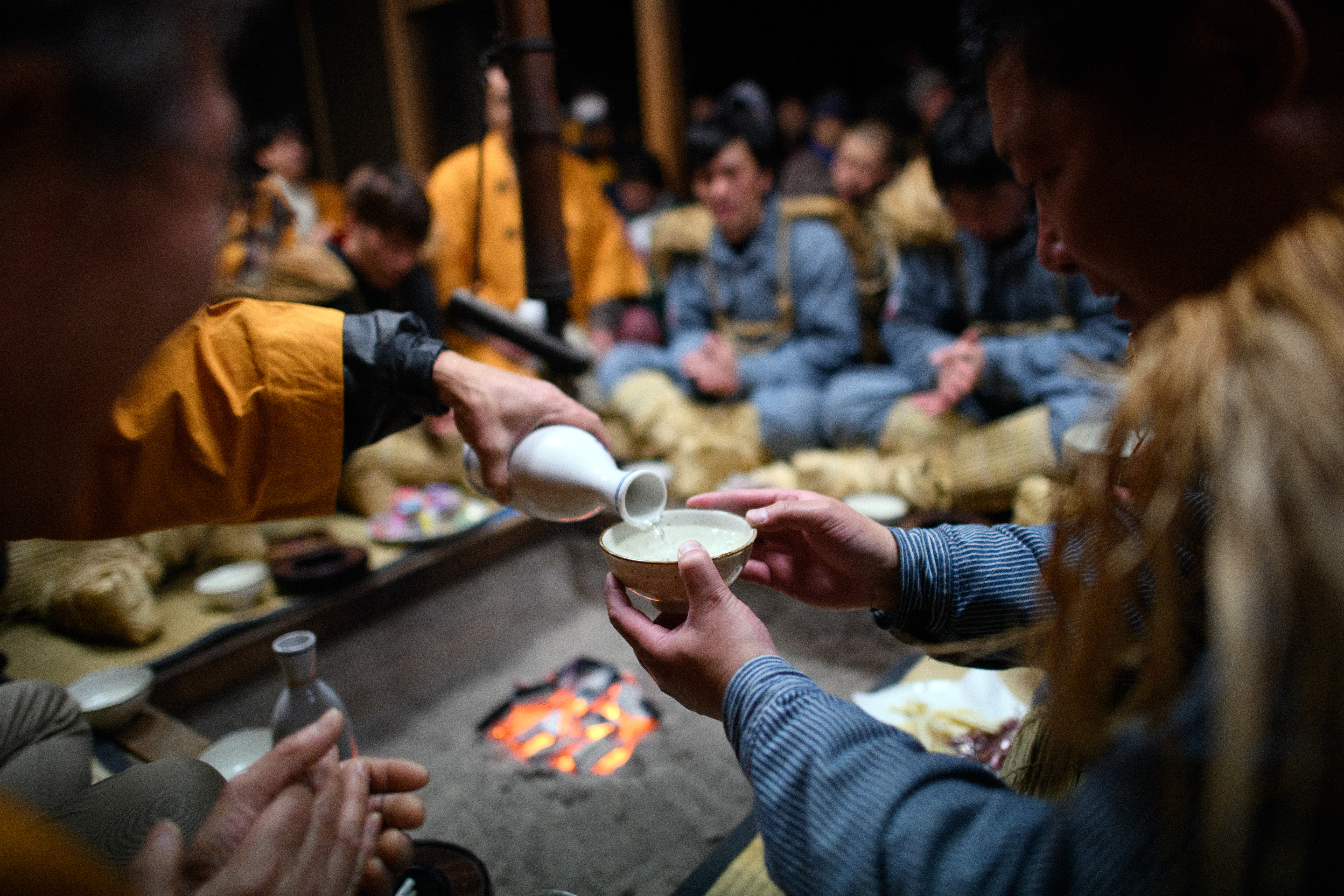
 A village man is poured sake at the beginning of the Nozawaonsen Dosojin Fire Festival on January 15, 2018 in Nozawaonsen, Japan. (Photo by Carl Court/Getty Images)
 Naturally, Japanese representatives at a UNESCO meeting in Paraguay marked the occasion by sampling some sake.
The beverage is made over several weeks by fermenting a mixture of rice, water, yeast and a colorful mold known as koji, in a process more akin to making beer than wine. The end results can be served hot, cold or at room temperature.
While sake plays a significant role in Japanese society and tradition, often served during ceremonies and special meals, demand has ebbed for the drink domestically even as international demand grows.
Sake producers hope UNESCO's recognition accelerates their exports and reinvigorates enthusiasm for the beverage at home.
"We are very happy," said Japan's permanent representative to UNESCO, Takehiro Kano.
"Being recognized internationally by this mechanism will renew the interest of Japanese people in this area, and that could lead to more momentum for transmitting these skills and know-how to the next generation."
UNESCO, the United Nations' education, scientific and cultural agency, admits practices, pieces of art or skills to its intangible cultural heritage list to foster their preservation for future generations.
UNESCO delegates also approved Asturian cider culture in Spain and the making of giant barrels in Guatemala, among other items and practices admitted to the list on Wednesday.
(Reporting by Daniel Desantis; Writing by Brendan O'Boyle; Editing by Tom Hogue)